
How to Prepare for Movers to Pack: The Room-by-Room Checklist
When you hire movers to pack your home, the crew does the heavy lifting, but the quality of the day depends heavily on what you do before they arrive. A well-prepared home lets packers work fast, protects your valuables, and prevents the most common moving-day frustrations: lost keys, packed passports, and boxes nobody can identify. Knowing how to prepare for movers to pack is less about packing itself and more about sorting, clearing, labelling, and communicating. This guide gives you a practical timeline, a room-by-room checklist, and the mistakes to avoid so the crew can pack efficiently and you can unpack without chaos.
Key Takeaways
- Declutter and sort before packing day; movers pack what is there, so remove what you do not want to move first.
- Set aside an essentials bag and a valuables box that the crew must NOT pack, and keep them with you.
- Clear paths, empty and defrost appliances, and disassemble what you can before the crew arrives.
- Walk the crew through the home at the start, flagging fragile, high-value, and do-not-pack items.
- Label rooms clearly and photograph electronics setups before anything is unplugged.
Two Weeks Before: Sort, Declutter, and Decide
The single most valuable preparation is deciding what not to move. Movers typically charge by time and volume, so every unwanted item you pack is money spent moving clutter. Two weeks out, walk each room with a box or bag and sort into keep, donate, sell, and discard. Be honest about items you have not used in a year, duplicate kitchen tools, worn-out linens, and broken electronics. Arrange donations and collections early so they are gone before packing day. This is also the time to decide which items you will pack yourself: sentimental items, jewellery, important documents, medications, and anything you would be upset to lose should never go in a general packing box.
Confirm the details with your moving company in the same window. Ask exactly what packing service includes: do they pack everything, or are there exclusions such as hazardous materials, perishable food, plants, or liquids? Many companies will not pack paint, aerosols, fuel, propane tanks, or cleaning chemicals, and some will not transport them either. Get the crew’s expected arrival time, team size, and estimated duration in writing, and confirm whether they supply boxes and materials or expect you to provide them. If you are still weighing how much help to book, it helps to first understand whether movers pack for you and what full-service packing usually covers.
One Week Before: Prepare Rooms and Appliances
A week before packing day, prepare each room so the crew can work without waiting on you. Empty drawers only if the mover asks you to; many crews prefer to pack drawer contents directly, but heavy furniture moves more safely with drawers emptied, so confirm their preference. Remove items from the tops of wardrobes and cabinets. Take pictures off walls and pack any frames you want to carry yourself. Disconnect and drain washing machines and dishwashers if the mover requires it, and defrost the freezer at least 24 to 48 hours before the move so it is dry and clean on the day.
Prepare appliances and fixtures that need special handling. Unplug electronics, coil cables, and photograph the back of each device before disconnecting anything, since those photos make reassembly ten times faster. Remove light bulbs from lamps you will transport and pack shades separately; delicate lighting deserves its own method, as explained in the guide to packing lamps for movers. Empty and clean the oven, microwave, and fridge, and leave appliance doors slightly open after cleaning to prevent odours. If furniture needs disassembly, check whether the crew includes it or whether you should do it yourself, and keep all bolts in labelled bags taped to the furniture piece.
The Do-Not-Pack Zone: What Stays With You
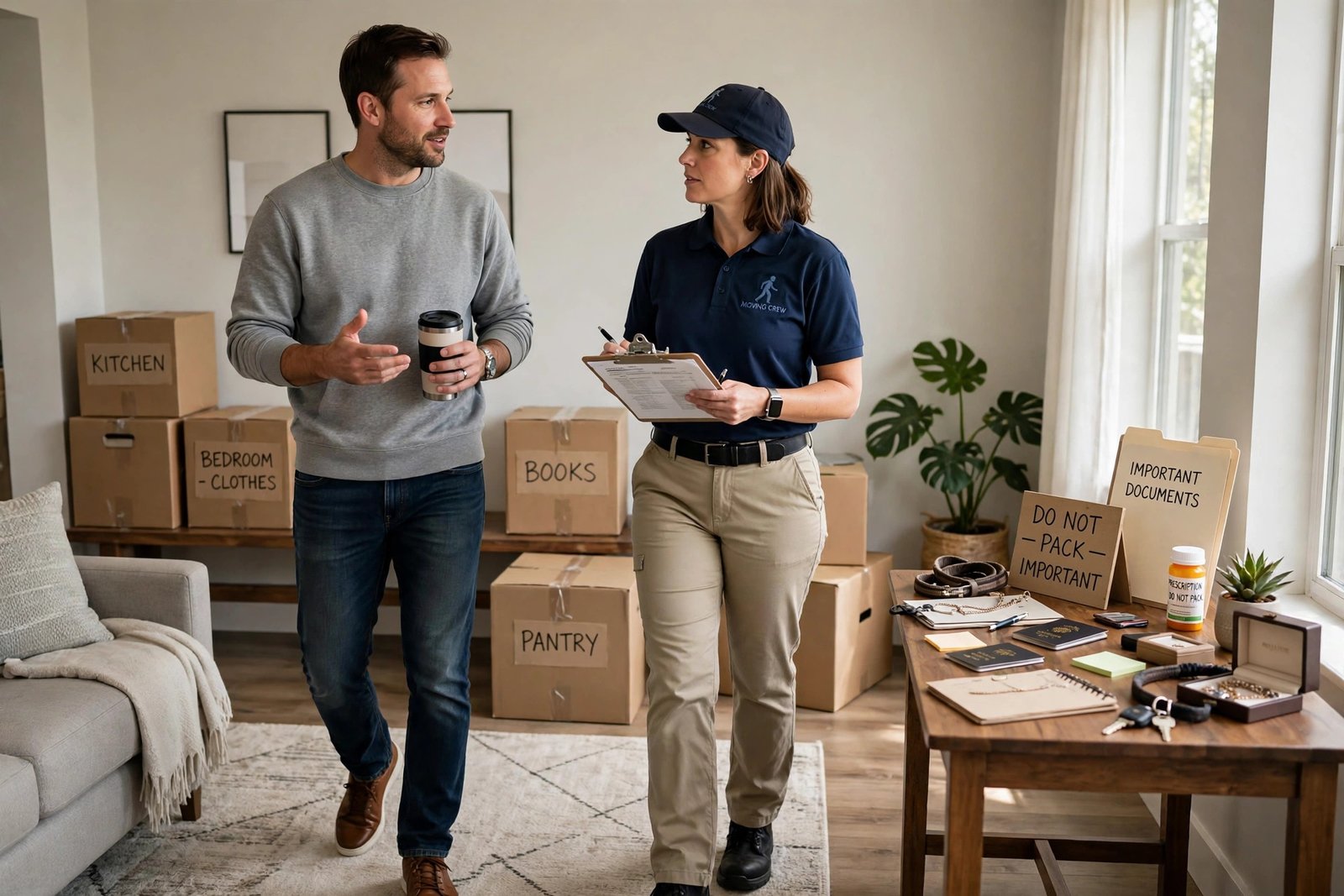
Every smooth packing day has a clearly marked zone that the crew must not touch. Choose one room, a bathroom, or a large table, and put a big sign on it: “DO NOT PACK — OWNER KEEPS”. Into this zone go your essentials for the first 48 hours: phone chargers, medications, toiletries, a change of clothes, bedding, towels, basic kitchen supplies, snacks, water, and cleaning products for the new home. Add valuables and documents: passports, IDs, lease and purchase papers, insurance documents, jewellery, cash, laptops, and sentimental items such as photo albums. Keep car keys, house keys for both properties, and the moving contract itself in this zone too.
Tell the crew leader about the zone during the opening walkthrough and repeat it if a new team member arrives later. Packers work fast and pack room by room, so an unmarked essentials bag on a bed will be packed without hesitation. The same rule applies to items staying behind for the next occupant or landlord: mark them clearly or move them into a separate room with a sign. A few minutes of labelling prevents hours of searching through sealed boxes later, and it is the preparation step homeowners most often regret skipping.
Packing Day Morning: Clear Paths and Set the Stage
On the morning itself, clear all hallways, staircases, and doorways so the crew can carry boxes and furniture without obstacles. Move cars from the driveway to leave space for the truck, and reserve parking or elevator access if your building requires it. Protect floors in high-traffic areas with old sheets or cardboard runners, especially in rain or snow. Put pets in a quiet room, with a friend, or in the car, since open doors and stressed animals are a bad combination. Arrange childcare for the same reason: packing day is not a safe or calm environment for small children.
Prepare refreshments and a bathroom the crew can use. Movers work physically hard for hours, and water, tea, and a few snacks are both courteous and practical, keeping energy up and the day on schedule. Have cash or a payment method ready for tips if you plan to tip, and keep your phone charged so the crew leader can reach you. Most importantly, stay available but out of the way: the crew needs you for questions and decisions, not for carrying boxes, and hovering in every room slows the work down.
The Opening Walkthrough: Your Most Important Ten Minutes
When the crew arrives, walk the home with the team leader before a single box is taped. Point out fragile and high-value items, antiques, artwork, and anything needing special materials. Show them the do-not-pack zone and the items staying behind. Mention pre-existing damage on furniture so it is noted on the inventory, and ask how they will protect floors, door frames, and banisters. Confirm the labelling system: most crews label boxes by room and contents, and you can ask them to add a star or “OPEN FIRST” mark to boxes you will need immediately.
Use the walkthrough to agree on priorities. If the crew must finish by a certain time, say so, and identify which rooms matter most. If the truck will be loaded in a particular order, for example heavy furniture first and essentials last, confirm it now. A clear walkthrough aligns expectations and prevents the mid-day misunderstandings that cause delays. It also gives you a chance to photograph each room before packing begins, creating a record of condition that supports any later claim.
Photograph electronics setups, wall arrangements, and furniture condition before packing. Photos make reassembly and claims far easier.
Tape a label to each door in the new home matching box labels, so movers unload each box into the right room without asking.
Bedding, towels, chargers, kettle, and toiletries in one clearly marked box turn the first night from chaos into comfort.
Moving admin is easy to forget. Work through a change of address checklist before moving week so mail, bills, and services follow you smoothly.
Room-by-Room Preparation Checklist
Kitchen
Use up perishable food in the final week and empty the fridge and freezer completely. Pack or dispose of open liquids, oils, and spices that movers will not transport. Clean appliances, leave doors ajar, and set aside one box of essentials: kettle, mugs, a few plates, cutlery, and basic cooking supplies for the first days.
Bedrooms
Strip beds on packing morning and bag bedding separately so it is easy to find. Empty nightstands of medications and chargers into your essentials bag. Leave wardrobes accessible and remove hanging items only if the crew asks you to; many crews use wardrobe boxes that transfer clothes directly on hangers.
Living areas
Remove wall art, mirrors, and curtains, and pack remotes and small electronics yourself. Clear shelves of books and ornaments so packers can work shelf by shelf. If a television is involved, decide in advance who packs it, since screens need special handling, unlike everyday items such as packing clothes for moving.
Bathrooms
Pack toiletries you will need into your essentials bag and discard nearly empty bottles. Drain and cap liquids the movers will transport, and bag them in sealed plastic to prevent leaks. Remove shower curtains and bath mats if they are moving with you.
Garage, loft, and storage
These areas hide the most surprises: paint, fuel, chemicals, and forgotten boxes. Sort them a week early, dispose of hazardous items at a proper facility, and label every storage box with its contents so the crew does not pack mystery cartons blindly.
Common Mistakes to Avoid
The most common mistake is leaving decisions until packing day. Unsorted rooms force the crew to pack clutter, and last-minute choices about what stays or goes slow everyone down. The second mistake is failing to protect valuables: jewellery, cash, and documents should never enter a moving box, no matter how trustworthy the crew. The third is forgetting access logistics: a truck that cannot park near the door, a lift that was never booked, or a narrow staircase nobody warned the crew about can add hours to the job. Confirm access with building management in advance and tell the mover about stairs, tight turns, and low doorways.
Another frequent error is packing prohibited items and hoping nobody notices. Flammable liquids, gas cylinders, and perishable food can be refused at loading, causing delays while you scramble to dispose of them. Finally, do not sign the inventory without reading it. Check that high-value items are listed, note pre-existing damage accurately, and keep your copy of the paperwork with you, not in a packed box.
Frequently Asked Questions
Should I empty drawers before movers pack?
Ask your mover. Many crews pack drawer contents into boxes, but heavy furniture is safer to move with drawers emptied. Confirm their preference a few days before packing day.
Do movers pack food from the kitchen?
Most will pack sealed, non-perishable food but not open liquids, perishables, or frozen goods. Use up perishables before moving week and transport open items yourself if allowed.
How long does professional packing take?
A typical two- or three-bedroom home takes a full day for a team of two to three packers. Larger homes or homes with extensive collections may take two days.
Should I be home while movers pack?
Yes, or have a trusted person there. The crew needs decisions about fragile items, do-not-pack zones, and priorities, and you need to verify the inventory before they leave.
What should I do when packing finishes?
Walk every room, including lofts, garages, and cupboards, to confirm nothing was missed. Check the inventory, sign it, and keep your copy with your essentials, not in a moving box.
Preparing for movers to pack is mostly about decisions made early: what moves, what stays with you, what gets donated, and what the crew needs to know. Sort two weeks out, prepare rooms and appliances a week out, guard your essentials zone fiercely, and lead a clear walkthrough on the morning itself. Do those four things and the crew can do what they do best, packing your home quickly, safely, and in an order that makes unpacking almost pleasant.