
Men’s Peacoat Outfit Ideas: The Naval Classic That Never Ages
The peacoat began life as a naval uniform: short, double-breasted, broad-collared, and built from heavy wool to keep sailors warm at sea. More than a century later, it remains one of the best coats a man can own, because that original design was so practical. It is warm without being long, smart without being formal, and structured enough to make jeans and a sweater look intentional. If you own one good winter coat, a peacoat is a strong candidate.
Modern peacoats keep the classic silhouette — hip length, wide lapels, double-breasted front — but come in slimmer cuts, softer wools, and colors beyond navy. This guide covers how to choose the right fit and seven outfits that take the peacoat from weekend casual to smart office to cold-weather evening, plus the details that separate a great peacoat from a mediocre one.
Key Takeaways
- A peacoat is hip-length, double-breasted, and wool — warm without the bulk of a long coat.
- Navy is the classic color; black, charcoal, and camel are strong alternatives.
- The coat should end at the hip and button comfortably over a sweater.
- Pop the collar against wind; it is a functional design feature, not just a style choice.
- Peacoats bridge casual and smart: they dress up jeans and dress down tailoring.
- Wool blends with at least 50 percent wool offer the best warmth and value.
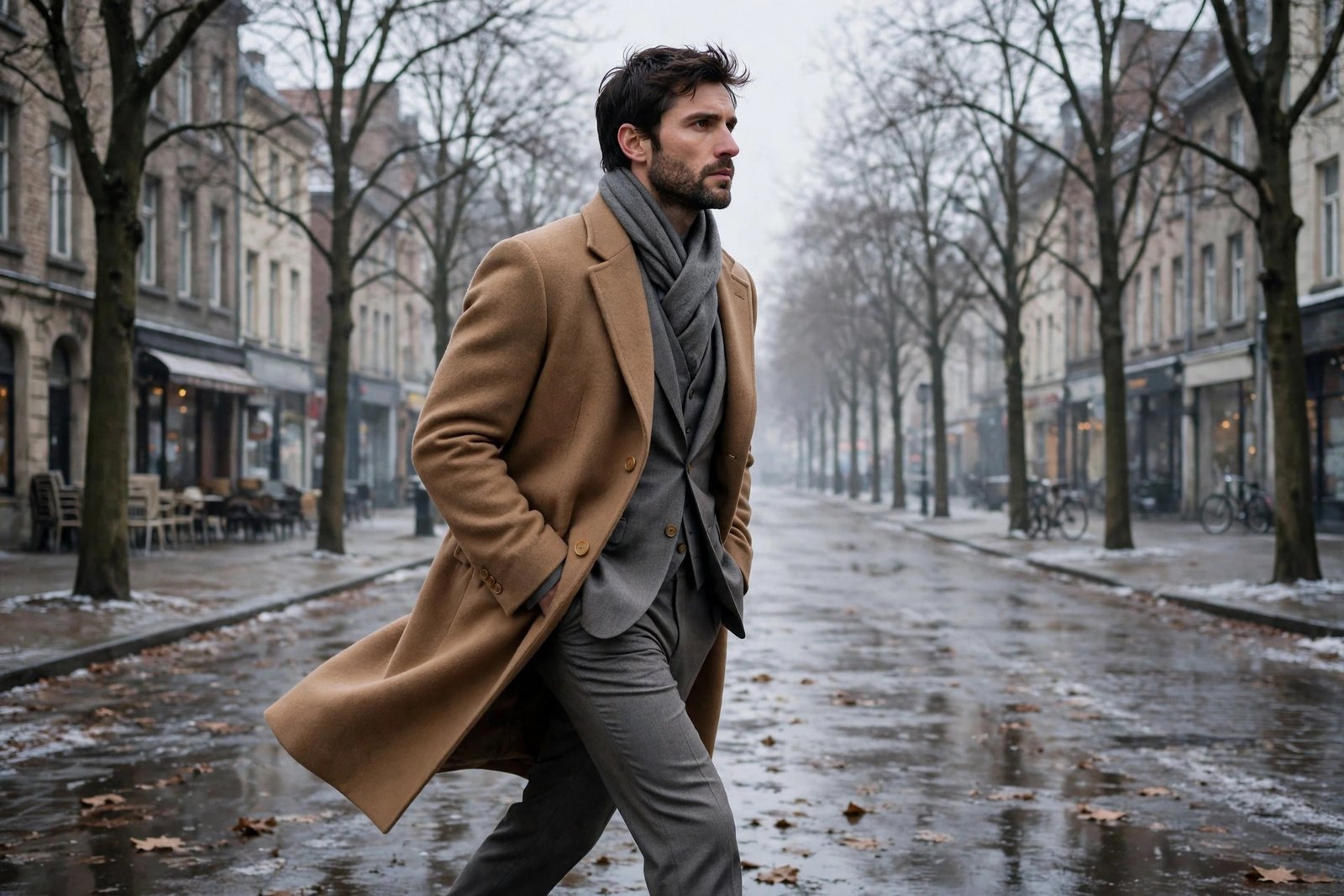
Choosing the Right Peacoat
Fit is everything with a peacoat. It should end at hip level — long enough to cover a sweater, short enough to show your legs and keep the silhouette balanced. The shoulders should sit at your natural shoulder line, and the coat should button comfortably over a knit without pulling across the chest. If it strains over a sweater, size up; a peacoat worn open all winter loses much of its warmth and structure. Slim and regular cuts both work, but avoid very boxy styles unless you are deliberately dressing in a vintage, oversized way.
The collar is the peacoat’s signature. A wide, well-structured collar that can be popped up against wind is a sign of quality; a flimsy collar that flops is not. Check the buttons too: traditional peacoats use large, sturdy buttons, often in horn or metal, and they should feel solid, not plasticky. Pockets should be deep enough for hands and a phone — slash pockets are standard — and the lining should be smooth and complete, not partial.
Color follows the same logic as other coats. Navy is the original and the most versatile: it pairs with jeans, grey trousers, black, and brown. Black is slightly more formal and urban, charcoal is quietly sophisticated, and camel is warmer and more casual. If you already own a navy overcoat, a black or charcoal peacoat adds variety; if the peacoat is your only coat, navy is the safest first choice.
7 Men’s Peacoat Outfit Ideas
1. The Weekend Classic
A navy peacoat, a crew neck sweater in grey or charcoal, dark jeans, and brown leather boots. This is the peacoat’s default outfit, and it works because every piece is simple and the coat supplies the structure. Add a scarf in navy or burgundy on colder days.
2. The Smart Office Peacoat
A charcoal or black peacoat, a collared shirt and tie or a fine-knit sweater, grey wool trousers, and dark leather shoes. A peacoat is short enough to look sharp with tailoring, unlike a long overcoat that can feel overly formal. Keep the trousers slim and the shoes polished, and the outfit reads professional without a suit.
3. Peacoat with Chinos
A navy peacoat, a white or chambray shirt, tan chinos, and suede desert boots. The navy-and-tan combination is a menswear classic, and the peacoat’s structure keeps the chinos from looking too casual. This is an ideal outfit for smart-casual offices, lunches, and spring-autumn transitions.
4. The All-Dark Peacoat
A black peacoat, a black knit, black slim trousers, and black Chelsea boots. An all-dark base with a peacoat looks sleek and modern, and the coat’s double-breasted front and wide collar provide the texture and detail that stop all-black from looking flat. Our Chelsea boots ideas pair naturally with this silhouette.
5. Peacoat Layered for Deep Winter
A navy peacoat over a turtleneck, with dark jeans, a wool scarf, leather gloves, and sturdy boots. A turtleneck under a peacoat is a perfect cold-weather combination: the high neck fills the coat’s collar gap, and the layers trap warmth without bulk. Pop the coat collar over the scarf for extra wind protection.
6. Peacoat with a Hoodie
A navy or black peacoat worn open over a hoodie, with jeans and sneakers or boots. This high-low combination is a modern streetwear staple: the coat adds polish, the hoodie adds comfort, and the contrast feels current rather than careless. Keep the hoodie plain and dark so the outfit stays cohesive.
7. Peacoat for Evenings
A black peacoat, a dark shirt, black slim trousers, and leather Derby shoes or boots. Evening peacoats work because the coat is inherently smart — it looks at home over dressier clothes in a way a parka never will. Skip the scarf indoors, keep the coat buttoned on arrival, and the outfit is dinner-ready.
Styling Details That Elevate a Peacoat
Small details make a peacoat outfit. Rolling the sleeves slightly to show a sweater cuff adds a casual, lived-in feel for weekends; keeping them full-length looks sharper for work. A scarf worn inside the coat, with just the knot or drape showing above the collar, adds color and warmth without bulk. Leather gloves in brown or black complete the winter look and are worth investing in, since a peacoat’s pockets, while deep, are not a substitute for gloves in real cold.
Watch the length relationship with what you wear underneath. A sweater or shirt that hangs well below the peacoat’s hem looks untidy, so tuck in or choose a shorter knit. Similarly, a scarf that hangs far below the coat can look straggly; keep scarf ends at or above hip level. These small proportion checks are what separate a peacoat outfit that looks thrown together from one that looks considered.
Peacoat Mistakes to Avoid
A peacoat that strains over knitwear loses warmth and shape. Size up to fit layers.
Hip length is the sweet spot. Longer looks like an overcoat; shorter looks like a jacket.
A collar that cannot stand up is useless in wind. Check its structure before buying.
Shirts hanging below the hem look messy. Tuck in or shorten the layer beneath.
A lightweight peacoat will not cope with real cold. Choose substantial wool.
Plasticky buttons cheapen a good coat. Horn or metal buttons signal quality.
Frequently Asked Questions
Are peacoats still in style in 2026?
Yes. The peacoat is a permanent menswear classic, updated in slimmer cuts and softer wools but unchanged in its essential silhouette.
How should a peacoat fit?
Hip length, shoulders at your natural line, and room to button over a sweater without pulling. If it strains over knitwear, size up.
Is a peacoat warm enough for winter?
A wool peacoat is warm for most winter days, especially layered over a sweater or turtleneck with a scarf. In extreme cold, a longer overcoat offers more coverage.
Can you wear a peacoat to the office?
Yes. A navy, black, or charcoal peacoat over a shirt or fine knit with wool trousers is smart enough for most offices.
What color peacoat should I buy first?
Navy. It is the original peacoat color, pairs with jeans, grey, black, and brown, and suits both casual and smart outfits.
Buy Once, Wear for Decades
A good peacoat is a decade purchase, not a season purchase. Choose navy wool, a hip-length fit that buttons over a sweater, and sturdy buttons and collar, and you will own a coat that outlasts trends and anchors winter outfits year after year.
For a longer coat option, see our wool overcoat outfit ideas, and start with fit — the peacoat rewards getting it exactly right.