
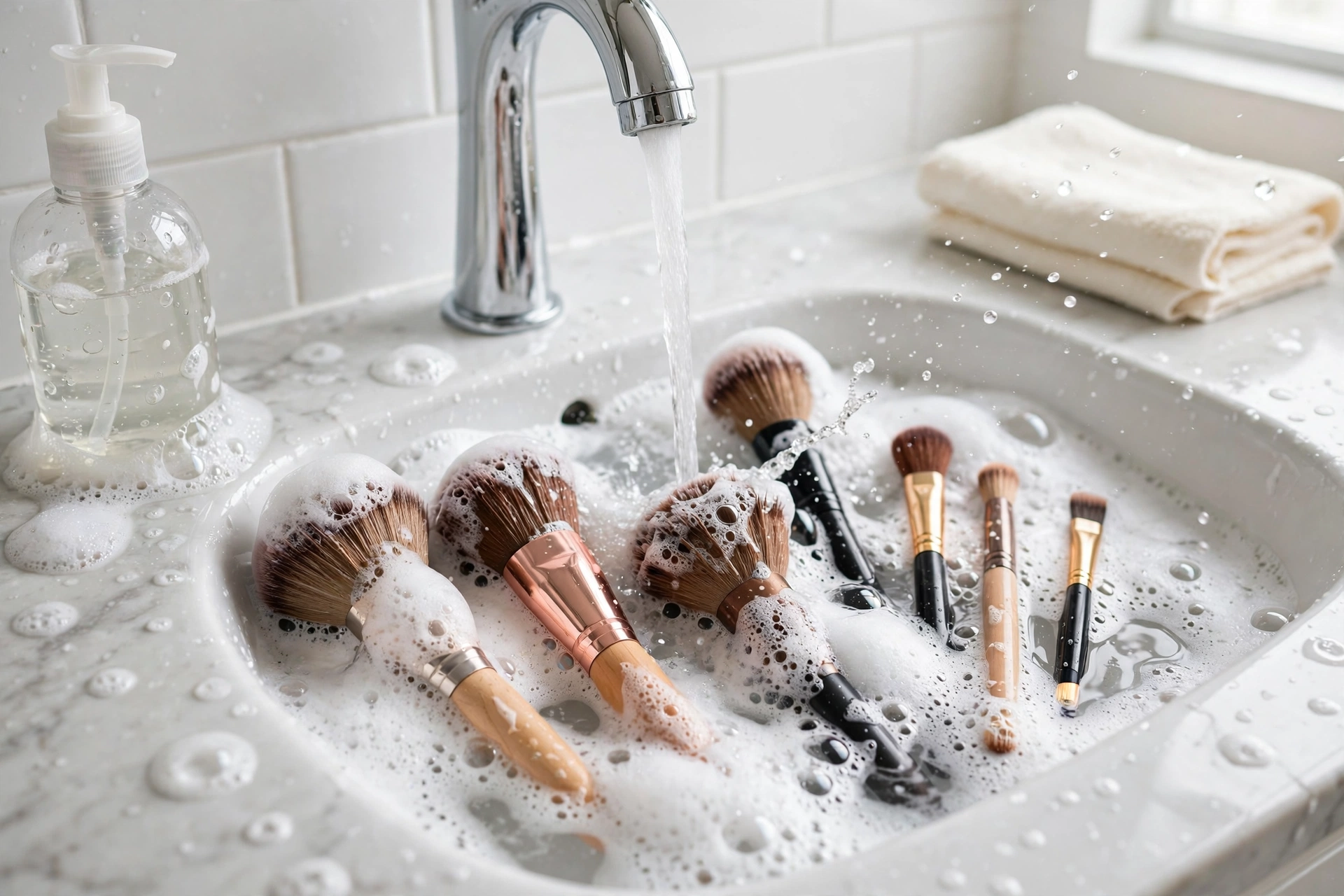
When did you last wash your makeup brushes? If you cannot remember, they are overdue — and your skin probably knows it. Learning how to clean makeup brushes properly takes about ten minutes, costs almost nothing, and makes a real difference: cleaner brushes apply makeup more evenly, last longer, and stop transferring old product and bacteria onto your face. Here is the method that works, how often to do it, and the mistakes that ruin good brushes.
- Clean foundation and concealer brushes weekly; powder and blush brushes every two weeks.
- Use lukewarm water and a gentle soap — baby shampoo or a dedicated brush cleanser both work.
- Always wash with the bristles pointing down so water never runs into the handle.
- Never dry brushes standing upright while wet — lay them flat or hang them bristle-down.
- Replace brushes when the bristles shed constantly, lose their shape, or feel scratchy even after washing.
How to Clean Makeup Brushes: The Right Method
Start by running the bristles under lukewarm water, holding the brush with the bristles pointing down. Hot water can loosen the glue that holds the bristles, and water running into the handle rots the ferrule from the inside — so keep the water on the bristles only. Put a drop of gentle soap in your palm or on a silicone cleaning mat, then swirl the brush in small circles until the water runs clear. Rinse, gently squeeze out the water with a clean towel, reshape the bristles with your fingers, and lay the brush flat on a towel to dry, with the bristles hanging slightly over the edge of a table so air can circulate.
For a deep clean, soak the bristles — never the handle — in a small bowl of lukewarm water with a drop of soap for a few minutes before swirling. This lifts stubborn foundation and long-wear products that a quick wash leaves behind. Drying takes the longest: most brushes need 6 to 8 hours, so wash them in the evening and they will be ready in the morning.
What to Use to Clean Makeup Brushes
Baby shampoo
The cheapest option that actually works. Baby shampoo is gentle, it cleans well, and it does not strip natural-hair bristles the way harsh dish soap can. A small bottle lasts months.
Dedicated brush cleanser
Products like Cinema Secrets or the solid cleansers from beauty brands dissolve makeup faster than shampoo, and they are worth it if you wear full-coverage foundation daily. They are not essential — shampoo does the same job, just slightly slower.
What to avoid
Do not use dish soap regularly — it is too harsh and dries out the bristles. Do not use hot water, do not use a washing machine, and do not use olive oil or coconut oil as a cleaner — they leave a residue that makes makeup apply unevenly and can clog pores. For the rest of your beauty routine, our sea salt spray guide and makeup and hair ideas cover the styling side.
How Often Should You Clean Makeup Brushes?
Foundation, concealer, and cream-product brushes: once a week, because liquid products breed bacteria fastest. Powder, blush, and bronzer brushes: every two weeks. Eyeshadow brushes: every two weeks, or weekly if you use them daily. Beauty sponges: after every use — they hold more moisture and bacteria than any brush, so rinse them with soap and water each time and replace them every one to three months.
If you have acne-prone or sensitive skin, clean more often rather than less. Dirty brushes are a common cause of breakouts that people blame on their skincare. A quick daily spot-clean with a spray cleanser between deep washes helps too — spray, wipe on a tissue, and the brush is ready in a minute.
How to Tell When a Brush Needs Replacing
Even well-cared-for brushes wear out. Replace a brush when the bristles shed every time you use it, when they have lost their shape and will not spring back after washing, when they feel scratchy on your skin, or when they hold a smell even after a deep clean. Good brushes last years with proper care — cheap brushes often last months. If you are building a kit, our grout cleaning guide uses the same gentle-care thinking for another household essential.
Frequently Asked Questions
How do you clean makeup brushes at home?
Rinse the bristles under lukewarm water pointing down, swirl them in gentle soap or baby shampoo, rinse until the water runs clear, reshape, and lay flat to dry.
Can I use dish soap to clean makeup brushes?
Occasionally, for a deep clean, but not regularly — dish soap is harsh and dries out bristles. Baby shampoo or a dedicated brush cleanser is gentler and better for daily care.
How often should I wash my makeup brushes?
Foundation and concealer brushes weekly; powder and eyeshadow brushes every two weeks; beauty sponges after every use.
How long do makeup brushes take to dry?
Usually 6 to 8 hours. Wash them in the evening so they are ready in the morning, and always dry them flat or bristle-down, never standing upright.
Can dirty makeup brushes cause breakouts?
Yes. Old product, oil, and bacteria build up on unwashed brushes and transfer to your skin, which can cause breakouts — especially for acne-prone skin.
Knowing how to clean makeup brushes is one of those small habits that pays off every day: better makeup, healthier skin, and brushes that last years instead of months. Ten minutes, once a week, in the evening — and your face will notice the difference before you do.
1 thought on “How to Clean Makeup Brushes: The Right Way”