
Eco-Friendly Diwali Ideas for a Greener Festival
Diwali is a festival of light, and there is no reason that light has to come with a trail of plastic, smoke and landfill. An eco-friendly Diwali is not a smaller Diwali — in many ways it is a richer one. Clay diyas glow warmer than plastic lights, handmade gifts mean more than mass-produced ones, and a celebration that respects the air and the neighbourhood feels better the morning after.
This guide is practical, not preachy. Every idea here has been chosen because it is easy, affordable and genuinely festive. Whether you are celebrating in a city flat or a family home, you can pick the swaps that fit your household and keep the rest traditional. The goal is progress, not perfection.
Key Takeaways
- Choose clay diyas over plastic and battery lights where you can — they are biodegradable, beautiful and support local potters.
- Make rangoli from flower petals, rice flour or natural colours instead of synthetic powders and plastic stencils.
- Skip or minimise fireworks; celebrate with lights, music, food and community displays instead.
- Give low-waste gifts: homemade food, plants, experiences, or useful items in reusable wrapping.
- Plan waste before the festival — compost flowers, reuse decorations and recycle packaging.
Why an Eco-Friendly Diwali Matters
Diwali is celebrated by hundreds of millions of people, so small choices add up enormously. A single household switching from plastic decorations to natural ones saves a bag of waste; a street doing it together transforms the whole neighbourhood. Air quality is the most visible issue — firework smoke lingers for days, affecting children, elderly relatives, pets and anyone with asthma. But the quieter waste matters too: plastic torans, synthetic rangoli powder, glitter, gift wrap and single-use serving ware all pile up after one night.
The beautiful irony is that the traditional Diwali was already eco-friendly. Clay diyas, flower rangoli, cotton clothes, homemade sweets and oil lamps are the originals. Going green is less about inventing something new and more about returning to what the festival always was.
Clay Diyas: The Heart of a Green Diwali
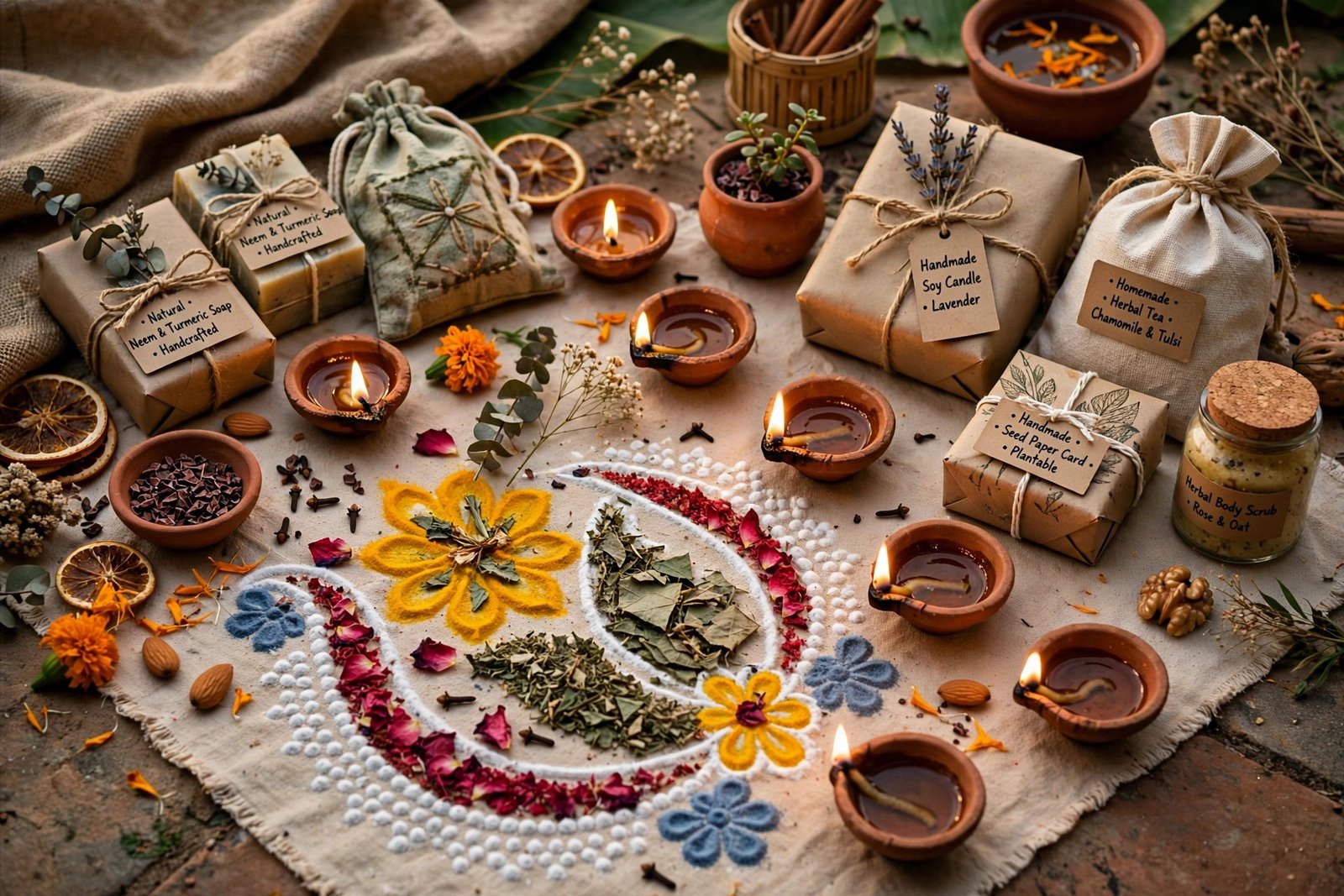
Clay diyas are the single best eco swap you can make. They are made from natural earth, they biodegrade, and they support local potters and artisans whose craft is centuries old. Buy them from a local market or community seller rather than a big chain, and you keep money in your neighbourhood too.
Before use, soak new diyas in water for a few hours so they absorb less oil, then fill with mustard oil, ghee or sesame oil and a cotton wick. After the festival, broken diyas can go into the garden or compost — unlike plastic lights, they return to the earth. For balconies and indoor shelves where open flames are risky, use LED diyas inside clay shells: you keep the look and the tradition with a fraction of the risk.
Decorating with diyas
Group diyas in odd numbers along windowsills, steps and the garden path — clusters of five or seven look intentional and abundant. Place them on metal or terracotta trays to protect surfaces, and never leave them burning unattended. If you want more lighting inspiration that carries through the season, our outdoor lighting ideas use the same layering of warm light at different heights.
Natural Rangoli Colours
Synthetic rangoli powders often contain chemicals and dyes that stain surfaces and harm soil and waterways when washed away. Natural alternatives are easy and look gorgeous. Flower petals — marigold, rose, jasmine — make the most beautiful rangoli of all, and they compost afterwards. Rice flour gives a clean white base, turmeric gives golden yellow, beetroot powder gives pink, and dried spinach or henna powder gives green.
If you have children, making natural colours together is a lovely pre-Diwali activity. Let them crush dried petals and mix powders, then design the rangoli as a family. The result will be less perfect than a stencil and far more memorable.
Low-Waste Gifts That People Actually Love
Diwali gifting can easily become a mountain of packaging. Rethink it with gifts that are used, eaten or grown rather than displayed and discarded. Homemade sweets and snacks in a reusable tin are always welcome — try a festive baking guide for techniques that transfer beautifully to Diwali treats. A potted plant, a jar of homemade chutney, a beeswax candle, or a donation in someone’s name all carry real meaning.
For wrapping, use fabric — a beautiful scarf or a square of cotton tied furoshiki-style doubles as part of the gift. Old newspapers decorated with stamps, brown paper with a marigold tucked under the string, or a reusable tote all look thoughtful and cost almost nothing. If you do buy gifts, choose quality over quantity: one useful, lasting item beats five plastic ones.
An Air-Friendly Celebration
Fireworks are the hardest part of a green Diwali to discuss, because they are genuinely beloved — especially by children. The honest facts are that fireworks release particulate pollution, disturb pets and wildlife, and create noise that affects elderly neighbours and people with sensory sensitivities. Many cities now restrict or ban them, and community displays are increasingly the norm.
If your area permits fireworks, consider attending one organised display rather than setting off many small ones at home — one professional show is more spectacular and far less polluting per person than dozens of garden fireworks. At home, replace fireworks with light: sparklers outdoors in a safe space, a firepit evening, fairy lights, lanterns and a playlist of festive music. Children often love a lantern walk around the neighbourhood just as much as fireworks, especially if the whole street joins in. For homes with animals, our pet safety tips for festive seasons cover the same principles of quiet rooms, safe spaces and preparation.
Eco Decorations for the Whole Home
Food: The Delicious Part of Going Green
Diwali food is already a strong point for sustainability: most festive cooking is vegetarian, seasonal and made from scratch. Lean into that. Cook in bulk to reduce packaging, buy spices and dry goods loose from a local grocer, and plan portions so leftovers become the next day’s lunch rather than waste. A cosy soup recipe is a perfect way to use leftover vegetables after the feast.
Serve drinks in reusable glasses, offer water in a jug rather than plastic bottles, and compost fruit peels and flower waste. If you are hosting, a small, clearly labelled compost bowl in the kitchen makes it easy for guests to help without being asked.
After Diwali: The Clean-Up That Counts
The morning after matters as much as the night itself. Compost flowers, petals and food waste. Save reusable decorations — toran hooks, fairy lights, brass diyas, fabric wrapping — in a labelled box for next year. Recycle cardboard and glass properly, and take any broken electronics or batteries to a proper recycling point rather than the general bin. A home that is cleaned and reset quickly also sets you up for the rest of the season; our November home checklist keeps the practical jobs on track.
Frequently Asked Questions
Are clay diyas really better than LED lights?
For the environment, yes — clay biodegrades and supports artisans, while LEDs need manufacturing and batteries. In practice, use both: real diyas where safe, LEDs where flames are risky.
How do I make natural rangoli colours?
Use rice flour for white, turmeric for yellow, beetroot powder for pink, and dried leaf powder for green. Flower petals need no preparation at all — just scatter them in your design.
What is the best eco-friendly Diwali gift?
Something edible, growable or reusable: homemade sweets, a plant, a candle, or an experience like a meal out together. Presentation in fabric or a reusable tin makes it feel special.
Can I still have fireworks at an eco Diwali?
That is your choice, but attending one organised community display instead of many home fireworks cuts pollution dramatically while keeping the spectacle.
Is eco-friendly Diwali more expensive?
Usually the opposite. Clay diyas, flowers, homemade food and fabric wrapping cost less than plastic decorations, packaged gift sets and fireworks.
An eco-friendly Diwali does not ask you to give anything up that matters. It asks you to choose the version of the festival that was always there underneath the plastic: real light, real flowers, real food, and real people. Start with one swap this year — the diyas — and let the rest follow naturally.