
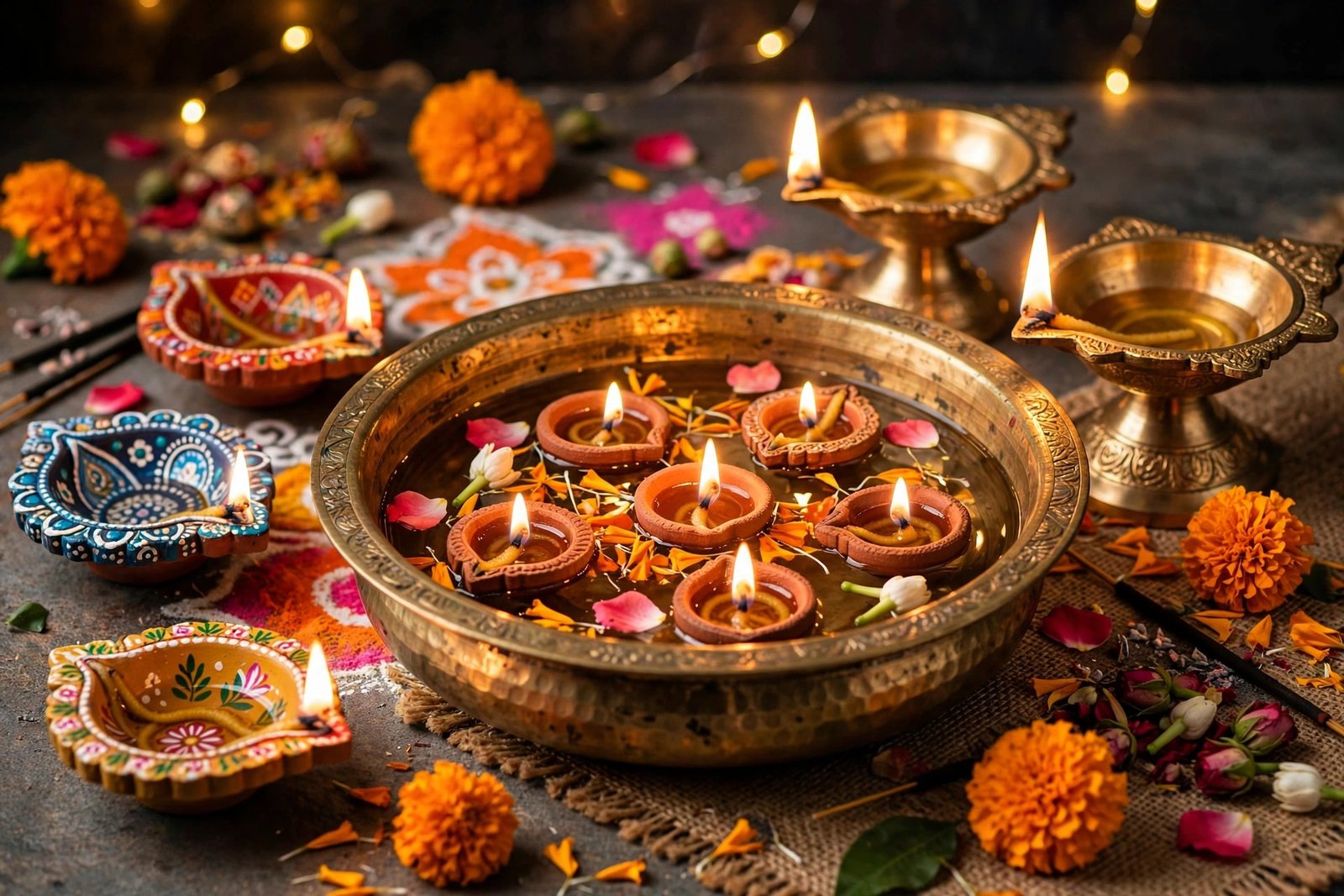
Diya Decoration Ideas for Diwali 2026
Nothing says Diwali like the warm flicker of a diya. Long before fairy lights existed, homes glowed with rows of small clay lamps, and that glow is still the heart of the festival. The good news is that diya decoration has never been more creative: painted clay diyas, polished brass, floating arrangements, and clever placements that make even a small home feel luminous. With Lakshmi Puja on Sunday, November 8, 2026, now is the time to plan your diyas — what to buy, how to decorate them, and where to place them for the best effect.
This guide covers every style, from traditional clay to modern floating displays, plus the safety habits that keep the evening joyful. No experience needed: most of these ideas take minutes and cost very little.
Key Takeaways
- Group diyas in odd numbers (3, 5, 7) — groupings look intentional and photograph beautifully.
- Mix heights: floor rows, table clusters, and one raised centrepiece per room.
- Soak clay diyas in water for an hour before use so they burn longer and evenly.
- Floating diyas in a brass urli are the easiest showstopper arrangement.
- Never leave flames unattended; keep diyas away from curtains, paper, and walkways.
Classic Clay Diyas: Painted and Decorated
Clay diyas are the traditional choice and still the most charming. Buy plain ones a week early and decorate them yourself: acrylic paint in gold, red, or green, a dot of glitter glue, or tiny mirror pieces pressed into wet paint. Children love this job, and hand-painted diyas become keepsakes you reuse year after year. Soak clay diyas in water for an hour before lighting — soaked clay absorbs less oil, so the flame burns steadier and longer.
For a polished look, paint the rim gold and the bowl a deep colour, then add a single row of white dots. Or keep them natural: unpainted terracotta against a brass tray or a bed of marigold petals looks effortlessly traditional. Place clay diyas in rows along windowsills, balcony edges, and stair steps — repetition is what makes them striking. For more on safe, beautiful outdoor placement, our outdoor lighting safety tips cover the same principles of spacing, shelter, and supervision.
Brass Diyas: Elegant and Reusable
Brass diyas are the investment pieces of Diwali. They polish up beautifully, last for decades, and suit both traditional and modern homes. A tall brass standing diya (samai) in the puja room or entrance is a statement on its own; smaller brass diyas work in clusters on the dining table or a console. Polish brass a few days before the festival with lemon and salt or a commercial brass cleaner, and it will gleam all evening.
Mix brass with other materials for contrast: brass diyas on a wooden tray, beside a clay pot of marigold, or next to glass candle holders. The warm metal picks up every flicker in the room, which is why a few brass pieces can light a whole corner. Store them wrapped in soft cloth after Diwali so they stay scratch-free for next year.
Floating Diyas: The Easiest Showstopper
Floating diyas need almost no skill and always impress. Fill a wide brass urli or a large bowl with water, scatter marigold and rose petals, and float three to seven small diyas or floating candles on top. Place it in the entrance, on the coffee table, or as a dining centrepiece. The water doubles the light — every flame reflects — and the petals add colour and fragrance.
Variations are endless: add a few drops of essential oil to the water for scent, use a glass bowl for a modern look, or float a single large flower in the centre with diyas around it. Keep the water level a finger below the rim so it never spills when someone brushes past, and place the bowl on a tray to catch drips. If you love this kind of water-and-light styling, our seasonal home fragrance ideas include scent layering that pairs perfectly with a floating display.
Creative Arrangements: Where to Place Diyas
Placement is what turns a collection of diyas into decor. Try these arrangements: a spiral of diyas on the floor around the rangoli; a staircase lined with one diya per step; a windowsill row that glows from the street; a tray of five diyas with marigold on the dining table; or a single large diya as the centre of the puja thali. Balconies look magical with diyas along the railing — use sturdy holders or small plates underneath so wind cannot tip them.
Think in layers: floor-level diyas near the entrance, table-level clusters in the living room, and one raised piece (a tall brass diya or a lantern) as the focal point. Avoid placing diyas where people walk, near curtains or paper decorations, or under low-hanging fabric. A beautiful arrangement that blocks a doorway is not worth it. For entrance arrangements that welcome guests without crowding them, see our home entrance decor ideas.
Modern Twists: LED Diyas, Lanterns, and Colour
If you have small children, pets, or a rented home with strict rules, LED diyas and lanterns give you the glow without the flame. Modern LED diyas flicker realistically and come in clay-look finishes; place them inside glass hurricanes or paper lanterns and most guests will not notice the difference. Paper sky lanterns (used outdoors, away from buildings and trees, and only where local rules allow) add drama to the evening, while Moroccan-style metal lanterns with coloured glass suit modern interiors beautifully.
Colour is another modern twist: try teal, deep blue, or green glass holders mixed with traditional gold, or dye the water in a floating display a soft pink with a few rose petals. The trick is restraint — one modern element per arrangement keeps the look festive rather than confused.
Diya Safety: The Non-Negotiables
Beauty and safety go together on Diwali. Never leave burning diyas unattended, and extinguish them before bed. Keep a small bowl of water and a damp cloth near the puja area. Place diyas on heat-proof surfaces — metal trays, ceramic plates, or stone — never directly on wood, cloth, or plastic. Keep oil bottles away from flames, and teach children to admire diyas without touching them. If you are making candles at home as well, our guide to making beeswax candles at home covers wick safety and clean burning that applies to diyas too.
After the evening, let diyas cool completely before handling. Save unburned oil, wash clay diyas gently if you plan to reuse them, and store brass pieces separately. A tidy clean-up on the night means next year’s decorating starts easily.
Frequently Asked Questions
How many diyas should I light for Diwali?
There is no fixed number — traditional homes light 11, 21, or 51, but even five well-placed diyas create the festive feel. Focus on placement and grouping rather than quantity.
How do I make clay diyas last longer?
Soak them in water for an hour before use, use thick cotton wicks, and shelter them from wind. A diya indoors can burn for several hours on a single fill of oil.
Are LED diyas acceptable for Diwali?
Absolutely. They are safer around children and pets, allowed in most rented homes, and modern flickering LEDs look very convincing, especially inside lanterns or hurricanes.
What oil is best for diyas?
Mustard oil and ghee are traditional; refined vegetable oil burns cleanly with less smoke. Avoid strongly scented oils indoors unless the room is well ventilated.
Diyas are Diwali in miniature: small, warm, and made more beautiful by being together. Paint a few, polish the brass, float some in water, and place them where their light can be seen. When the house glows on Lakshmi Puja evening, you will know the simplest decor was the most meaningful all along.