
Best Wood for Bed Frame: Oak, Walnut, Teak, Pine, Maple and Engineered Wood Compared
A bed frame is the hardest-working piece of furniture in the house. It carries weight every night, absorbs movement, and is expected to stay silent, stable and beautiful for decades — yet most buyers choose it by colour and price, and only discover the wood matters when it starts to creak, sag or dent. The wood species, and how it is constructed, determines almost everything about a bed: how long it lasts, how much weight it supports, how it ages, and how much care it needs. Get the wood right and the rest is easy.
This guide compares the woods you will actually encounter when shopping for a bed frame — oak, walnut, teak, pine, maple and engineered wood — on durability, cost, appearance, weight and maintenance. It also explains the difference between solid wood and veneer, what to check in the joints and slats, and which wood suits which kind of buyer, from a first flat to a forever bedroom. By the end, you will know not just which wood is “best” in general, but which is best for you.
Key Takeaways
- Oak is the best all-rounder: very durable, good-looking, and available at a wide range of prices.
- Walnut is the premium choice for a rich, dark look; teak is the most weather- and moisture-resistant.
- Pine is the best budget solid wood, but it dents easily and suits lighter use or a rustic style.
- Maple is hard, pale and modern-looking, ideal for minimalist bedrooms that need a tough frame.
- Engineered wood can be good value if it uses quality plywood cores; cheap particleboard frames sag and creak.
- Check joints, slats and centre support rails, not just the wood species — construction matters as much as timber.
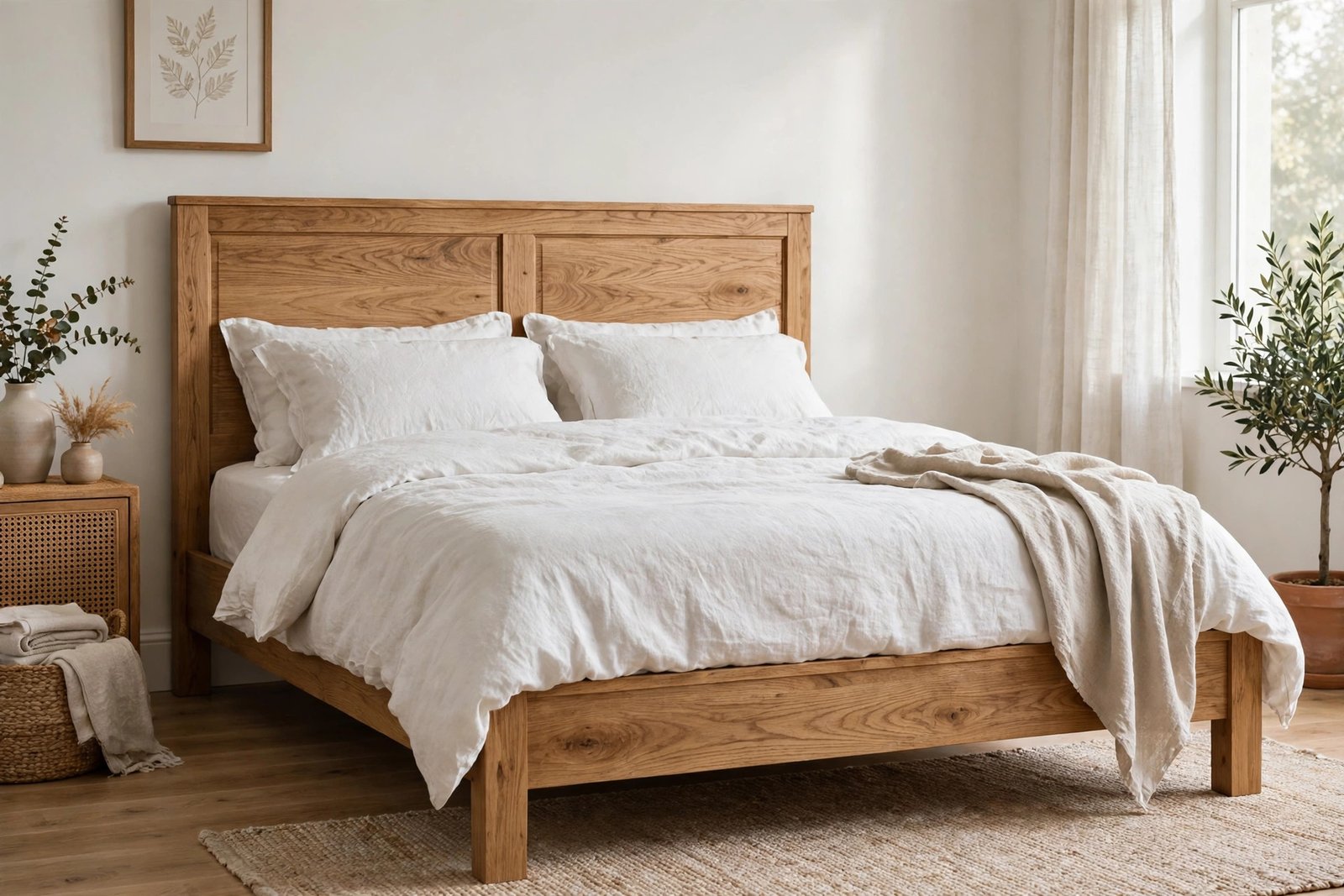
What Makes a Good Bed Frame Wood
Four qualities matter most. Hardness decides dent and scratch resistance: hardwoods like oak and maple shrug off knocks that would mark pine. Stability decides whether the frame stays square and quiet as humidity changes through the seasons; some woods move more than others, and a frame that warps will creak. Strength decides load-bearing: a good bed wood supports two adults, a heavy mattress and years of movement without the side rails bowing or the joints loosening. Finally, appearance and finish decide how the wood looks in your room and how it ages — some woods darken beautifully, others stay pale, and some take stain far better than others.
Weight is a practical factor people forget until moving day. A solid oak or teak king frame is heavy, which is part of why it feels so solid, but it is harder to move and assemble. Pine and engineered wood frames are much lighter, which suits renters and anyone who rearranges often. Cost follows hardness and rarity fairly closely: pine is cheapest, oak and maple sit in the middle, and walnut and teak command a premium. The trick is to match the wood to your real life — a guest-room bed does not need the same timber as the bed you will sleep in for twenty years. If you are comparing furniture woods more broadly, our guide to which wood is best for furniture is a useful companion.
Oak: The Best All-Rounder
Oak has been the default bed wood for centuries, and it earns that status. It is hard, dense and strong, with a prominent grain that looks good in almost any finish, from pale natural oak to dark stained finishes. Red oak and white oak are both used; white oak is slightly harder and more moisture-resistant, while red oak is a little more affordable and takes stain very evenly. Either will support a heavy mattress for decades without bowing, provided the slats and centre rail are properly built.
Oak’s main drawbacks are weight and price. A solid oak frame is a two-person assembly job, and a quality oak bed costs noticeably more than pine. It is also a wood that shows its grain strongly, which suits rustic, traditional and transitional bedrooms but can feel too busy in a very minimal room. For most buyers, though, oak is the safest recommendation in this guide: durable enough for daily use, beautiful enough to keep for decades, and widely available, so you can find a style you like without hunting. It also ages gracefully, darkening slightly and developing a warm patina rather than looking worn out.
Walnut and Teak: The Premium Choices
Walnut is the wood people choose when they want a bed to be a statement. Its colour is naturally rich — deep chocolate brown with subtle variation — and its grain is finer and more elegant than oak’s, which makes it ideal for modern, mid-century and luxury bedrooms. Walnut is hard and stable, so it holds joints well and resists warping, but it is expensive, and cheaper “walnut” beds are often walnut veneer over a cheaper core. That is not necessarily a problem — a good veneer over plywood can be excellent — but the price should reflect it, and you should check what is underneath.
Teak is a different kind of premium. Naturally oily, it is exceptionally resistant to moisture, insects and decay, which is why it is used for boats and outdoor furniture. Indoors, that means a teak bed frame is almost indestructible in humid climates or damp-prone rooms, and it needs very little finishing — many owners simply oil it once a year. Its golden-brown colour deepens with age, and its grain is straight and calm. The downsides are cost and weight, and the need to check sourcing: good teak should come from responsibly managed plantations. For a direct comparison of two popular tropical hardwoods, see our guide to teak wood versus sheesham wood.
Pine and Maple: Budget and Bright Alternatives
Pine is the most common budget solid wood, and it has real virtues. It is light, easy to work with, affordable, and its pale colour and visible knots suit farmhouse, Scandinavian and rustic bedrooms beautifully. A pine bed is easy to move, easy to assemble, and easy to repaint or restain if your taste changes. The trade-off is softness: pine dents and scratches far more easily than oak or maple. In a child’s room or a guest room that is fine, but for a main bed used daily, expect marks over time, especially on the headboard and footboard where bags and feet make contact.
Maple is the opposite end of the accessible spectrum: pale, hard and fine-grained, with a clean, modern look that suits minimalist and contemporary bedrooms. It is harder than oak, so it resists dents well, and it takes a clear finish beautifully, staying light rather than yellowing dramatically. Maple can be harder to stain evenly — it is prone to blotching — so most maple beds are sold in natural or lightly tinted finishes, which is actually a strength if you like pale wood. Price sits between pine and walnut: more than pine, less than walnut, and a sensible investment for a bed you plan to keep long-term. Protect whichever wood you choose with the advice in our guide to how to protect wooden furniture from termites and other damage.
Engineered Wood: When It Works and When It Does Not
Engineered wood covers a wide range, and the name alone tells you very little. At the good end, plywood-core frames with a real wood veneer are stable, strong and resistant to warping, because plywood’s layered construction cancels out the movement of solid wood. A well-made plywood bed with a thick oak or walnut veneer can look and perform almost like solid wood, at a lower price and weight. Medium-density fibreboard (MDF) with veneer is also common; it is smooth and stable, but heavier than plywood and weaker at screw joints, so it suits headboards and panels better than load-bearing rails.
At the cheap end, particleboard frames — often sold as “wooden” beds at very low prices — are the ones to avoid for a main bed. Particleboard crumbles around screws, sags under a heavy mattress, and swells badly if it gets damp. If you buy engineered wood, ask what the core is, check the thickness of the side rails, and look for a centre support rail on anything larger than a double. A good engineered bed is a smart buy; a bad one is the bed that creaks after six months. Our comparisons of engineered wood versus solid wood furniture and plywood versus MDF for furniture explain these materials in more depth.
Construction Checks Before You Buy
Mortise-and-tenon or bolted joints outlast staples and basic screws; wiggle the frame in the shop if you can.
Slats should be no more than 7–8 cm apart, solid rather than thin, and supported by a centre rail on larger beds.
For veneered beds, ask whether the core is plywood, MDF or particleboard — it changes everything.
Sit, shift and lie on the display bed; creaks now will only get worse at home.
A good lacquer or oil finish protects against spills and wear; unfinished wood stains at the first accident.
Choose the wood colour against your flooring and existing furniture, not against the showroom lighting.
Finally, plan for care. Dust wooden frames weekly, wipe spills promptly, and re-oil oiled finishes once a year. Keep beds out of direct, prolonged sunlight, which fades and dries wood, and avoid placing them hard against a damp exterior wall. With those small habits, a good wooden bed frame is a twenty-year purchase, not a five-year one. For keeping the finish looking new, see our guide to types of wood polish for furniture.
Frequently Asked Questions
What is the best wood for a bed frame overall?
Oak, for most people: it balances hardness, strength, appearance and price better than any other common wood, and a well-built oak frame lasts decades.
Is pine strong enough for a bed frame?
Yes, for light to moderate use, especially with thick rails and a centre support. Pine dents easily, so it suits guest rooms, children’s rooms and rustic styles better than a heavily used main bed.
Is engineered wood bad for bed frames?
Not necessarily. Plywood-core frames with real veneer are strong and stable. Cheap particleboard frames are the problem: they sag, crumble at screws and swell with moisture.
Is walnut worth the extra cost?
If you want a rich, dark, elegant look and plan to keep the bed long-term, yes. If budget is tight, a walnut veneer over plywood gives a similar look for less, provided the core is good quality.
Which wood is best for a humid climate?
Teak, thanks to its natural oils and moisture resistance. White oak is a good second choice. Avoid untreated particleboard and unsealed MDF in damp rooms.
How can I stop a wooden bed frame creaking?
Tighten all bolts, add felt pads or wax to joints, check that slats are evenly spaced and supported, and make sure the frame sits level on the floor. Persistent creaking often means a loose joint or a sagging rail.
Choose the Wood for Your Real Life
There is no single best wood for a bed frame, only a best match for your budget, your room and how long you plan to keep the bed. Oak for the all-rounder, walnut for luxury, teak for humidity, maple for a pale modern look, pine for a budget-friendly start, and quality engineered wood for smart value — each has a place.
Before you buy, check the joints, the slats and the centre rail, and ask what is under the veneer. A bed frame chosen on those grounds, in the right wood, will be quiet, strong and beautiful for far longer than one chosen on colour alone.