
How to Clean Grout: A Homeowner’s Complete Guide
Grout is the quiet workhorse of every tiled home. It holds your kitchen backsplash together, seals your bathroom floor, and frames every shower tile — and it is also the first thing to look tired, because its porous surface soaks up grease, soap scum, and everyday grime like a sponge.
The good news is that cleaning grout is one of the most satisfying DIY jobs a homeowner can do. With the right method for your grout type and soil level, you can take dingy lines back to a crisp, like-new finish in a single afternoon — and this guide covers when it is time to call a professional instead.
Key Takeaways
- Match the method to the mess: mild dish-soap scrubbing for upkeep, baking soda or hydrogen peroxide for stains, oxygen bleach for deep restoration.
- Know your grout type first — natural stone tiles need pH-neutral cleaners, since acids and bleach can etch the stone itself.
- Always test any cleaner in a hidden spot and ventilate the room before using stronger products.
- Sealing clean grout every 12 to 24 months is what keeps the results lasting instead of fading in weeks.
- Call a professional when grout is cracked, crumbling, or stained beyond what scrubbing can fix — repairs and regrouting are jobs worth outsourcing.
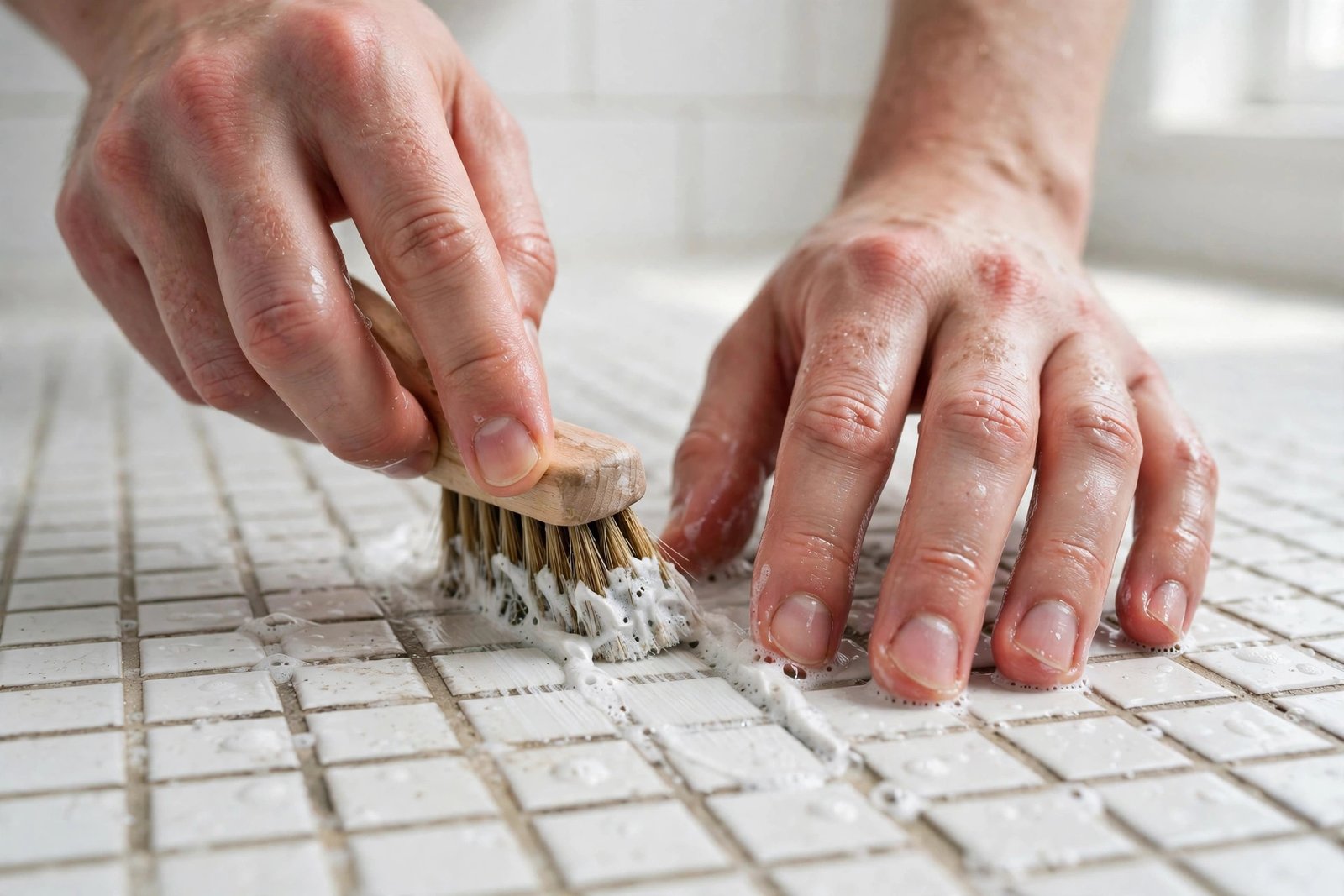
What Grout Is (and Why It Gets Dirty)
Grout is the cement- or epoxy-based filler between your tiles, and standard cement grout is naturally porous — tiny pores along every line soak up grease, soap scum, and mop water. That is why grout darkens even in well-mopped homes: ordinary mopping pushes dirty water into the pores instead of lifting it out. Epoxy grout resists staining far better, but most kitchens and bathrooms have cement-based grout.
Before choosing a cleaner, check your tile type. Natural stone — marble, travertine, slate, limestone — is acid-sensitive, so vinegar and harsh bleach can etch the tile while you clean the lines. Ceramic and porcelain tiles, which cover most backsplashes and bathroom floors, are far more forgiving.
Before You Start: Supplies and Safety
Gather a stiff nylon grout brush, a spray bottle, a bucket of clean water, and old towels. Avoid metal brushes — they scratch glaze and chip edges. Ventilate the room, wear rubber gloves, and never mix products: bleach combined with vinegar or ammonia-based cleaners releases dangerous fumes. Finally, pick a hidden test spot — behind the toilet or under the fridge — and try every new cleaner there first.
The Best DIY Methods for Cleaning Grout
Start with the gentlest method that could work and escalate only if needed. Work in small sections of three or four tiles so cleaners do not dry before you scrub and rinse them.
Method 1: Dish Soap and Warm Water (Routine Upkeep)
For grout that is only slightly dull, a few drops of dish soap in warm water is genuinely enough. Scrub the lines with your grout brush using short back-and-forth strokes, then wipe with a clean damp cloth and rinse with fresh water. Change your rinse water frequently — mopping with gray water is one of the most common reasons grout never looks clean.
Method 2: Baking Soda and Vinegar Paste (Moderate Stains)
Mix baking soda with just enough water to form a thick paste, spread it over the grout lines, and let it sit for ten to fifteen minutes. Then spray plain white vinegar over the paste — the fizzing helps lift surface grime — and scrub. Rinse thoroughly. Reserve this method for ceramic and porcelain tiles only; on natural stone, use a baking-soda-and-water paste with no vinegar.
Method 3: Hydrogen Peroxide (Stubborn Discoloration)
Standard 3% hydrogen peroxide is a gentle bleach alternative that works well on yellowed or grayed grout. Apply it to the lines, let it sit for ten minutes, then scrub and rinse. For extra power, make a paste of hydrogen peroxide and baking soda in roughly a two-to-one ratio, wait fifteen minutes, and scrub. Safe for most grout colors, but spot-test colored grout first.
Method 4: Oxygen Bleach (Deep Restoration)
For grout neglected for years, oxygen bleach powder (sodium percarbonate) is the strongest DIY option short of hiring a pro. Dissolve it in warm water per the package directions, spread it over the grout, and let it dwell fifteen to thirty minutes without drying out. Scrub, rinse thoroughly, and let the floor dry completely before judging — grout always looks darker when wet. Oxygen bleach is color-safe and kinder to grout than chlorine bleach, which weakens cement grout with repeated use.
Method 5: Steam (Chemical-Free Deep Cleaning)
A steam cleaner with a brush attachment blasts hot vapor into the pores and loosens grime without chemicals — ideal for homes with small children, pets, or sensitivities. Move slowly, then wipe each section with a microfiber cloth before grime re-deposits. Skip steam on natural stone and on cracked or crumbling grout, since heat and moisture can worsen existing damage.
Room-by-Room Grout Cleaning Tips
Different rooms soil grout in different ways, so tailor your approach to what the grout actually faces.
Kitchen Backsplash and Floor
Kitchen grout collects cooking grease, which ordinary soap sometimes leaves as a sticky film. Add a degreasing pass — hot water with dish soap, scrubbed well — before moving to baking soda or peroxide methods. Wipe the backsplash weekly while residue is fresh. If crumbs and grease keep finding their way into corners, keeping your other floors on a regular cleaning schedule stops tracked-in dirt from reaching the tile.
Bathroom Floor and Shower
Bathroom grout battles soap scum, body oils, hard-water minerals, and mildew. Squeegee shower walls after use and run the exhaust fan during and after every shower — most grout mildew is a ventilation problem wearing a cleaning-problem costume. For mildew spots, hydrogen peroxide or an oxygen-bleach soak works without the harshness of chlorine bleach. While you are deep-cleaning, check the shower drain too — a slow shower drain leaves standing water that keeps grout damp and invites mildew back within days.
Entryways, Mudrooms, and Living Areas
Entryway grout darkens from foot traffic and outdoor grit, so prevention does half the work: a good doormat, a no-shoes habit, and dry-mopping before wet-mopping so loose dirt does not turn into mud on the grout lines. In open-plan spaces where tile meets soft furnishings, pairing bright grout with a freshly cleaned couch makes the whole living area look newly decorated.
Protect Your Work: Sealing Grout After Cleaning
Cleaning grout without sealing it is like washing a car in a dust storm — the pores stay wide open and ready to re-stain. Once grout is fully clean and completely dry (wait 24 to 48 hours), apply a penetrating grout sealer with a small brush, wiping excess off the tile faces before it hazes. Reapply every one to two years, sooner in showers and busy entryways. The water-drop test tells you when: if water beads, the sealer is working; if it soaks in, reseal.
DIY vs. Professional Grout Cleaning: When to Call a Pro
Call a professional grout cleaning service when you see cracked, crumbling, or missing grout — those are repairs, not cleaning jobs, and they need regrouting. If large areas stay dark after an oxygen-bleach treatment, a pro’s truck-mounted hot-water extraction reaches deeper than any home scrubber. Persistent musty smells or grout that stays damp for days can signal water intrusion behind the tile, which deserves a professional assessment before mold becomes the bigger problem.
For a typical home, professional cleaning costs a few hundred dollars depending on square footage — often less than the time and products a homeowner would spend fighting a losing battle. Get quotes from two or three local services, ask whether sealing is included, and request before-and-after photos of similar jobs.
6 Pro Tips for Grout That Stays Clean
Blot spills the day they happen. Grout stains are set by time — yesterday’s tomato sauce is ten times harder to remove than today’s.
One bucket for clean solution, one for wringing. Single-bucket mopping redistributes grime straight into the grout lines.
Run the fan during and 20 minutes after every shower. Dry grout resists mildew; damp grout invites it.
Reseal grout every 12 to 24 months. A maintained sealer makes every future cleaning easier.
Chlorine bleach and acidic cleaners weaken cement grout over time. Oxygen bleach and peroxide brighten without the damage.
Tinted grout can fade with aggressive scrubbing. Spot-test first, and consider a grout colorant pen for uneven lines.
Frequently Asked Questions
How often should I clean my grout?
Wipe high-traffic lines weekly with dish soap and water, and deep-clean kitchens and bathrooms every one to three months. A busy family entryway needs more attention than a guest-bath floor, and sealed grout stretches every interval further.
Can I use bleach to clean grout?
Occasionally and with caution, but it is not the best routine choice. Chlorine bleach can weaken cement grout and damage colored grout over time. Hydrogen peroxide or oxygen bleach whiten just as well with far less risk.
Why does my grout look dirty again right after cleaning?
Usually it is dirty rinse water mopped back into the pores, or cleaner left to dry on the surface instead of being rinsed. Change water often, rinse twice, and let grout dry fully — wet grout always looks darker. If it still darkens fast, the sealer has worn off.
Is vinegar safe for all grout?
Vinegar is safe for cement grout but unsafe for natural stone tiles — marble, travertine, slate, and limestone etch on contact with acid. On ceramic and porcelain tile it is fine, and a vinegar-free baking-soda paste works on sensitive surfaces.
How much does professional grout cleaning cost?
Most homeowners pay a few hundred dollars depending on area size and condition, with sealing often extra. For widespread deep staining or damaged grout, one professional visit usually beats repeated DIY attempts.
Bright Grout, Whole New Room
Clean grout has an outsized effect on how a room feels — crisp lines make tile look newer, floors look larger, and the whole space feel cared for. Start with the gentlest method, work room by room, and seal your results so the effort lasts.
Ready to tackle it this weekend? Pick your worst room and start with the dish-soap pass — you will see results within the first ten minutes. And if the grout is cracked or crumbling instead of just dirty, skip the scrubbing and get a professional regrouting quote first.