
How to Get Rid of Carpenter Ants: A Homeowner’s Complete Guide
Finding large ants on your windowsill is alarming — and for good reason. Carpenter ants excavate the wood inside your home to build nests, and a mature colony can weaken window frames, door frames, and even structural beams. The good news: you can get rid of carpenter ants yourself with a methodical plan rather than the first spray can you find.
This guide shows you exactly how to get rid of carpenter ants: confirming the pest, finding the nest, treatments that actually work (and ones that backfire), and keeping them from coming back. Written for regular homeowners — no pest-control license required.
Key Takeaways
- Confirm the pest first: large (6–13 mm), dark reddish-black ants with bent antennae and a narrow waist are carpenter ants.
- Find the nest before you treat — spraying foragers only scatters the colony and makes it harder to kill.
- Slow-acting baits beat sprays: foragers carry bait back to the queen, which is what actually destroys the colony.
- Eliminate moisture and decaying wood — carpenter ants need damp wood to get started.
- Call a professional if you see frass (sawdust-like debris) falling from walls or ceilings; that signals a large, established nest.
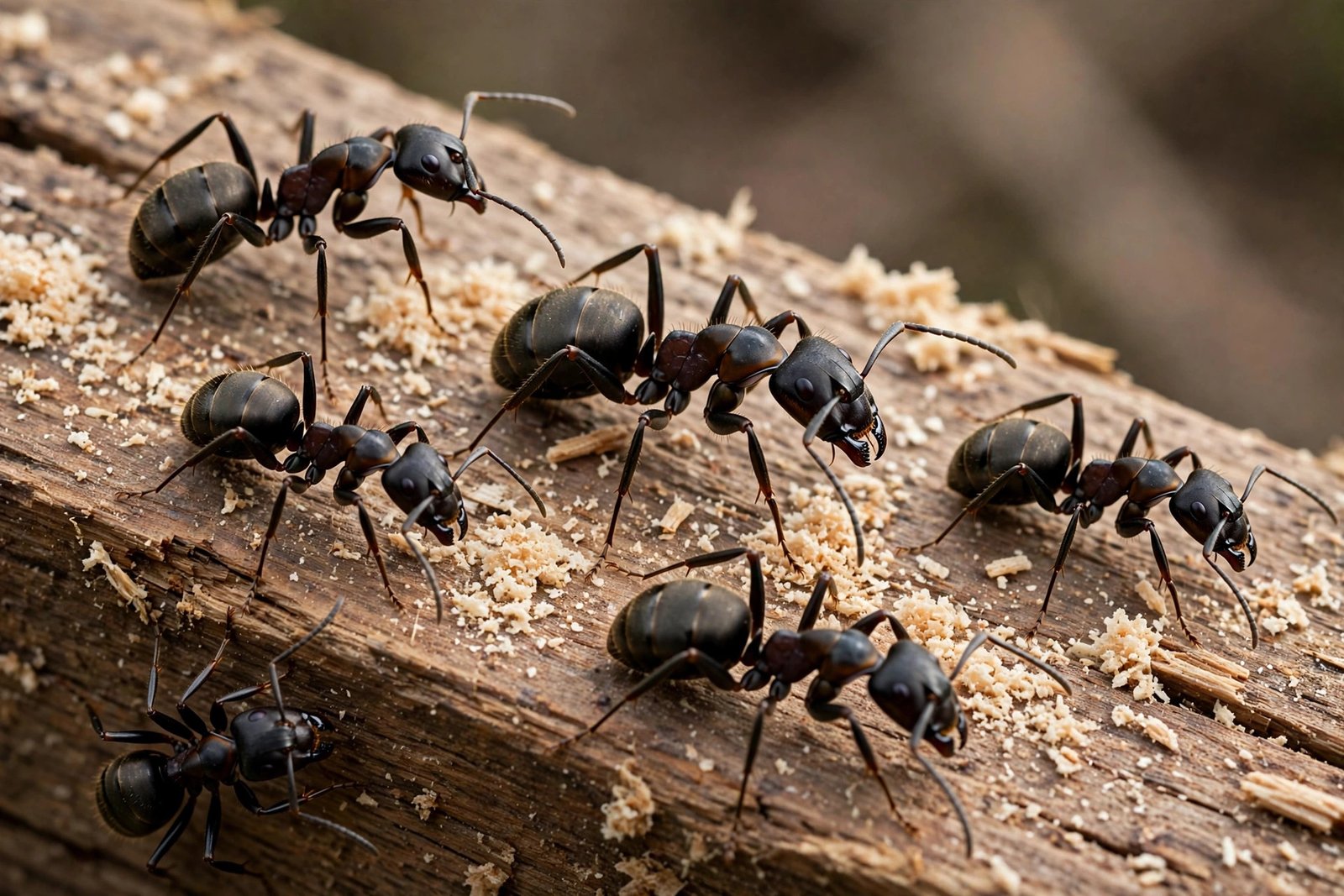
How to Identify Carpenter Ants
Treating the wrong pest wastes time and money, so start with identification. Carpenter ants are among the largest home ants at 6 to 13 millimeters, typically dark reddish-brown or black, with a narrow segmented waist and distinctly elbowed antennae. In spring you may spot winged swarmers — reproductives leaving to start new colonies. Swarms indoors mean a nest is inside your house.
The biggest clue is their frass. Unlike termites, carpenter ants do not eat wood; they chew it to carve nesting galleries and push the debris out. That mix of fine sawdust, wood shavings, and dead ant bits piles up beneath nest openings — usually near baseboards, window sills, door frames, or decks. You may also hear faint rustling inside walls at night as the colony chews. Only seeing the occasional small ant in your kitchen? Our guide on how to get rid of ants in the kitchen covers common sugar ants, which need a different approach.
Step 1: Find the Nest
Locating the nest — ideally the parent colony — is the most important step in getting rid of carpenter ants. Parent colonies sit in moist, decaying wood. Start outdoors: dead stumps, fallen logs, landscape timbers, mulch piled against the foundation, and woodpiles against the house. Check any branch or shrub touching your roof or walls — these are the bridges ants use to get inside.
Then move indoors, focusing on where moisture and wood meet: under sinks and bathtubs, window frames with failed caulk, door thresholds, crawl spaces, attics near roof leaks, and subfloors under dishwashers or washing machines. Probe suspect wood with a flat screwdriver — wood that gives way or sounds hollow likely houses a colony. Try the nighttime trick: set out a small dish of honey after dark, then follow the foragers’ trail back toward the nest.
Signs You Have a Parent Colony Inside
- Winged swarmers appearing indoors, especially in spring
- Consistent ant traffic on the same trail at night, week after week
- Fresh frass piles that reappear after you sweep them away
- Rustling or chewing sounds inside a wall or ceiling at night
- Wood that feels soft, spongy, or hollow when you press or probe it
Step 2: Bait the Colony, Not the Foragers
Most homeowners make the same mistake: spraying the ants they can see. The foragers on your counter are less than 10 percent of the colony. Contact sprays kill them on the spot, which can trigger budding — the colony splits, leaving you with two or three colonies where you had one. To truly get rid of carpenter ants, you need the queen, and slow-acting bait carried home by foragers is how you reach her.
Use both protein-based and sugar-based baits. Carpenter ants favor protein in spring (for raising young) and lean toward sugars later in the year. Place baits along the trails you mapped and near nest entrances — never right where you have sprayed, since residue repels them and ruins the bait. Expect one to three weeks. Do not clear the bait when activity spikes at first; more foraging around the bait means more ants are carrying it home, which is exactly what you want.
Bait Types Worth Trying
- Gel baits (sugar-based): for trails along baseboards and window frames; place pea-sized dots every few feet.
- Granular protein baits: best in spring during brood rearing; scatter lightly around outdoor nest entrances.
- Enclosed bait stations: safest around pets and children; secure them near entry points and under sinks.
- Borax-based homemade baits: boric acid with sugar water or peanut butter can work, but commercial formulas act slowly enough for the colony to spread the dose — homemade versions often act too fast.
Step 3: Treat Nests You Can Reach Directly
If you found an actual nest cavity — in a log, a hollow door frame, or accessible trim — treat it directly with insecticidal dust puffed inside. The ants track particles deep into the galleries as they move. Seal the entrance with caulk afterward so the dust stays put. Outdoors, a non-repellent perimeter treatment around the foundation, door frames, and window frames creates a zone foragers cross undetected, carrying the active ingredient home on their bodies.
Do not seal cracks until the colony is dead. Sealing is essential prevention — but around a live colony it traps ants inside your walls and forces them to chew new paths through interior wood. Kill the colony with bait first, then seal.
Step 4: Remove What Attracted Them — Moisture and Decaying Wood
Carpenter ants do not eat wood, but they need soft, moist, or decaying wood to start a nest — a colony cannot establish in dry, sound lumber. So the long-term fix is a home maintenance project: eliminate what invited them. Repair leaky faucets, appliance connections, and roof flashing; keep gutters discharging several feet from the foundation; and hold crawl-space humidity below 60 percent.
Then fix the wood itself: replace rotted window frames, door thresholds, deck boards, and siding. Move firewood at least 20 feet from the house, raised off the ground. Keep a six-inch gap between mulch and siding, and trim branches and shrubs so nothing touches the roof or walls — those are the highways carpenter ants use.
When to Call a Professional
DIY handles most carpenter ant problems, but call a licensed professional if frass is falling from inside walls or ceilings (a large hidden nest), multiple rooms show heavy activity (satellite colonies), or structural wood is damaged. Professionals have foam treatments for wall voids and non-repellent products not sold at retail. Also call if a month of baiting brought no reduction — the parent colony is likely somewhere you have not found, often near a slow hidden leak. And if you are fighting a stubborn mixed infestation, confirm the pest first: some homeowners read guides like how to get rid of cockroaches permanently when the real culprit is the carpenter ant nest they never located.
Preventing Carpenter Ants From Coming Back
Once the colony is gone, prevention is mostly good home upkeep. Inspect the exterior every spring for moisture damage, cracked caulk, and wood-to-soil contact. Keep pet food and trash sealed — protein and grease spills still attract foragers. Seal cracks around pipes, wires, and vents, and replace worn weatherstripping.
A slow drip under a sink can soften wood enough to attract a colony in a single season. Moisture control is the number-one prevention tool.
Trim any tree limb or shrub that touches your roof or walls. Carpenter ants almost always enter through these natural highways first.
Keep woodpiles at least 20 feet out and raised off the soil. Stacking firewood against the siding is an engraved invitation.
Walk the perimeter each spring checking caulk, weatherstripping, and mulch depth. Ten minutes of inspection beats a summer of baiting.
How do I know if carpenter ants are actually damaging my house?
Look for frass (fine sawdust mixed with insect parts) under nest openings, hollow-sounding wood, and winged ants indoors in spring. Trim damage is mostly cosmetic; damage to beams or joists needs a professional.
Are carpenter ants as destructive as termites?
No. Termites eat wood continuously, so their damage spreads faster. Carpenter ants only excavate wood for nesting, so damage stays more localized — but a large established colony can still weaken structural wood, so do not ignore it.
How long does it take to get rid of carpenter ants with bait?
Expect one to three weeks for the bait to circulate through the colony and kill the queen, sometimes longer for large colonies. Do not disturb the bait stations during this window — consistent access is what makes the treatment work.
Can I just seal up the holes where I see ants coming in?
Not until the colony is dead. Sealing around a live colony traps ants inside your walls and forces them to chew new routes. Kill the colony with bait first, then seal.
Why do carpenter ants keep coming back every spring?
It usually means a satellite colony survived nearby — in a dead stump, woodpile, or neighbor’s yard — or the moisture problem was never fixed. Re-inspect for damp wood and track trails back to the source.
Your Carpenter Ant Action Plan
Getting rid of carpenter ants is a project, not a purchase: confirm the pest, find the nest, bait patiently until the poison reaches the queen, treat accessible nests directly, then fix the moisture and wood problems that invited them in. Follow that sequence and you will keep them from ever coming back.
Protect Your Home From Pests Year-Round
Carpenter ants are only one of the uninvited guests that target wooden homes. A simple seasonal routine — checking for moisture, sealing gaps, and keeping wood off the soil — prevents most infestations before they start. Bookmark this guide and run the prevention checklist each spring.
2 thoughts on “How to Get Rid of Carpenter Ants (Nest-to-Prevention Guide)”