
Leather Boots Outfit Ideas for Winter Styling
A good pair of leather boots is the backbone of a winter wardrobe. Unlike trainers or delicate heels, leather boots handle cold pavements, rain and long days — and they make almost any outfit look more put-together. But “leather boots” covers a lot of ground: ankle boots, knee-highs, Chelseas and riding boots all behave differently, and each one suits different outfits, occasions and weather. Choosing the right style — and styling it well — is what separates a boot collection that works from one that gathers dust.
This guide breaks down the four essential leather boot styles, how to wear each one, and the care routine that keeps leather looking expensive for years rather than one season.
Key Takeaways
- Start with black or dark brown leather — both go with everything in a winter wardrobe.
- Ankle boots are the most versatile; knee-highs are the most elegant; Chelseas are the easiest everyday boot.
- Match boot height to hemline: knee-highs with skirts and dresses, ankle boots with jeans and trousers.
- A block heel beats a stiletto for winter pavements — comfort and grip matter more than height.
- Waterproof leather before first wear and condition it monthly through winter.
- Quality leather, resoled when needed, costs less per winter than replacing cheap boots yearly.
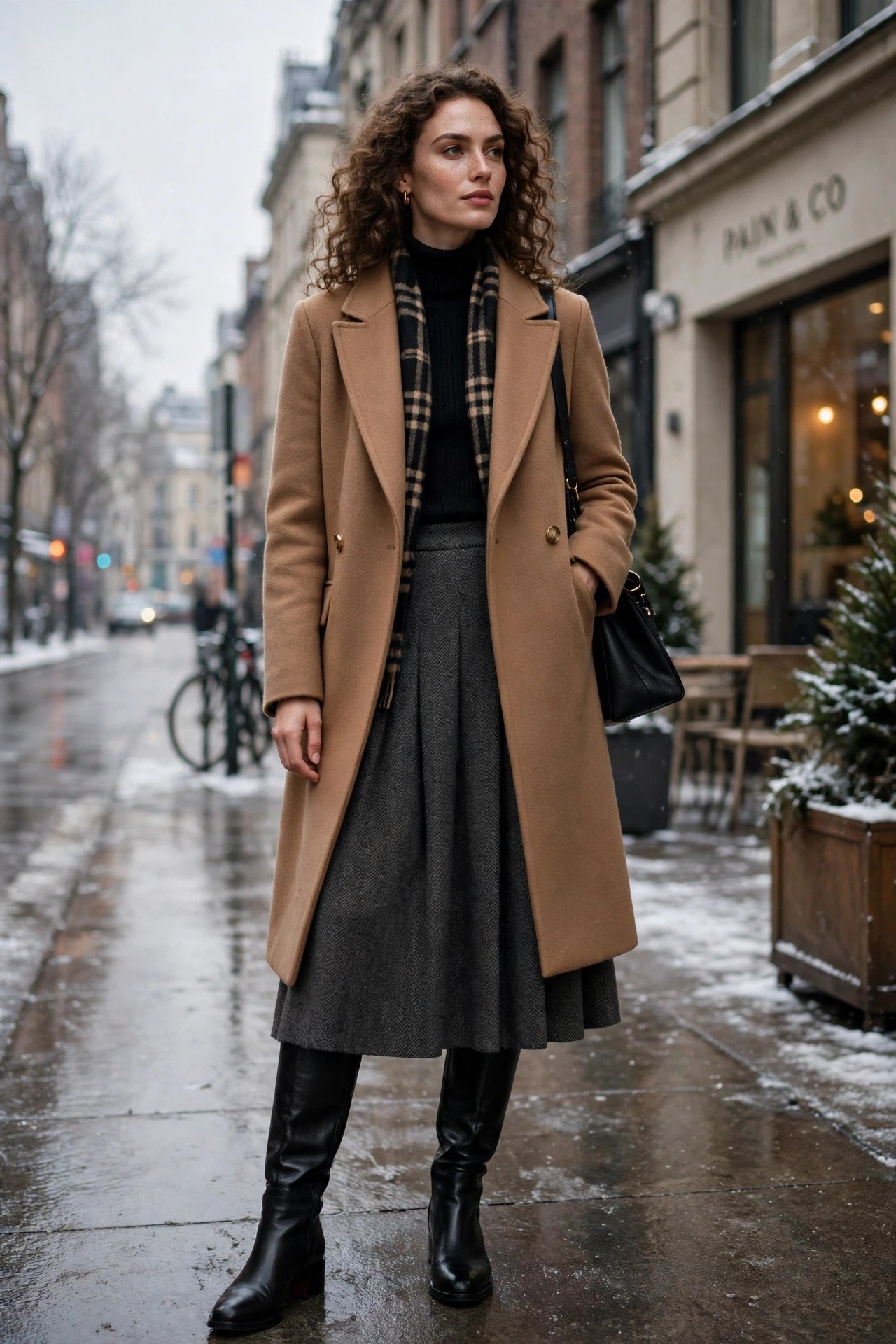
Ankle Boots: The Everyday Workhorse
If you own one pair of leather boots, make it ankle boots. They work with straight jeans, tailored trousers, midi skirts and dresses, and they transition from office to evening without a change of shoes. The most versatile version is a black or dark brown leather ankle boot with a block heel of around 4–5 cm and a slightly pointed or almond toe — high enough to elongate the leg, low enough to walk in all day. A side zip makes them easy to get on and off, while a Chelsea-style elastic panel gives a cleaner, pull-on look.
Styling ankle boots is mostly about the hem. With jeans, a straight or slightly cropped leg that shows a sliver of ankle (or sits just above the boot) looks sharpest; very long jeans bunched over ankle boots look messy. With skirts, a midi length that falls just above or below the boot top creates a clean line — avoid skirts that end exactly at the boot top, which visually cut the leg in half. And with trousers, a tapered or straight leg worn over a slim ankle boot is the polished choice. For evening, swap to a heeled ankle boot in a softer leather or suede finish. Our knee-high boots outfit ideas cover the taller alternative in detail.
Knee-High Boots: Elegance and Warmth in One
Knee-high leather boots are winter’s most elegant option, and they are also the warmest — full leg coverage makes a real difference on cold days. They shine with skirts and dresses: a knee-high boot under a midi skirt or dress creates one long, uninterrupted line, especially when the boot and tights are the same colour. Black boots with black tights is the simplest leg-lengthening trick in winter styling, and it works with almost any skirt colour on top.
Fit is everything with knee-highs. The boot should sit just below the knee without gaping at the calf or cutting in — if you are between sizes, look for styles with a stretch panel or an adjustable buckle. Flat or low-heeled knee-highs suit daytime and walking; a block-heeled pair takes the same outfit to dinner. Avoid pairing knee-highs with very short skirts in cold weather unless you are prepared for the chill, and never tuck wide-leg trousers into knee-high boots — the bunching ruins both pieces. A slimmer alternative for dressier evenings is the heeled knee-high with a pointed toe, which pairs beautifully with a velvet or satin midi. See our winter party outfit ideas for evening combinations.
Chelsea Boots: The Easy, Endless Classic
Chelsea boots — the ankle boot with elastic side panels and a pull tab — are the easiest boots you will ever own. No zips, no laces, just pull on and go. Their clean, minimal design makes them the most casual of the leather boots, which is exactly their strength: they ground jeans, knit dresses and oversized coats without adding fuss. A black leather Chelsea with a low block heel is the default weekend boot for good reason, and a brown or tan pair softens darker winter outfits beautifully.
The styling rule for Chelseas is simple: keep the rest of the outfit relaxed too. They pair naturally with straight jeans, chunky knits and wool coats, and less naturally with very formal tailoring — a Chelsea with a sharp suit can look underdressed. For wet weather, Chelseas are a strong choice because their pull-on design has fewer seams and fastenings for water to enter, especially when the leather is treated. If you want a smarter flat option, a polished leather Chelsea with a slightly pointed toe bridges the gap between casual and smart better than a rounded-toe version.
Riding Boots and How to Style Them
Riding boots — tall, flat, equestrian-inspired leather boots — bring a polished, countryside feel to winter outfits. They work best with slim trousers or jeans tucked in, with knit dresses and long coats, and they suit a heritage, old-money aesthetic: think wool, tweed, camel and navy. Unlike fashion knee-highs, riding boots are usually flat and sturdy, which makes them genuinely practical for long days on your feet and uneven ground.
The key to wearing riding boots without looking costumey is to keep one other element modern — a contemporary coat, a sleek bag, or a simple knit rather than head-to-toe heritage styling. Brown riding boots with dark jeans and a camel coat is a classic for a reason; black riding boots with a black knit dress and a tailored coat is the city version. Avoid pairing them with very short skirts or overly frilly pieces, which tip the look from equestrian-chic into fancy dress. And because riding boots are an investment, buy them in real leather with a proper sole that a cobbler can replace — they should last a decade, not a season.
Leather Boot Care: The Routine That Pays
Spray or wax new leather boots before they meet rain or slush. Prevention beats repair every time.
A light leather conditioner through winter stops cracking and keeps the leather supple and rich.
Wet boots dried on heat crack and warp. Stuff with newspaper and let them dry at room temperature.
Knee-highs stored upright with trees keep their shape; ankle boots stuffed hold theirs too.
Two pairs worn alternately last far longer than one pair worn daily — leather needs a day to recover.
A cobbler can resole quality leather boots for a fraction of replacement cost, extending life by years.
Frequently Asked Questions
What is the most versatile leather boot style for winter?
Black leather ankle boots with a block heel. They work with jeans, trousers, skirts and dresses, and they suit both work and evening wear.
Should knee-high boots match your tights?
Matching black boots with black tights creates the longest leg line and the cleanest look. It is the simplest styling trick for skirts and dresses in winter.
How do I waterproof leather boots?
Apply a waterproofing spray or wax before first wear, and reapply every few weeks through winter. Always clean the boots first so the treatment bonds properly.
Are Chelsea boots smart enough for work?
A polished leather Chelsea with a pointed toe works for smart-casual offices, but very casual rounded-toe Chelseas suit relaxed dress codes better. Match the boot’s finish to your office.
How long should good leather boots last?
Quality leather boots, conditioned monthly and resoled when needed, should last 5–10 years. Cheap bonded leather rarely survives more than one or two winters.
Build From One Great Pair
You do not need four pairs of boots to have a great winter wardrobe — you need one great pair that fits your life, worn well and cared for properly. Start with ankle boots if you wear trousers and jeans most days, knee-highs if you live in skirts and dresses, or Chelseas if ease matters most. Add a second style only when the first has earned its place. For a smarter flat alternative to boots, our Mary Jane shoes outfit ideas show how a classic flat can carry a polished winter look. Good leather boots, chosen for your real life rather than a fantasy one, are the most cost-effective fashion purchase winter offers.