
First-Time Thanksgiving Hosting Checklist for Hosts
Hosting Thanksgiving for the first time is exciting — and, if you are honest, a little terrifying. The turkey, the timing, the table, the guests, the mountain of dishes: it is a lot to hold in your head at once. The good news is that first-time hosts succeed not by being perfect cooks, but by having a plan. This checklist breaks Thanksgiving hosting into a timeline, a table plan, a guest plan, and a leftovers plan, so nothing important gets forgotten and you actually enjoy your own party.
Start here, then build your menu with our Thanksgiving dinner menu ideas and make-ahead Thanksgiving sides — both are designed to take pressure off the day itself.
Key Takeaways
- Make-ahead dishes are the first-time host’s best friend — the less cooking on the day, the calmer you are.
- Work backwards from serving time: write the oven schedule down, don’t keep it in your head.
- Accept help: guests who offer to bring a dish mean it, and it makes the meal better.
- Plan leftovers before the meal — containers, labels, and a send-home plan save food and fridge chaos.
Two Weeks Before: The Big Decisions
Confirm the guest list and headcount, including children and dietary needs — this number drives everything else, from turkey size to chair count. Choose your menu and keep it realistic: one turkey (or a main alternative), three to four sides, one or two desserts, and drinks. First-time hosts should not attempt more; a short menu cooked well beats a long menu cooked frantically.
Order the turkey now (fresh or frozen — frozen needs 24 hours of thawing per 4–5 pounds in the fridge, so count backwards carefully). Check your equipment: a roasting pan, a meat thermometer (essential — do not guess turkey doneness), enough plates and glasses, and seating for everyone. Borrow or buy what is missing now, not on Thanksgiving week. Plan your table with ideas from our Thanksgiving table decor ideas.
One Week Before: Prep and Shop
Write a shopping list in two parts: non-perishables now, fresh items two days before. Prep anything that holds: cranberry sauce, pie dough, stock, and any freezer-friendly dishes. Our freezer-friendly holiday baking ideas can stock desserts ahead. Clean the house in stages — guest bathroom, dining room, kitchen — rather than one exhausting marathon. Set the table a day or two early if you have the space; it is one less job on the day and it builds excitement.
Thanksgiving Week Timeline
Monday–Tuesday: Shop non-perishables, prep cranberry sauce and pie dough, confirm who is bringing what. Wednesday: Shop fresh items, bake pies, assemble casseroles, set the table, chill drinks, and prep vegetables (peel, chop, store in water). Thursday morning: Turkey in the oven first — it needs the longest and rests for 30 minutes, which is when sides go in. Two hours before serving: Start sides, warm bread, set out appetisers. 30 minutes before: Carve the turkey (or ask a confident guest to carve — it is a great honour to delegate), warm gravy, and plate up.
Write the oven schedule on paper and stick it to the fridge: what goes in, at what temperature, and when it comes out. When five dishes share one oven, a written schedule is the difference between calm and chaos.
The Table: Simple, Warm, and Practical
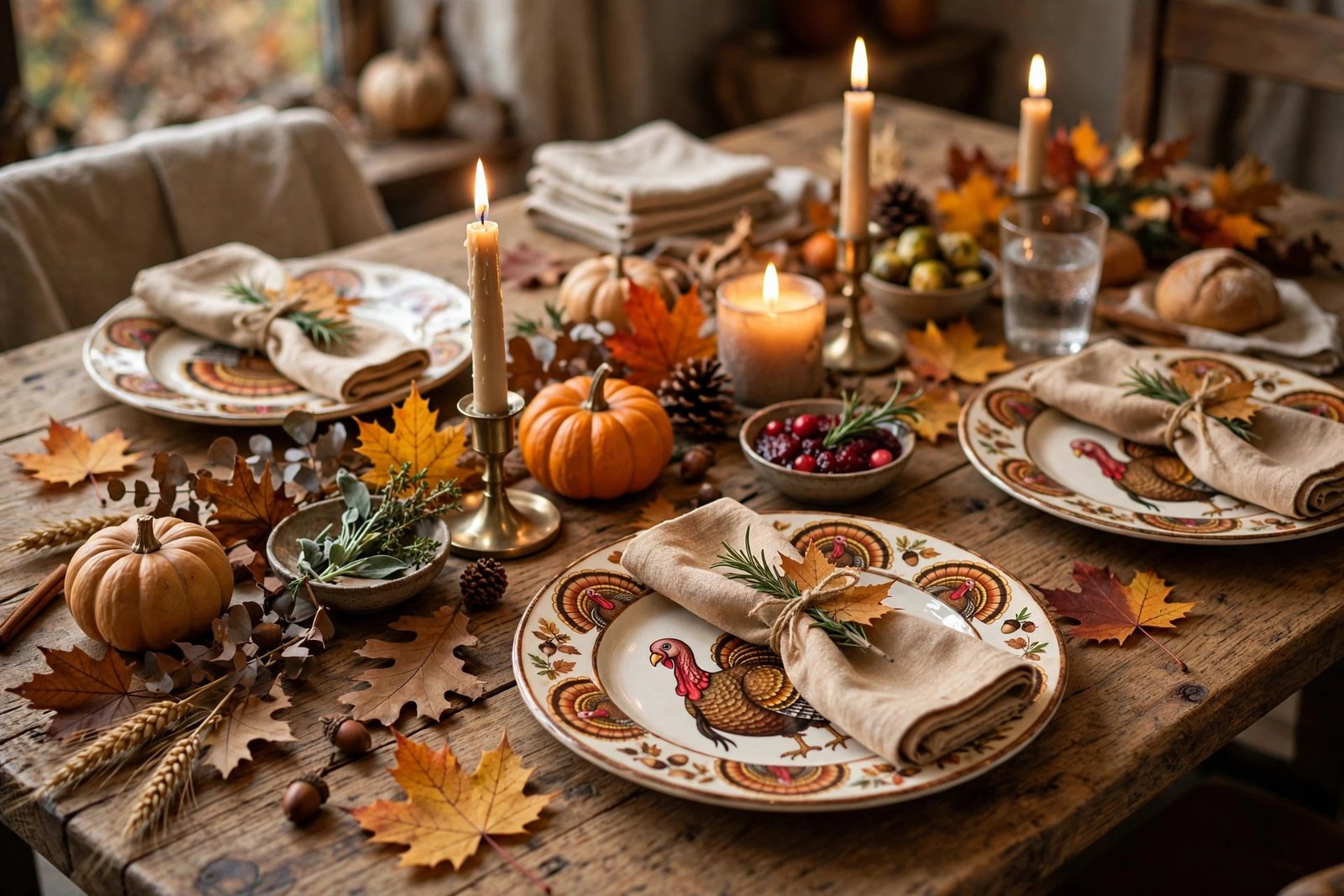
A Thanksgiving table should feel warm, not fussy. A simple runner or tablecloth, a centrepiece of pumpkins, autumn leaves, or candles (keep it low so guests can see each other), and a place card or small favour if you like — that is plenty. Use your everyday plates if they are nice; nobody expects rented china. Put water on the table, keep drinks accessible, and leave room for serving dishes — a crowded table where nobody can reach the food is worse than a plain one.
If space is tight, serve buffet-style: food on a sideboard or kitchen island, guests seated at the table with plates. It is relaxed, practical, and works beautifully in small homes — see our holiday hosting ideas for a small home for layouts that work.
Guests: Seating, Dietary Needs, and Help
Ask about dietary needs when you invite, not on the day, and label dishes that contain common allergens. Seat guests thoughtfully — mix talkers and listeners, keep children near parents, and avoid seating two people who clash side by side. Give guests jobs if they offer: bringing a side, a dessert, or wine genuinely helps and makes them feel part of the day. Have a simple appetiser and drinks ready when guests arrive so early arrivals are comfortable while you finish cooking.
Plan for the unexpected: a vegetarian main (a stuffed squash or a hearty mushroom dish) even if you think everyone eats turkey, a high chair or booster if children are coming, and a quiet corner for anyone who needs a break from the noise.
Leftovers: Plan Them Before the Meal
Leftovers are part of Thanksgiving’s joy — but only if they are handled well. Before guests arrive, set out containers and labels. Within two hours of serving, refrigerate leftovers in shallow containers (they cool faster and stay safe longer). Send guests home with a plate each — it is generous, it clears your fridge, and everyone loves next-day turkey sandwiches. Plan one leftover meal (turkey soup, a casserole, or sandwiches) for the next day, and freeze what you will not eat within three days.
The First-Time Host’s Survival Rules
Rule one: Something will go slightly wrong — the gravy will lump, a side will be late, a glass will break. It does not matter. Guests remember warmth, not perfection. Rule two: Eat before guests arrive, or you will be too busy to eat at all. Rule three: Start the dishwasher early and wash as you go; a mountain of dishes at midnight is the worst end to a lovely day. Rule four: Take a photo before everyone sits down — the table at its best, the turkey carved, the room full — because once dinner starts, the moment is gone.
Frequently Asked Questions
How big a turkey do I need?
Plan on 1 to 1.5 pounds per person (bone-in weight). For 10 guests, a 14–16 pound turkey is about right, with leftovers. A meat thermometer is essential — cook to 165°F in the thickest part of the thigh.
What time should Thanksgiving dinner be served?
Late afternoon (3–5 pm) is traditional and practical: it gives the turkey time, lets guests travel, and leaves the evening relaxed. Pick a time and work the oven schedule backwards from it.
Should I ask guests to bring dishes?
Yes — most guests want to contribute. Assign specific dishes (a side, a dessert, wine) so you don’t end up with four salads and no dessert.
How do I keep food warm if the oven is full?
Use a slow cooker for gravy or mashed potatoes, a warming drawer if you have one, or cover dishes with foil and towels. Stagger cooking so sides finish just as the turkey rests.
Hosting Thanksgiving for the first time is a milestone, not a test. With a realistic menu, a written timeline, and a plan for leftovers, you will feed everyone well — and, just as importantly, enjoy your own Thanksgiving. You have got this.