
Pet Christmas Safety Tips for a Happy Holiday
Christmas is exciting for pets too: new smells, twinkling lights, visitors, and food everywhere. But the festive season also brings more hazards for dogs and cats than any other time of year, from toxic foods and plants to tinsel, candles, and tangled lights. Most Christmas pet emergencies are preventable, and a little preparation before the decorations go up keeps the whole household, pets included, safe and happy.
This guide covers the main Christmas dangers for pets, room by room and risk by risk: toxic foods and plants, dangerous decorations, electrical and fire hazards, and how to keep pets calm when guests and noise arrive. It also explains what to do if your pet does eat something they should not, and when to call the vet immediately.
Key Takeaways
- Keep chocolate, grapes, onions, xylitol, and alcohol completely away from pets at all times.
- Avoid toxic plants: poinsettias, lilies, mistletoe, and holly are all dangerous to pets.
- Skip tinsel and small ornaments at pet height; cats and dogs swallow shiny things readily.
- Secure the tree, hide cables, and never leave candles burning near curious pets.
- Give pets a quiet retreat room during parties, with water, a bed, and a familiar toy.
- Know your vet’s holiday hours and the nearest emergency clinic before Christmas Day.
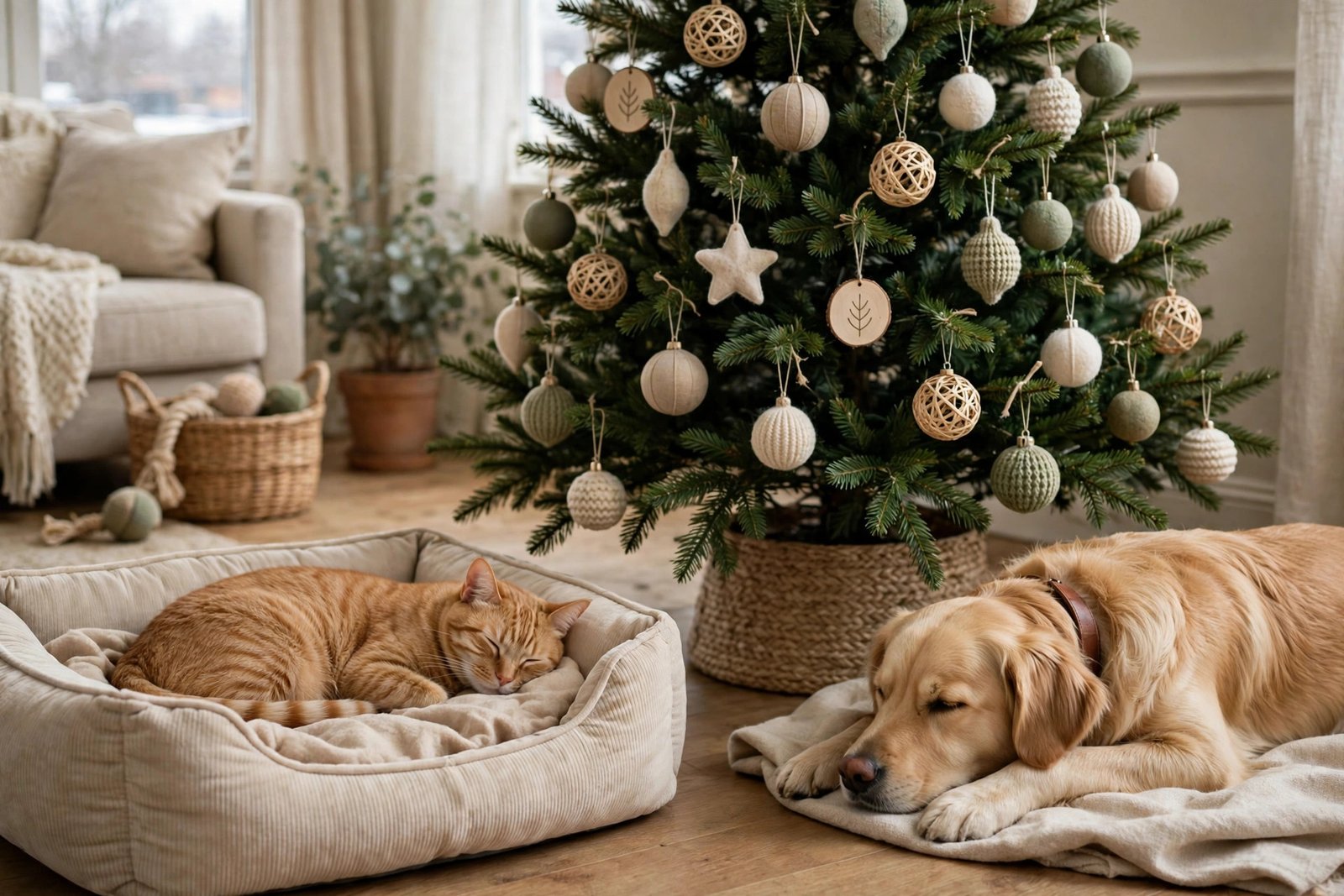
Toxic Foods: The Biggest Christmas Danger
Food is the most common cause of Christmas pet emergencies, because festive food is everywhere and guests often share without realising the risk. Chocolate is toxic to dogs and cats, with dark chocolate the most dangerous, and even small amounts can cause vomiting, restlessness, and worse. Grapes and raisins, found in mince pies, Christmas pudding, and fruit cake, can cause kidney failure in dogs even in small quantities. Onions, garlic, and leeks, present in stuffing and gravy, damage red blood cells. Xylitol, a sweetener in some sugar-free sweets and baked goods, is extremely toxic to dogs.
The safest rule is simple: no human Christmas food for pets, no exceptions, and tell guests the same. Keep food out of reach on high counters, not low coffee tables, and clear plates promptly after meals rather than leaving them where a dog can snatch them. Cooked bones, especially poultry bones, can splinter and injure the gut, so never give pets leftover bones. If you want to include your pet in the celebration, buy pet-safe treats or make a simple pet treat at home, and serve it in their own bowl at mealtime. For more on keeping pets safe during household upheaval, our moving with pets tips cover the same principles of routine, retreat space, and hazard-proofing.
Decorations, Plants, and the Tree
The Christmas tree is a magnet for pets, especially cats. Anchor it securely to a wall or use a heavy, stable base so a climbing cat or an excited dog cannot topple it. Place fragile ornaments high, use shatterproof ornaments at pet height, and skip tinsel entirely: cats in particular love to play with and swallow tinsel, which can cause dangerous intestinal blockages requiring surgery. The same goes for ribbon, string, and small ornaments that fit in a mouth.
Plants deserve equal caution. Lilies are extremely toxic to cats, even a small nibble or pollen on fur can cause kidney failure. Mistletoe, holly, and poinsettias are all toxic to dogs and cats to varying degrees, causing vomiting, drooling, and worse. If you love festive plants, choose pet-safe alternatives like Christmas cactus, or display toxic plants well out of reach, and vacuum fallen leaves and berries promptly. For outdoor safety, our Christmas outdoor lighting safety tips cover cable and light safety that protects pets as well as people. Inside, keep the tree water covered, since stagnant tree water can contain bacteria and fertiliser that upset pets’ stomachs.
Candles, Cables, and Party Stress
Candles, fairy lights, and open fires all need pet-proofing. Never leave a burning candle unattended in a room with pets, and place candles where a wagging tail or a jumping cat cannot reach them. Secure light cables along walls or behind furniture so pets cannot chew them, and unplug decorations when you leave the house or go to bed. Battery-operated candles give the same glow with none of the fire risk, and they are ideal for homes with very curious animals.
Parties are stressful for many pets, even sociable ones. Noise, strangers, doorbells, and disrupted routines can cause anxiety, hiding, or escape attempts. Give your pet a quiet retreat room before guests arrive, with their bed, water, a familiar toy, and a litter tray or garden access, and let them choose whether to join the party or stay away. Keep doors and gates closed, and ask guests not to feed the pet or chase them for cuddles. If your pet is very anxious, talk to your vet in advance about calming options. Decorating safely matters for the whole home, and our Christmas home decor ideas include pet-friendlier styling choices for festive rooms.
Pet Christmas Safety Shortcuts
Tell visitors on arrival: no feeding the pets, no chocolate sharing, and keep doors closed.
Unbreakable ornaments at pet height prevent cuts and swallowed glass if the tree is bumped.
Tinsel is one of the most dangerous decorations for cats. Ribbon and garlands are safer choices.
Cover light cables and secure them out of chewing reach, and unplug decorations overnight.
A quiet room with bed, water, and toys lets pets escape party noise whenever they choose.
Note your vet’s holiday hours and the nearest emergency clinic on the fridge before Christmas.
Frequently Asked Questions
What Christmas foods are toxic to dogs and cats?
Chocolate, grapes and raisins, onions and garlic, xylitol-sweetened foods, alcohol, and cooked bones. Keep all festive food out of pets’ reach and never share table scraps.
Are poinsettias poisonous to pets?
Poinsettias are mildly toxic, causing drooling and vomiting if eaten. Lilies, mistletoe, and holly are more dangerous, especially lilies for cats, which can cause kidney failure.
Is tinsel dangerous for cats?
Yes, very. Cats swallow tinsel while playing, and it can cause intestinal blockages needing emergency surgery. Avoid tinsel entirely in homes with cats.
How can I keep my pet calm during Christmas parties?
Provide a quiet retreat room with bed, water, and toys, keep routines as normal as possible, and let the pet choose whether to socialise. Ask guests not to feed or chase the pet.
What should I do if my pet eats something toxic?
Stay calm, remove any remaining food, note what and how much was eaten, and call your vet or an emergency clinic immediately. Do not induce vomiting unless the vet tells you to.
A Safe Christmas for Every Family Member
Pets are family, and keeping them safe at Christmas is mostly about foresight: secure the tree, skip the tinsel, keep toxic foods and plants out of reach, hide the cables, and give them a quiet place to retreat. Do those things before the celebrations start, and your pets can enjoy the season as much as you do, safely, calmly, and with their own treats in their own bowls. Happy holidays to the whole household, paws included.