
November Home Maintenance Tasks Checklist
November is the last comfortable month to get your home ready for winter. The days are still mild enough for outdoor work, tradespeople still have slots before the holiday rush, and every job you finish now is one you will not be doing in freezing rain or paying emergency rates for in January. A focused November maintenance weekend can prevent burst pipes, heat loss, damp and the slow damage that cold weather does to an unprepared house.
The trick is to work from the outside in, in order of consequence. Roof and gutters first, because water is the most destructive force a house faces. Heating and insulation next, because they decide both your comfort and your bills all winter. Then safety checks, appliances and the small indoor jobs that make the dark months easier to live through. This checklist covers all of it, with realistic time estimates, so you can spread the work across two or three weekends rather than cramming it into one exhausting day.
Key Takeaways
- November is the last mild window for outdoor winter prep — start with roof, gutters and exterior taps.
- Service the heating system and bleed radiators before the first real cold snap, not during it.
- Clear gutters and check downspouts after the leaves fall, so winter rain drains away from the walls.
- Test smoke and carbon monoxide alarms, and check the fire extinguisher, before heating season peaks.
- Insulate exposed pipes, seal draughts and reverse ceiling fans to push warm air down.
- Clean the dryer vent and replace HVAC filters — two small jobs that prevent fires and cut bills.
Outside First: Roof, Gutters and Drainage
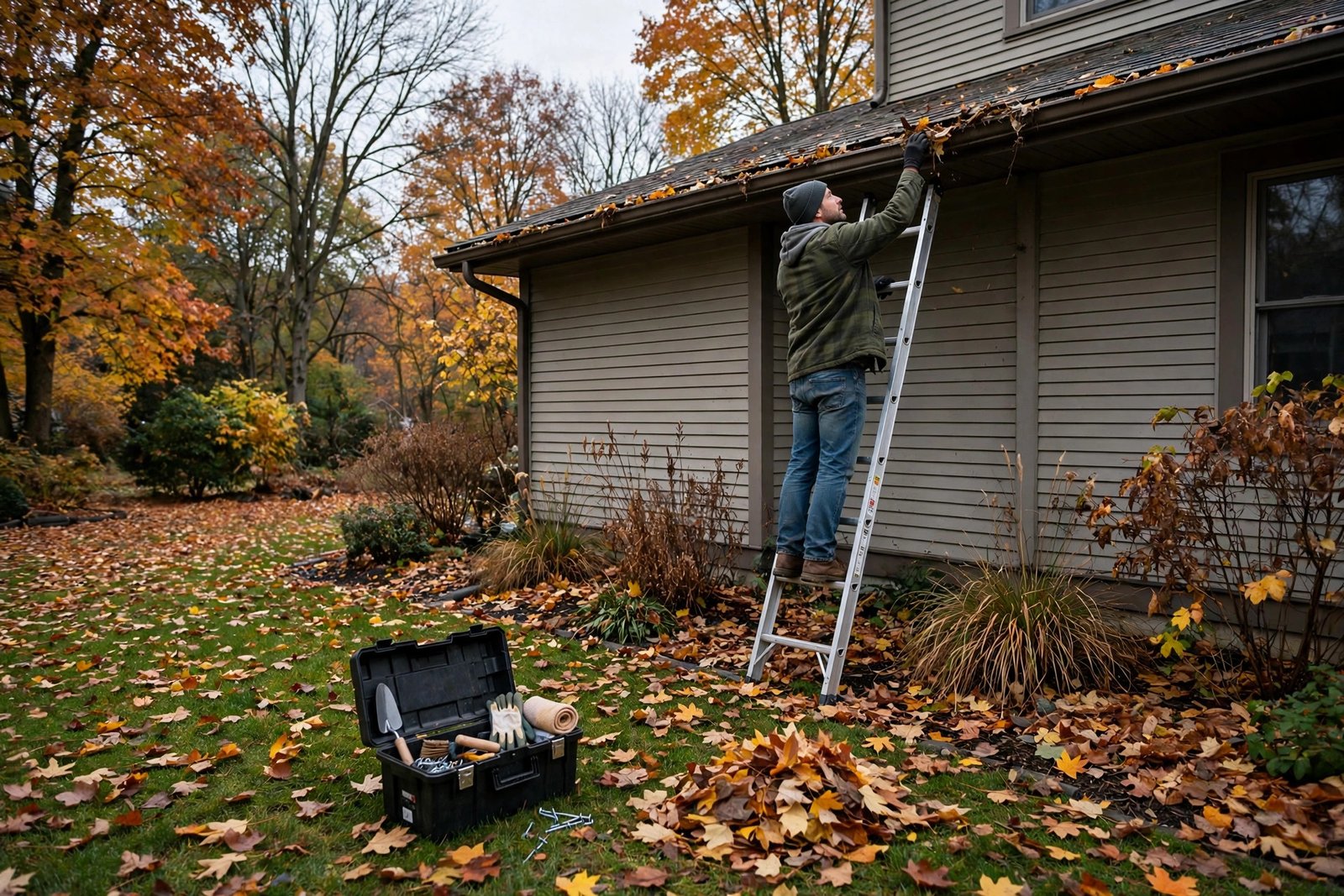
Start with the gutters. Autumn leaves clog them fast, and a blocked gutter overflows down the wall, soaking brickwork and foundations — the kind of damp that costs thousands to fix but minutes to prevent. Clear leaves and debris by hand or with a scoop, flush the run with a hose, and check that downspouts discharge well away from the house. If water pools near the walls, add a simple downspout extension. While you are up there, look for cracked or slipped roof tiles, damaged flashing around chimneys, and moss build-up that traps moisture.
Next, walk the exterior. Check window and door seals for gaps, re-caulk where the old sealant has shrunk or cracked, and clear leaves from drains, grates and window wells. Turn off exterior taps from the inside shut-off valve and drain the outdoor pipework, or fit frost-proof tap covers — a burst outdoor pipe is one of the most common and most avoidable winter insurance claims. Store garden hoses indoors, put away garden furniture or cover it, and sweep leaves off paths and driveways before they turn slippery. For the full seasonal picture, compare this list with our seasonal home maintenance checklist and our general home maintenance checklist.
Heating, Insulation and Draughts
Book a heating service now if you have not already. A serviced boiler or furnace runs more efficiently, lasts longer and is far less likely to fail on the coldest night of the year, when every engineer is booked solid. While the system is running, bleed any radiators that are cold at the top — trapped air stops them heating properly — and check the pressure gauge is in the normal range. Replace the HVAC filter if you have not done so in the last three months; a clogged filter forces the system to work harder and costs you money every day.
Then hunt draughts. Hold a hand near window frames, door edges, loft hatches and letterboxes on a windy day, and seal what you find with draught excluder strips, which cost very little and pay for themselves within weeks. Check loft insulation depth — modern guidance is around 270mm — and top it up if it has thinned or been disturbed. Insulate exposed pipes in lofts, garages and under floors with foam sleeves, and reverse ceiling fans to run clockwise at low speed so they push warm air down from the ceiling. Small draughts add up: sealing them is often the cheapest heating upgrade a home can get.
Safety Checks Before Heating Season Peaks
November is the right month for safety checks because heating appliances, candles and fairy lights all come into heavy use at once. Test every smoke alarm and carbon monoxide alarm — press the test button, replace batteries, and replace any alarm older than ten years. If you have a fireplace or wood stove, book a chimney sweep before you light the first fire; creosote build-up is a genuine fire risk. Check the fire extinguisher’s pressure gauge and expiry date, and make sure everyone in the house knows where it is.
Also check the less obvious items: the carbon monoxide alarm near any gas appliance, the condition of extension leads and overloaded sockets that will soon power heaters and decorations, and the outdoor lights and paths that guests will use on dark evenings. If you keep a stock of candles for winter evenings, store them away from curtains and never leave them burning unattended. These checks take under an hour in total and are the highest-value hour in the whole checklist.
Indoors: Appliances, Vents and Deep-Clean Jobs
Winter means the house is closed up, so indoor air quality and appliance health matter more. Clean the dryer vent properly — lint build-up is a fire hazard and makes drying take twice as long. Our guides to how often to clean your dryer vent and how to clean a dryer vent walk through the full job. Clean or replace cooker hood filters, vacuum behind the fridge and check its door seals, and run a cleaning cycle on the washing machine and dishwasher before the holiday cooking season loads them heavily.
This is also the month for the deep-clean tasks that are easier before guests arrive. A pass through our deep-cleaning checklist now — skirting boards, light fittings, inside cupboards — means December can focus on decorating rather than cleaning. Check under sinks for slow leaks, look for mould in bathrooms and window corners, and improve ventilation in rooms that stay damp. A small dehumidifier in a persistently damp room is cheaper than replastering a wall in spring.
November Weekend Plan
Gutters, roof check, exterior taps, drains, garden tidy and path clearing. About 3–4 hours.
Boiler service, radiator bleeding, filter change, draught sealing and pipe insulation.
Alarms, chimney sweep, extinguisher check, electrics and outdoor lighting test.
Dryer vent, appliance clean, leak check, deep clean and guest-room refresh.
Salt or grit for paths, spare filters, batteries, draught strips and pipe sleeves before demand peaks.
Note what you serviced and when, so next November starts from a record, not a guess.
If you can only do three things this November, do these: clear the gutters, service the heating, and test the alarms. Everything else is valuable, but those three prevent the most expensive and most dangerous winter failures. Spread the rest across the month and the house will enter winter in genuinely good shape.
Frequently Asked Questions
What is the most important November maintenance task?
Clearing gutters and servicing the heating system. Blocked gutters cause water damage to walls and foundations, and an unserviced boiler is most likely to fail on the coldest nights, when repair waits are longest.
How often should I replace my HVAC filter?
Every 1–3 months depending on use, pets and dust levels. November is a natural checkpoint: fit a fresh filter before the heating season so the system runs efficiently all winter.
Should I insulate pipes myself?
Yes — foam pipe sleeves are cheap, cut to size with a knife, and simply clip around the pipe. Focus on pipes in lofts, garages, basements and outside walls, where freezing risk is highest.
When should I reverse my ceiling fan for winter?
In November, when the heating comes on. Set the fan to run clockwise at low speed so it gently pushes warm air that has risen to the ceiling back down into the room.
How do I find draughts in my home?
On a windy day, hold a hand or a lit incense stick near window frames, doors, letterboxes and loft hatches. Moving smoke or a cold stream of air marks a gap worth sealing with draught excluder strips.
Do I really need a chimney sweep every year?
If you use an open fire or wood stove regularly, yes. Annual sweeping removes creosote that can catch fire, and many insurers require it. Book in November before the peak burning season.
A House Ready for Winter
November maintenance is not glamorous, but it is the difference between a winter of comfort and a winter of call-outs. Work through this checklist across the month, keep a note of what you did, and you will head into December with a warmer, safer, cheaper-to-run home — and more time for the enjoyable parts of the season.
Start this weekend with the gutters and the alarms. Two hours, two jobs, and the biggest winter risks are already handled.