
Freezer-Friendly Holiday Baking Ideas
December baking does not have to mean December stress. The secret of calm holiday hosts is not a bigger kitchen or a faster oven — it is a freezer that was filled quietly in November. When cookies, doughs, cakes and breads are already baked, wrapped and waiting, the busy weeks before Christmas turn into simple assembly: thaw, warm, plate, enjoy. No last-minute flour clouds, no oven queue, no panic when unexpected guests arrive.
Not everything freezes well, and that is where most people go wrong. Delicate meringues turn sticky, custard fillings weep, and cream-topped cakes collapse after thawing. But a surprising range of holiday bakes actually improve with a spell in the freezer: flavours meld, textures settle, and many cookies taste better after a few days frozen than they do straight from the oven. This guide covers what to bake now, how to wrap it so it survives, and exactly how long to thaw each type, so your holiday table looks effortless — because most of the work was done weeks ago.
Key Takeaways
- Start in November: most holiday bakes keep beautifully for 4–8 weeks in the freezer.
- Freeze butter-based cookies, slice-and-bake doughs, fruit cakes, quick breads and unbaked pie dough — skip meringues, custards and cream fillings.
- Double-wrap everything: cling film first, then a freezer bag or foil, with air pressed out.
- Label every package with the item name and date; freeze in small, party-sized portions.
- Thaw cookies and cakes at room temperature, breads in a warm oven, and bake frozen dough straight from the freezer with a few extra minutes.
- Cool bakes completely before wrapping — trapped steam is the main cause of freezer burn and sogginess.
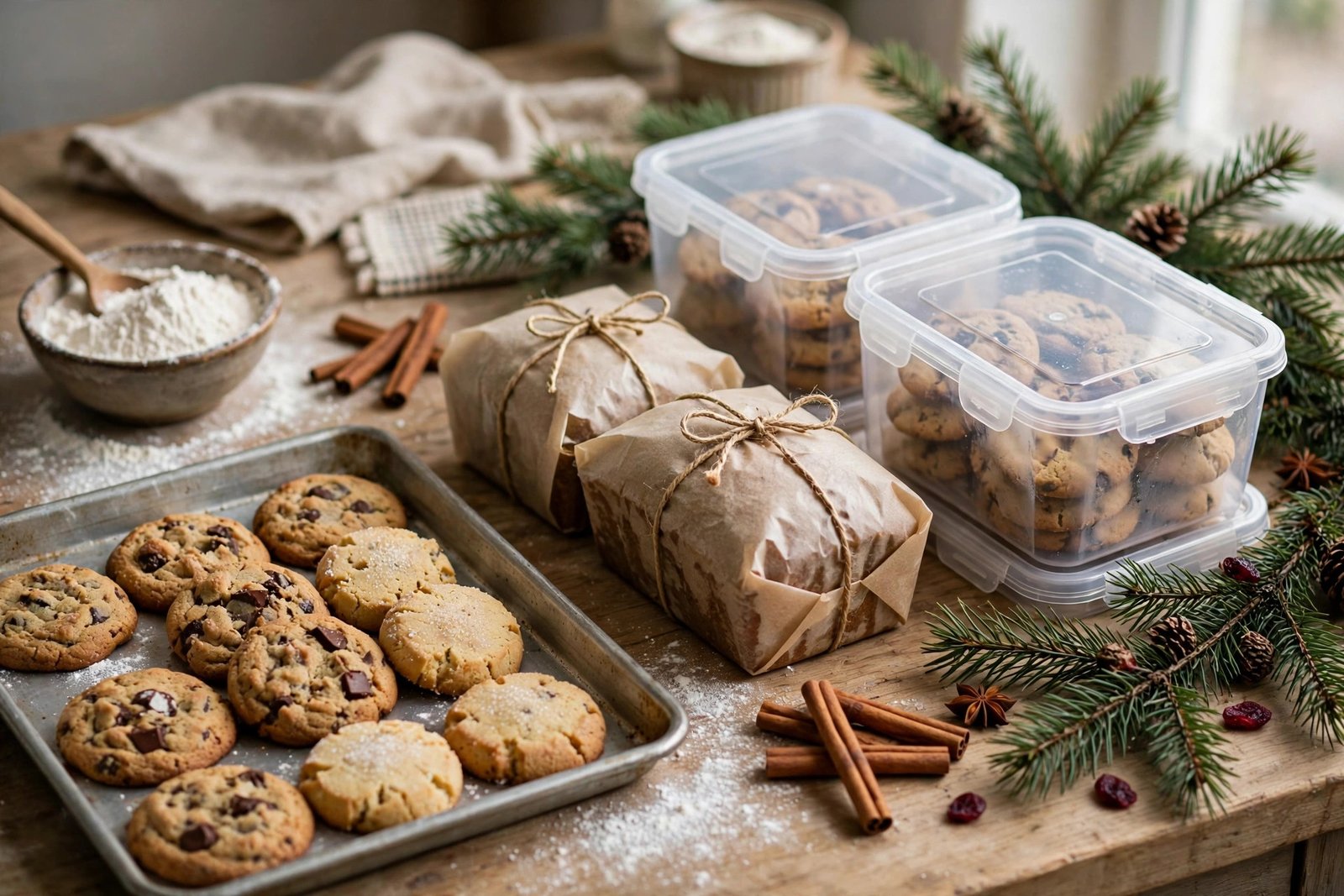
What Freezes Well — and What Does Not
The best freezer candidates share one trait: fat and structure that protect them. Butter cookies, shortbread, gingerbread, biscotti and bar cookies freeze superbly for up to three months. Their low moisture content means they thaw crisp, especially if you underbake them very slightly — by about a minute — so the final warming finishes the job. Fruit cakes and rich spice cakes are even better after freezing, because the resting time lets spices deepen. Quick breads such as banana bread, pumpkin bread and cranberry loaf freeze whole or sliced, and slices thaw in minutes for unexpected visitors.
Doughs are the real time-savers. Slice-and-bake cookie dough, rolled into logs and wrapped tightly, can be sliced and baked straight from frozen whenever you need a fresh batch. Pie dough discs, puff pastry and bread dough all freeze well too. What does not freeze well? Anything relying on a delicate, airy structure: meringues, pavlovas and angel food cake turn chewy or weep. Custard, cream and fresh fruit fillings separate or go watery. Frosting is a mixed case — buttercream freezes fine, but whipped cream and cream cheese frosting do not. The rule is simple: freeze the base now, add the delicate topping fresh on the day.
How to Wrap Bakes So They Actually Survive
Freezer burn is not mysterious; it is air and moisture doing damage over time. The fix is a proper double wrap. First, cool the bake completely — at least two hours for cakes and breads, until the centre feels room temperature. Warm food releases steam inside the wrapping, which freezes into ice crystals and turns into sogginess on thawing. Then wrap tightly in cling film, pressing the film against every surface to remove air pockets. Add a second layer of aluminium foil or a zip-top freezer bag with the air squeezed out.
For cookies, freeze them in a single layer on a tray first, for about an hour, until solid. Then stack them in rigid containers with parchment between layers — this stops them sticking together and lets you lift out exactly how many you need. For cakes, freeze the layers unwrapped for an hour to firm up the crumb, then wrap each layer separately. Always label with the item, the quantity and the date, using freezer tape or a marker on the bag. A mystery package in January is a package that gets thrown away, and a labelled one is a dessert.
A November Baking Calendar That Works
Spreading the work across November is what makes this plan realistic. In the first week, bake the long-keepers: fruit cake, gingerbread dough logs, and shortbread. These taste better with age and are the most forgiving in the freezer. In the second week, make pie dough discs, biscotti and bar cookies such as brownies and blondies, cut into portions before freezing. The third week is for quick breads and muffins, frozen in slices or individually so breakfast for guests is a two-minute job.
The final week of November is for the showpieces that need less freezer time: unbaked cookie dough balls, frozen flat on trays and bagged, ready to bake fresh in December. If you are also planning the look of the season, pair this baking plan with our Christmas kitchen decor ideas so the kitchen feels festive while you work, and save the finished bakes for a gathering using our Friendsgiving dinner party ideas or a quiet evening from our cosy Christmas movie night ideas.
Thawing Times: The Cheat Sheet
Thawing is where good frozen baking is won or lost. Most cookies need only 15–30 minutes at room temperature — take out only what you need and keep the rest frozen. Bar cookies and brownies take 30–60 minutes, and a brief 5 minutes in a warm oven restores their just-baked edge. Whole quick breads and loaf cakes need 2–3 hours on the counter, still wrapped, so condensation forms on the wrapping rather than on the crumb. Sliced bread thaws in 10–15 minutes, or straight from frozen in the toaster.
Layer cakes need 3–4 hours at room temperature, still wrapped, and should be frosted while slightly chilled — it is far easier than frosting a soft, room-temperature cake. Fruit cake is the exception: thaw it overnight in the fridge, then bring it to room temperature for an hour before serving. Pie dough should move from freezer to fridge the night before rolling, never straight to the counter, where it softens unevenly. And one safety rule matters more than any other: thawed bakes should be eaten within two to three days and never refrozen, so thaw in small batches.
Freezer-Friendly Recipes Worth Your November
Roll dough into logs, freeze, then slice and bake from frozen at the usual temperature plus 2–3 minutes.
Chill dough discs flat, freeze up to 8 weeks, thaw overnight in the fridge, then roll and cut as normal.
The double bake drives out moisture, so biscotti stay crisp for months and thaw in minutes.
Wrap in baking paper, then foil, then a bag. Flavour deepens in the freezer; ice it after thawing.
Freeze sliced with parchment between slices, so a single serving thaws in 10 minutes flat.
Scoop, freeze flat on a tray, then bag. Bake straight from frozen — fresh cookies on demand, all December.
For gifting, frozen bakes are a hidden advantage. A box of shortbread, biscotti and a mini loaf, assembled from the freezer and tied with ribbon, looks and tastes homemade without a December baking marathon. Just include a small note with thawing instructions — your friends will appreciate it, and the gift will actually be eaten at its best rather than going stale on a countertop.
Frequently Asked Questions
How long can holiday bakes stay in the freezer?
Most cookies, breads and cakes keep well for 2–3 months at 0°F (-18°C) or below. Fruit cake and shortbread last longest, up to 3 months; frosted or filled items should be used within 4–6 weeks.
Should I freeze cookies baked or as dough?
Both work. Baked cookies are instant — thaw and serve. Dough gives you the fresh-baked smell and texture on the day, and is better for drop cookies and slice-and-bake varieties. Choose baked for gifting, dough for at-home entertaining.
Why did my frozen cake taste dry after thawing?
Usually it was wrapped while still warm, or wrapped loosely so air dried it out. Always cool completely, wrap tightly in cling film plus foil or a freezer bag, and thaw still wrapped so moisture stays in the crumb.
Can I freeze frosted cakes?
Buttercream-frosted cakes freeze well: freeze unwrapped for an hour to firm the frosting, then wrap carefully. Skip whipped cream, cream cheese frosting and fresh fruit toppings — add those fresh after thawing.
How do I thaw a whole loaf cake safely?
Keep it wrapped and leave it on the counter for 2–3 hours, or overnight in the fridge for larger cakes. Eat within 2–3 days and do not refreeze. Slices thaw in about 15 minutes.
Can I bake cookie dough straight from the freezer?
Yes — that is the point. Bake frozen dough balls or slices at the recipe temperature, adding 2–4 minutes to the time. Do not thaw first, or the cookies will spread too much.
Start This Weekend, Relax All December
Pick one recipe — shortbread is the easiest win — and freeze a double batch this weekend. By the end of November you will have a freezer full of holiday baking, a calmer December, and a table that looks like you spent all day in the kitchen. The best holiday baking is the kind nobody saw you make, because you made it weeks ago.
Label the first package today, and keep the list on the freezer door. When December gets busy, that list is your menu: thaw, warm, serve, and enjoy the season instead of spending it at the oven.
3 thoughts on “Freezer-Friendly Holiday Baking Ideas”