
Eco-Friendly Building Materials for Homes: A Practical Guide to Greener Building
Every home is made of choices. The timber in the frame, the blocks in the walls, the insulation hidden behind the plasterboard, and the finish on the floor all carry an environmental cost long before you move in — in the energy used to make them, the resources pulled from the ground, and the waste left behind. Eco-friendly building materials for homes aim to cut that cost without cutting corners on strength, comfort, or durability. They are not a single product or a niche luxury. They are a growing family of materials, from fast-growing bamboo to reclaimed timber and recycled steel, that let you build a home that is healthier to live in and lighter on the planet.
But “eco-friendly” is also one of the most abused labels in construction. A material can be natural yet shipped halfway around the world, recycled yet full of chemicals, or energy-efficient yet impossible to repair. This guide cuts through the marketing. It explains the main eco-friendly building materials worth considering, how each one actually performs, where each works best, and the honest trade-offs — cost, availability, maintenance, and climate suitability — so you can choose materials that fit your home, your budget, and your building team.
Key Takeaways
- No single material is greenest for every job — match the material to the wall, floor, or structure it serves.
- Bamboo, reclaimed wood, and recycled steel cut raw-resource demand, but each needs the right detailing to last.
- Rammed earth and hempcrete offer superb thermal mass and insulation, yet suit some climates far better than others.
- Insulation choice matters as much as structure: natural options like cellulose, wool, and cork perform well when kept dry.
- Always check local availability, building codes, and skilled labour before committing to an unfamiliar material.
- The greenest material is often the one already made: reusing, reclaiming, and building less beats buying new.
What Makes a Building Material Eco-Friendly?
A material earns the label on several counts, not just one. First is embodied energy: how much energy goes into extracting, manufacturing, and transporting it. Timber and bamboo score well because plants do much of the work with sunlight; steel and concrete score badly unless recycled content or cleaner production cuts the footprint. Second is renewability: can the resource regrow quickly, like bamboo in three to five years, or does it take a forest a century to replace? Third is health: does it release harmful chemicals indoors, through finishes, adhesives, or dust? Low-emission, natural materials make for better indoor air.
Two more tests matter just as much. Durability asks whether the material will last decades with modest care — a “green” product replaced twice is rarely green at all. End of life asks what happens when the home is eventually altered or demolished: can the material be reused, recycled, or safely returned to the soil? Reclaimed timber passes all these tests beautifully, while some composite products fail the last one completely. Keep those five tests in mind as you read the options below, and be wary of any product that boasts about only one of them. Before you commit, it also helps to understand the stages of building a house step by step, so you know when each material decision actually gets locked in.
Bamboo: Fast-Growing Strength
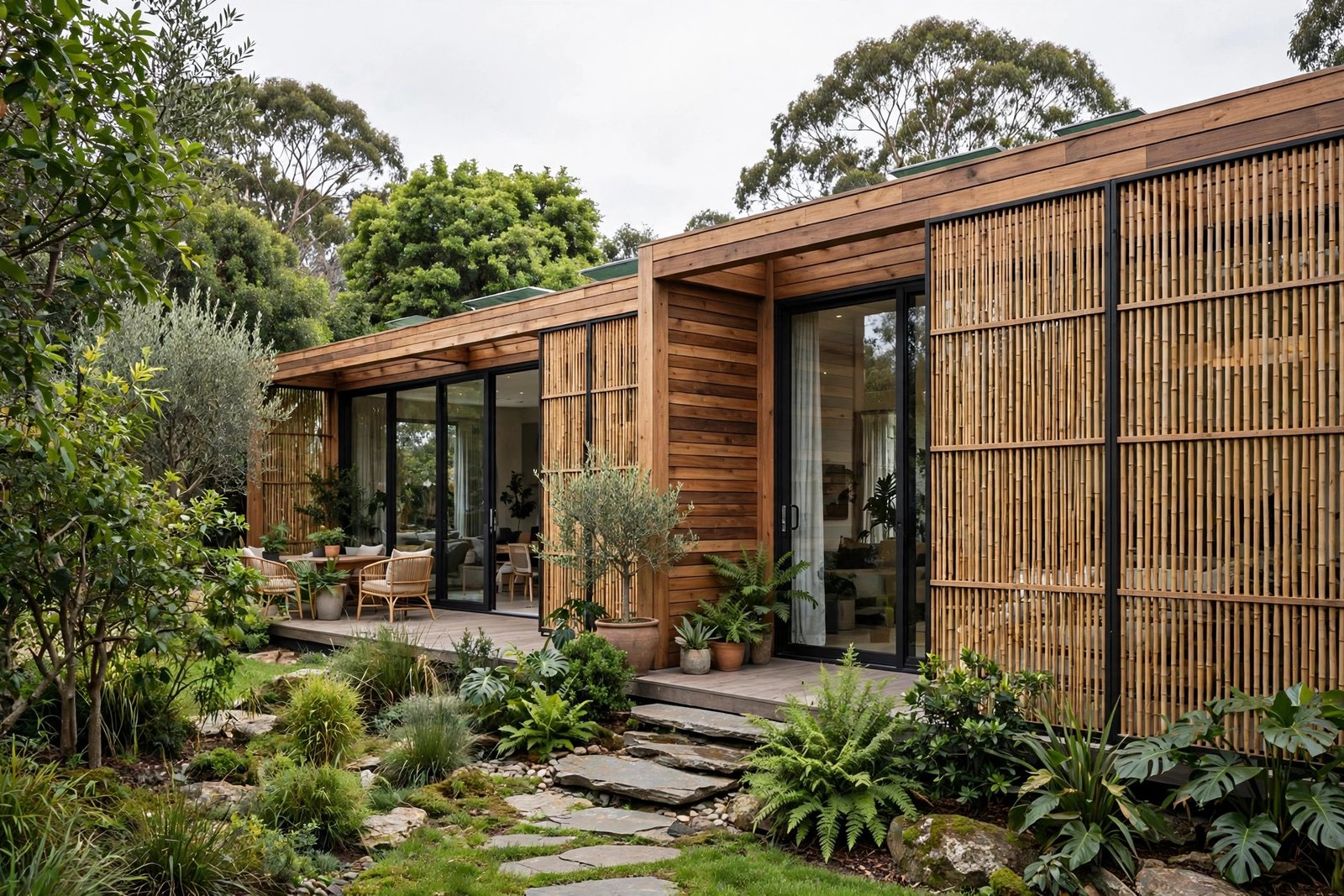
Bamboo is the poster child of eco building for good reason. Certain species grow to full height in a single season and can be harvested every three to five years without killing the plant, which keeps regrowing from its roots. That makes it one of the most renewable structural materials on earth. Strand-woven bamboo flooring and bamboo plywood are hard, stable, and attractive, while bamboo poles are used structurally in many parts of the world for frames, screens, and scaffolding.
The honest limitations are about processing and place. Most bamboo products are manufactured far from where they are used, so transport adds to the footprint. Quality varies widely: cheap bamboo flooring can dent, scratch, or swell in damp conditions, while well-made strand-woven boards perform closer to hardwood. Adhesives matter too — look for low-formaldehyde products. Bamboo suits flooring, cabinetry, wall panels, and decorative screens in almost any home, but for primary structure in regions with strict codes, you will need an engineer familiar with the material and a supplier who can document strength ratings.
Reclaimed Wood: Character With a History
Reclaimed wood — timber salvaged from old barns, warehouses, factories, and demolished homes — is arguably the greenest wood you can buy, because the trees were cut decades or centuries ago and no new forest is touched. It brings warmth and character that new timber cannot imitate: nail holes, weathered grain, and deep colour. It works beautifully for feature walls, beams, flooring, stair treads, shelving, and furniture, and it is often denser and more stable than modern fast-grown timber because it came from old-growth trees.
The trade-offs are practical. Supply is irregular, so matching large quantities or long lengths can be difficult. Old timber must be checked for nails, metal, rot, insect damage, and old finishes such as lead paint, and it usually needs cleaning and re-milling. For structural use, grading and engineering approval are essential, since old beams may hide defects. Used thoughtfully, though, reclaimed wood turns demolition waste into the most talked-about feature of a home. If you are weighing timber choices more broadly, our comparison of types of plywood and their uses helps explain where sheet timber fits alongside solid reclaimed boards.
Rammed Earth and Hempcrete: Walls That Breathe
Rammed earth is one of the oldest building methods in the world, and it is enjoying a serious revival. Damp soil, sand, gravel, and a small amount of stabiliser are compacted in layers inside formwork to create thick, solid walls. The result is extraordinary thermal mass: walls absorb heat during the day and release it slowly at night, smoothing out temperature swings. Rammed earth is fire-resistant, pest-resistant, extremely durable, and made mostly from local soil, which slashes transport emissions.
Hempcrete is a different idea with a similar spirit. Hemp fibres (the woody core of the hemp plant) are mixed with a lime-based binder and water to form a lightweight, insulating material cast around a timber frame. It insulates well, regulates humidity, resists mould and pests, and actually absorbs carbon dioxide as the lime cures. It is not load-bearing on its own, so it needs a frame, and it must be protected from prolonged wetting. Both materials demand skilled builders and longer build times, and both suit drier climates better than constantly wet ones. In the right setting, however, they produce homes that feel remarkably calm, quiet, and even in temperature — and need far less heating and cooling energy over their lives.
Recycled Steel and Other Recycled Materials
Steel is energy-hungry to make from scratch, but recycled steel tells a different story: it can be melted down and reused repeatedly without losing strength, and recycling uses far less energy than primary production. Recycled steel framing is strong, precise, termite-proof, and dimensionally stable — it will not warp, twist, or shrink the way timber sometimes does. For homes in termite-prone areas or where long, straight spans matter, it is a genuinely practical green choice, provided the design accounts for steel’s thermal bridging with proper insulation breaks.
The recycled idea extends far beyond steel. Recycled glass becomes countertops and tiles, recycled plastic becomes decking and insulation boards, and crushed concrete from demolition becomes aggregate for new foundations and driveways. Each option diverts waste from landfill and reduces demand for virgin material. The caution is the same each time: check what binders, resins, or coatings are involved, and whether the product can itself be recycled later. A recycled product glued together with toxic resin may be worse for indoor health than a simple virgin alternative. Ask suppliers for composition and emissions data, not just a “recycled” badge.
Insulation: The Hidden Green Decision
Insulation is where eco choices pay back fastest, because good insulation cuts heating and cooling energy for the life of the home. Cellulose insulation, made from recycled newspaper treated with borates for fire and pest resistance, is blown into walls and lofts and performs very well at a modest price. Sheep’s wool insulation is natural, breathable, and handles moisture gracefully. Cork, harvested from bark without felling the tree, insulates and dampens sound. Wood-fibre boards combine insulation with thermal mass. Even straw bales, properly detailed and plastered, insulate superbly in suitable climates.
The rule for all natural insulation is moisture management. These materials work best in walls designed to breathe and dry, with good detailing around windows, roofs, and foundations. Trapped damp ruins performance and invites mould, whatever the material. Pair insulation choice with airtightness and ventilation: a well-insulated but leaky home still wastes energy, while a sealed home without ventilation traps humidity. Our guide to how to improve home insulation covers the practical steps that make any insulation material perform at its best.
Choosing Materials: A Practical Checklist
Thermal mass suits hot, dry climates; high insulation suits cold ones. Pick materials that work with your weather, not against it.
Local stone, soil, and timber slash transport emissions and usually suit local conditions and builders better.
Confirm your chosen materials meet local building codes and that an engineer or inspector can approve them before you order.
An unfamiliar material in inexperienced hands is a risk. Hire builders who have completed similar projects successfully.
Compare durability, maintenance, and energy savings over decades, not just the purchase price on day one.
Ask for embodied-energy data, emissions ratings, and end-of-life options. Vague claims without numbers deserve scepticism.
It also pays to avoid the classic pitfalls of any build. Choosing an unusual material magnifies the cost of poor planning, so read common mistakes to avoid when building a house before finalising your specification, and make sure your builder is comfortable with everything on the list. A short conversation early on prevents expensive substitutions halfway through construction.
Frequently Asked Questions
What is the most eco-friendly building material?
There is no single winner. Reclaimed wood is hard to beat for low impact, bamboo wins on renewability, rammed earth wins on thermal mass and local sourcing, and recycled steel wins on strength and recyclability. The greenest choice depends on the job, the climate, and local availability.
Are eco-friendly building materials more expensive?
Some are, some are not. Cellulose insulation and reclaimed timber can be competitive, while rammed earth and hempcrete often cost more upfront due to skilled labour. Judge cost over the building’s life: energy savings and durability frequently close the gap.
Is bamboo really sustainable?
Yes, when responsibly harvested and manufactured. Bamboo regrows in three to five years without replanting. Check for low-formaldehyde adhesives, certified sourcing, and quality strand-woven products rather than the cheapest boards.
Do eco homes meet building codes?
Most mainstream eco materials do, but unusual systems like hempcrete or straw bale may need engineering approval or alternative compliance routes in some areas. Confirm code acceptance and find an experienced builder before committing.
Is hempcrete load-bearing?
No. Hempcrete is an insulating infill cast around a structural timber or steel frame. It provides insulation, humidity regulation, and fire resistance, while the frame carries the building’s loads.
Can I use eco materials in a renovation?
Absolutely. Renovations are ideal: reclaimed timber, natural insulation, cork or bamboo flooring, and low-emission finishes can transform an existing home without a new build. Start with insulation and draught-proofing for the biggest energy return.
Build Greener, One Decision at a Time
You do not need to build an experimental house to build greener. Start where the impact is greatest: good insulation, a reclaimed or responsibly sourced timber feature, low-emission finishes, and materials sourced as locally as possible. Each choice trims energy use, waste, and indoor pollutants — and together they add up to a home that is cheaper to run, healthier to live in, and kinder to the world it stands in.
Talk to your builder early, check codes and suppliers, and choose materials your team can build well. A well-built home in conventional materials that lasts a century beats a poorly built “eco” home that needs rebuilding in thirty years. Build once, build well, and let every material earn its place.