
After Christmas Home Decor Ideas: From Festive to Fresh Winter Calm
There is a strange quiet that settles over a house in the first days of January. The tree is still up, the fairy lights still glow in the evening, but the excitement has moved on, and the decorations that felt magical three weeks ago now feel like clutter. Most of us leave everything in place far too long, partly from tiredness and partly because we do not know what should replace it. The answer is not to strip the house bare. It is to make a gentle, deliberate transition from festive to fresh, keeping the warmth of winter while letting the house breathe again.
Good after Christmas home decor ideas work in stages. First, you edit: the most overtly festive pieces come down, while winter textures, greenery and candlelight stay. Then you refresh: lighter layers, cleaner surfaces and a few new focal points replace the red and gold. Finally, you store everything properly, so next December starts with organised boxes instead of a tangled mess. This guide walks through all three stages, room by room, with practical ideas that work in real homes, not just styled photographs.
Key Takeaways
- Take decorations down in stages: festive symbols first, winter warmth second, nothing all at once.
- Keep greenery, candles and soft textures; remove baubles, tinsel and novelty pieces first.
- Swap red and gold for white, cream, sage and soft blue to reset the palette for January.
- Repurpose wreaths, garlands and ornaments instead of binning them, and store the rest labelled by room.
- Refresh one focal point per room — a mantel, a table centrepiece, a bed — rather than redecorating everything.
- Let in more daylight, clear surfaces, and add one living plant to make the house feel new again.
When to Take the Tree and Decorations Down
Tradition says the Twelfth Night, 5 or 6 January depending on how you count, is the deadline, and it is a sensible one. By then most people are back at work, the novelty has faded, and a real tree is dropping needles faster than you can sweep them. But there is no rule that says everything must come down on the same day. In fact, a staged takedown is far easier on your energy and on the house. Start the day after Boxing Day or in the first days of January by removing the most fragile and fiddly items — glass baubles, tinsel, novelty ornaments — and leave the lights and greenery for a few more days while you decide what stays.
The tree itself deserves a decision, not drift. If it is real, check it daily for dryness; a brittle tree near a radiator is a fire risk, and it should go as soon as the needles fall at a touch. If it is artificial, dismantle it section by section, wrap the lights around cardboard to prevent tangles, and bag each tier separately so next year you are not wrestling with a compressed bundle. Once the tree is gone, resist the urge to fill the empty corner immediately. Live with the space for a day or two. Often a simple floor plant, a basket or a reading chair works better there than a new piece of furniture bought in a hurry. For a broader fresh start, pair this reset with our January home reset ideas.
Keep the Winter, Lose the Christmas
The easiest way to think about the transition is to sort everything into two piles: Christmas and winter. Christmas items are anything that only makes sense in December — Santa figures, nativity scenes, baubles, stockings, advent calendars, and anything red and gold together. Winter items are anything that still feels right in January and February — evergreen branches, pinecones, bare branches in a vase, chunky knit throws, candles, lanterns and faux fur. Keep the winter pile out. Put the Christmas pile away.
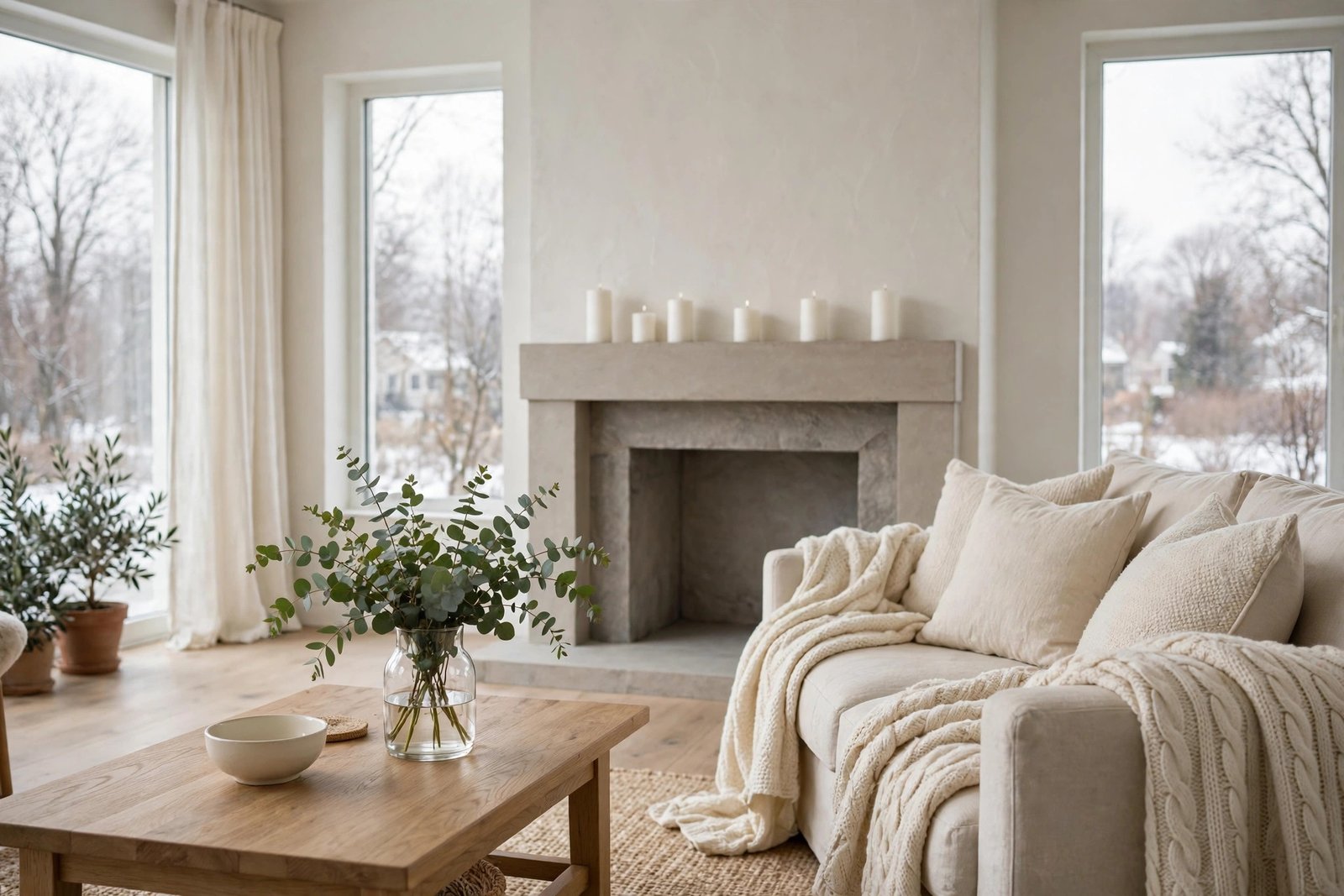
This simple sort instantly changes how the house feels. A mantel that held a garland, stockings and a row of baubles can keep the garland, minus the baubles, with candles and a few pinecones added. A dining table that was dressed in red can switch to a natural linen runner, white candles and a bowl of pinecones or winter fruit. The house still feels warm and seasonal, but it no longer looks like a party that ended a week ago. If you love the glow of fairy lights, keep one discreet string in a jar or along a shelf rather than a whole tree’s worth — the effect is cosy rather than festive, and it carries you through the darkest weeks of the year. Our winter home decor ideas offer more ways to keep that warmth without the Christmas theme.
Refresh the Colour Palette Room by Room
January light is low and grey, so the palette needs to do more work than it did in December, when lights and colour carried the mood. The trick is to go lighter, not colder. Swap deep red cushions for cream, oatmeal or sage. Replace a red throw with a chunky cream knit. Change a festive tablecloth for plain linen in white or soft grey. You do not need to buy a whole new set of soft furnishings — rotating pieces you already own, or swapping cushion covers only, is enough to make a room feel different.
In the living room, focus on the sofa and the mantel, the two places the eye lands first. Two new cushion covers, a lighter throw and a cleared coffee table can transform the space in ten minutes. In the bedroom, switch to crisp white or pale bedding, add a single textured throw, and remove any festive bedding or novelty cushions. In the kitchen and dining area, clear the festive centrepiece and replace it with something everyday and useful: a wooden board, a fruit bowl, a small vase of eucalyptus. Each room needs only one or two changes. The cumulative effect, though, is a house that feels clean, calm and ready for the year ahead rather than stuck in last month’s celebration.
Repurpose Before You Store
Before you box everything away, look for pieces that can earn a second life in January. A plain evergreen wreath, with its baubles and ribbon removed, makes a beautiful winter door wreath until February. A garland draped along a staircase can stay if you strip the ornaments and add plain fairy lights or dried oranges. Glass baubles in soft metallics — silver, champagne, pale gold — can fill a large bowl or hurricane vase as a winter centrepiece, and they look surprisingly elegant once the tree context is gone.
Ornaments that do not fit the winter look can still be useful. Shatterproof baubles make cheerful fillers for a child’s craft box. Ribbon can be saved for gift wrapping all year. Even the tree itself, if real, can be chipped for garden mulch or cut into slices for coasters and plant stands, which is a satisfying way to close the season. The point is to be deliberate: keep what still looks good, store what is truly seasonal, and recycle or donate what you no longer love. A ruthless edit now means fewer boxes to haul out next December, and a collection you actually enjoy decorating with. If clutter has built up beyond decorations, our guide to how to declutter and organise your home will help you work through the rest.
Store Decorations So Next December Is Easy
Bad storage is why so many people dread decorating. Lights tangled into knots, baubles crushed at the bottom of a bag, and three boxes all labelled “Christmas” with no idea what is inside. Fix it once, properly, and you will thank yourself for years. Use sturdy boxes, not bin bags, and label each one by room or by type: tree ornaments, mantel decor, outdoor lights, tableware. Wrap fragile ornaments individually in tissue or old tea towels, and keep the heaviest items at the bottom.
A few small habits make a big difference. Wind each string of lights around a piece of cardboard and label whether it works. Photograph each room before you take it down, so next year you have a reference for what went where. Keep a small “first out” box with the tree skirt, the star or topper, and your favourite ornaments, so decorating next December starts with a quick win instead of a search. Store boxes somewhere dry and accessible, not buried behind summer gear, and add a note inside the lid listing anything you decided to donate or replace. This is also the moment to check what is broken: bin it now, not next December when you are short of time.
Small Refreshes That Make January Feel New
Clean windows inside, pull curtains fully back, and swap heavy festive drapes for lighter ones.
Pick a surface each day — mantel, sideboard, coffee table — and clear it completely before restyling.
One healthy green plant per room beats a dozen festive stems for making a space feel alive.
Swap spiced festive candles for fresh linen, cedar or eucalyptus to signal a new season.
A mirror or large print, two candlesticks and one vase is a calm, timeless mantel formula.
Retain a reading nook with a throw and lamp, so the house still feels warm after the lights go.
These small changes matter because January can feel flat, and the house should not add to that feeling. A clean window, a fresh scent and a clear table are not dramatic gestures, but they change how you feel walking into a room. If you still want a reason to gather in the evening, keep the cosy rituals that December gave you — a film night, hot drinks, a lit candle — without the decorations. Our cosy Christmas movie night ideas adapt easily to a winter film night once the festive theme is gone.
Frequently Asked Questions
When should I take my Christmas decorations down?
Traditionally by Twelfth Night, 5 or 6 January. A staged takedown over the first week of January is easier: remove baubles and novelty pieces first, then the tree, and keep winter greenery and candles for a little longer.
What should I keep out after Christmas?
Winter items, not Christmas items: evergreen branches, pinecones, candles, lanterns, chunky throws and plain fairy lights in jars. Remove baubles, tinsel, stockings and anything red and gold together.
How can I make my home feel fresh without redecorating?
Swap cushion covers and throws for lighter colours, clear surfaces, clean the windows, change the candle scent, and add one living plant per room. One focal point per room is enough.
How do I store Christmas lights without tangles?
Wind each string around a flat piece of cardboard, secure the ends with tape, and label the box with the length and whether the lights work. Never stuff loose lights into a bag.
What can I do with a real Christmas tree afterwards?
Many councils offer tree recycling or chipping collections. At home, branches can be chipped for garden mulch, and trunk slices make coasters or plant stands. Never burn a whole tree indoors.
Should I buy new decor for January?
Usually not. Rotate pieces you already own, swap covers, and restyle what is there. If you buy anything, choose neutral winter pieces — a vase, a throw, candles — that work all year, not January-only items.
A Calmer House for the New Year
The best after-Christmas home is not empty; it is edited. Take down what belongs to December, keep what belongs to winter, and give each room one fresh focal point. Store the rest properly, labelled and protected, and you will start next December ahead instead of behind. January is long and dark enough without a house that still looks like a party. Clear it, lighten it, and let the new year in — one calm room at a time.
Start today with the smallest job: remove the baubles from one surface and see how different it looks. That single edit is often enough to convince you the rest is worth doing, and by the end of the week your home will feel like yours again, not like a set left over from Christmas.