
How to Organize a Small Bathroom: Smart Storage for Every Inch
A small bathroom punishes clutter more than any other room in the house. There is no spare corner to hide things in, no junk drawer to absorb the overflow, and every bottle, towel, and appliance competes for the same few shelves. The result is usually the same: a crowded counter, a cabinet you dread opening, and a morning routine spent hunting for things that should take seconds to find.
The fix is not a bigger bathroom. It is a system built for the space you actually have: ruthless decluttering, storage that uses walls and doors instead of floors and counters, and a home for every single item. This guide shows you how to organize a small bathroom step by step — from the clear-out to the zones, containers, and habits that keep it organized when real life resumes.
Key Takeaways
- Declutter first: a small bathroom can only hold what you actually use, so let the rest go.
- Use walls, doors, and the space above the toilet — counter space is your scarcest resource.
- Give every item a zone: daily, weekly, and backstock, each in its own place.
- Clear bins and labelled containers stop cabinets from becoming black holes.
- Keep the counter to five items or fewer; everything else lives behind a door.
- A two-minute nightly reset keeps a small bathroom tidy with almost no effort.
Step 1: Declutter Ruthlessly
Take everything out of the bathroom — every drawer, cabinet, shelf, and shower caddy — and sort it into keep, relocate, and discard. Discard expired medicines, empty bottles, dried-out products, and anything you have not used in six months. Relocate anything that does not belong in a bathroom: cleaning supplies live under the kitchen sink, medicines belong somewhere cool and dry away from shower steam, and the hair tools you use weekly can live in the bedroom if the bathroom has no room for them.
What remains should be a surprisingly small pile: the products you use daily, the ones you use weekly, and a modest backstock. If an item survives this cut but you still hesitate, ask whether it earns its space: in a small bathroom, every object pays rent in square centimetres, and anything that does not earn it goes. This step alone often frees a full shelf, and it makes every later step easier, because you are organizing a realistic inventory instead of a hoard.
Step 2: Zone the Bathroom by Routine
Divide what remains into zones that match your daily routine. The morning zone — toothbrush, skincare, deodorant — belongs nearest the mirror, ideally in the medicine cabinet or a small drawer. The shower zone — shampoo, conditioner, body wash — belongs in the shower itself, in a caddy or on a tension-rod shelf, not on the bathroom floor. The grooming zone — hair dryer, brushes, styling tools — belongs together in one bin or drawer, so you are not hunting across three cabinets for one routine.
Backstock — the spare shampoo, the extra toothpaste, the bulk pack of toilet paper — gets its own zone, separate from daily items, ideally high up or in a lidded box on top of a cabinet. When backstock mixes with daily items, you can never tell what is running low, and you end up buying duplicates. Keeping zones separate is the single habit that prevents a small bathroom from sliding back into chaos.
Step 3: Storage That Uses Walls, Doors, and Dead Space
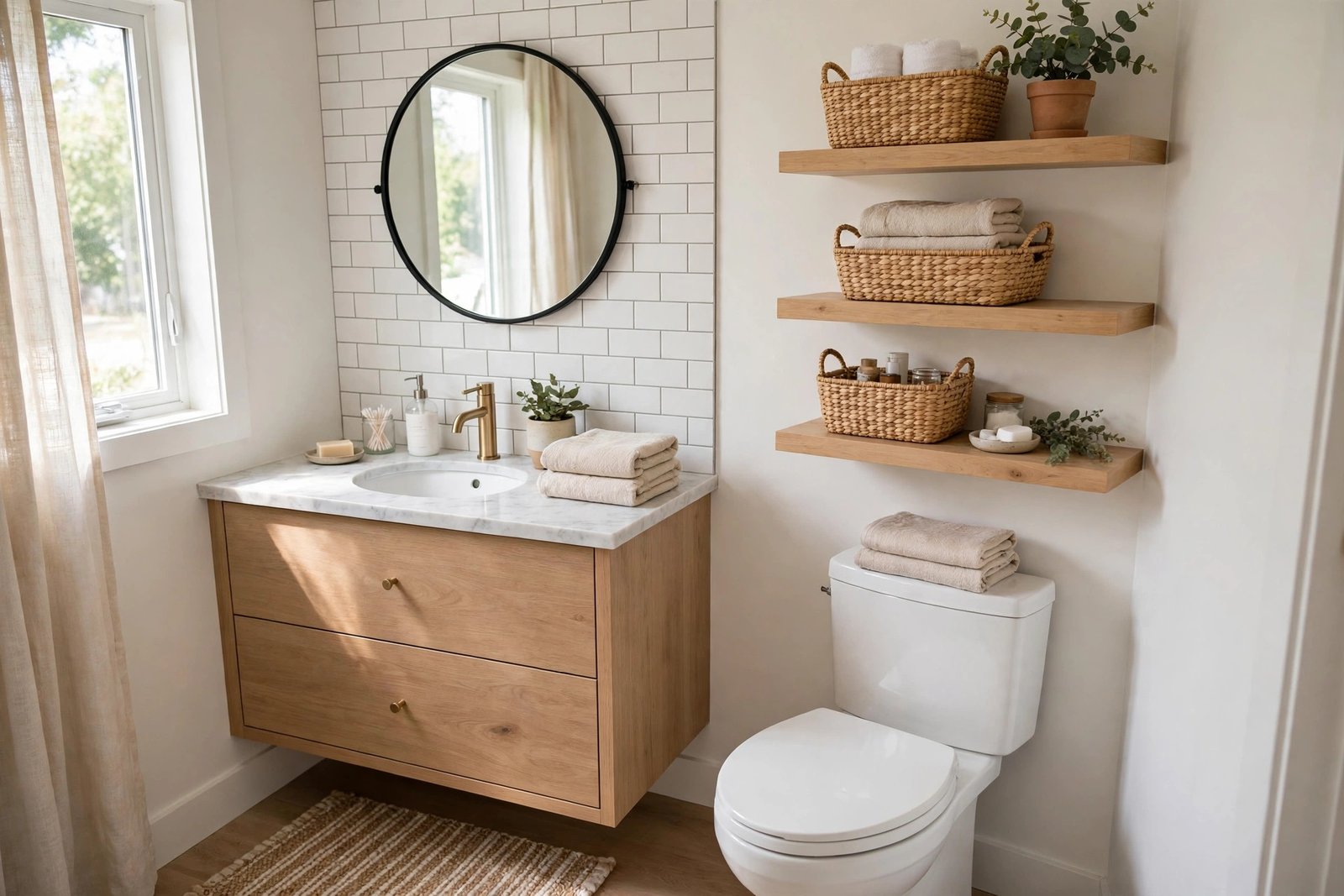
Counter space is precious, so stop storing things on it. Floating shelves above the toilet use the most wasted space in a small bathroom — two shelves there hold towels, baskets, and backstock without touching the floor. An over-door rack on the bathroom door or the cabinet door holds styling tools, cleaning sprays, or spare towels. A magnetic strip inside a cabinet door corrals bobby pins and clips that otherwise vanish into drawers.
Inside cabinets, small clear bins are transformative: one bin for skincare, one for hair products, one for first aid, each labelled and pull-out like a drawer. A lazy Susan turntable in a deep under-sink cabinet brings the back row forward, and stackable bins use the vertical height that usually goes to waste. Under the sink, protect the cabinet floor from leaks with a small tray, and hang cleaning bottles from a tension rod under the sink if pipes leave awkward gaps. For more ideas in this vein, see bathroom storage ideas for small bathrooms, which covers shelving, baskets, and over-toilet storage in detail.
Step 4: Tame the Counter, the Towels, and the Shower
Set a hard rule: no more than five items live on the counter permanently — soap, a toothbrush holder, and perhaps a small tray for daily skincare. Everything else goes behind a door. A small tray or a pretty dish corrals the daily items so they look intentional rather than scattered, and it makes wiping the counter a ten-second job instead of a relocation project.
Towels are the other great space-eater. In a small bathroom, store only one set of towels per person in the bathroom itself, and keep spares in a linen closet or bedroom cupboard. Roll towels instead of folding them if shelf space is tight — rolled towels fit into baskets, onto ladder shelves, and into narrow gaps that folded stacks cannot. And keep the shower minimal: one bottle per person per product type, in a caddy that drains, with empties removed the moment they are finished rather than left to accumulate.
Daily Habits That Keep It Organized
Put away what migrated to the counter, hang the towel, and toss any empty packaging. Two minutes nightly beats an hour monthly.
A new product enters only when an old one leaves. This rule alone stops small bathrooms from refilling.
Keep a cloth under the sink and wipe the counter when you finish your routine, so grime never builds into a cleaning project.
Once a week, open every cabinet and bin, pull forward what has drifted, and remove anything finished or expired.
Matching bottles look lovely, but decanting everything wastes time. Decant only bulky products that benefit from a smaller container.
A small caddy of bathroom cleaners under the sink means you actually clean, instead of postponing it until supplies are fetched.
Small Upgrades With a Big Payoff
A few low-cost changes make a small bathroom feel larger as well as tidier. A large mirror, or a mirrored medicine cabinet, doubles the sense of space and adds hidden storage at the same time. Light colours on walls and towels keep the room feeling open, and a clear shower curtain or glass panel avoids visually cutting the room in half. Replacing a bulky vanity with a wall-hung one frees floor space and makes cleaning underneath easy.
Good lighting matters too: a bright, even light at the mirror makes the morning routine faster and the room feel bigger, while a dim, single-bulb bathroom feels cramped no matter how organized it is. And do not neglect maintenance — a clean, well-kept bathroom stays organized more easily, so keep on top of the fixtures with guides like removing hard water stains from bathroom fixtures and getting rid of mould in the shower before small problems become big ones.
Shared Bathrooms: When Two or More People Use One Small Space
A small bathroom shared by two or more people needs a different system from one used by a single person, because the clutter multiplies with every user. The fairest solution is personal zones: each person gets one bin or one drawer section for their own products, and everything else — shared soap, cleaning supplies, spare toilet paper — lives in communal zones. When personal items mix freely, nobody feels responsible for the mess, and the bathroom drifts back to chaos within a week.
Colour-coding is a simple trick that works surprisingly well in shared bathrooms: one colour of towel, basket, or toiletry bag per person makes ownership obvious at a glance and stops the daily argument about whose shampoo is whose. Hooks beat towel bars in shared bathrooms too, because each person can claim a hook and their towel dries properly instead of being squashed onto a shared rail. If counter space is fought over, agree on a strict rule together — for example, only the items used every single morning stay out, and everything else returns to its bin after use. A shared bathroom only stays organized when everyone has agreed to the same small set of rules, and when breaking them is visible enough that the group corrects itself.
Frequently Asked Questions
Where should I store towels in a small bathroom?
Keep only one set per person in the bathroom — on a towel ring, a hook, or a shelf above the toilet — and store spares elsewhere. Rolled towels in a basket fit tight spaces better than folded stacks.
How do I organize under a small bathroom sink?
Use small clear bins or a turntable around the pipes, a tray to catch leaks, and a tension rod to hang spray bottles. Group by zone — cleaning, skincare backstock, first aid — so each bin has one purpose.
What should stay on the bathroom counter?
As little as possible: soap, toothbrushes, and the skincare you use daily, corralled on a small tray. Everything else belongs behind a door or in a drawer, or the counter will never look tidy.
How can I add storage without drilling?
Over-door racks, adhesive hooks, tension-rod shelves in the shower, and freestanding ladder shelves all add storage without a single hole — ideal for rentals and tiled walls.
How often should I declutter a small bathroom?
Do a quick pass monthly — toss empties and expired items — and a full clear-out every six months. Small spaces refill fast, so frequent small declutters beat rare big ones.
Bringing It All Together
Organizing a small bathroom comes down to three moves: own less, store it in zones, and use walls and doors instead of counters. Declutter honestly, give every item a zone and a container, keep the counter nearly empty, and protect the result with a two-minute nightly reset.
Start this weekend with the clear-out — it takes less than an hour and frees more space than any product you could buy. Once you can see the shelves again, the rest of the system falls into place, and your small bathroom stops feeling like a storage problem and starts feeling like a room that works.