
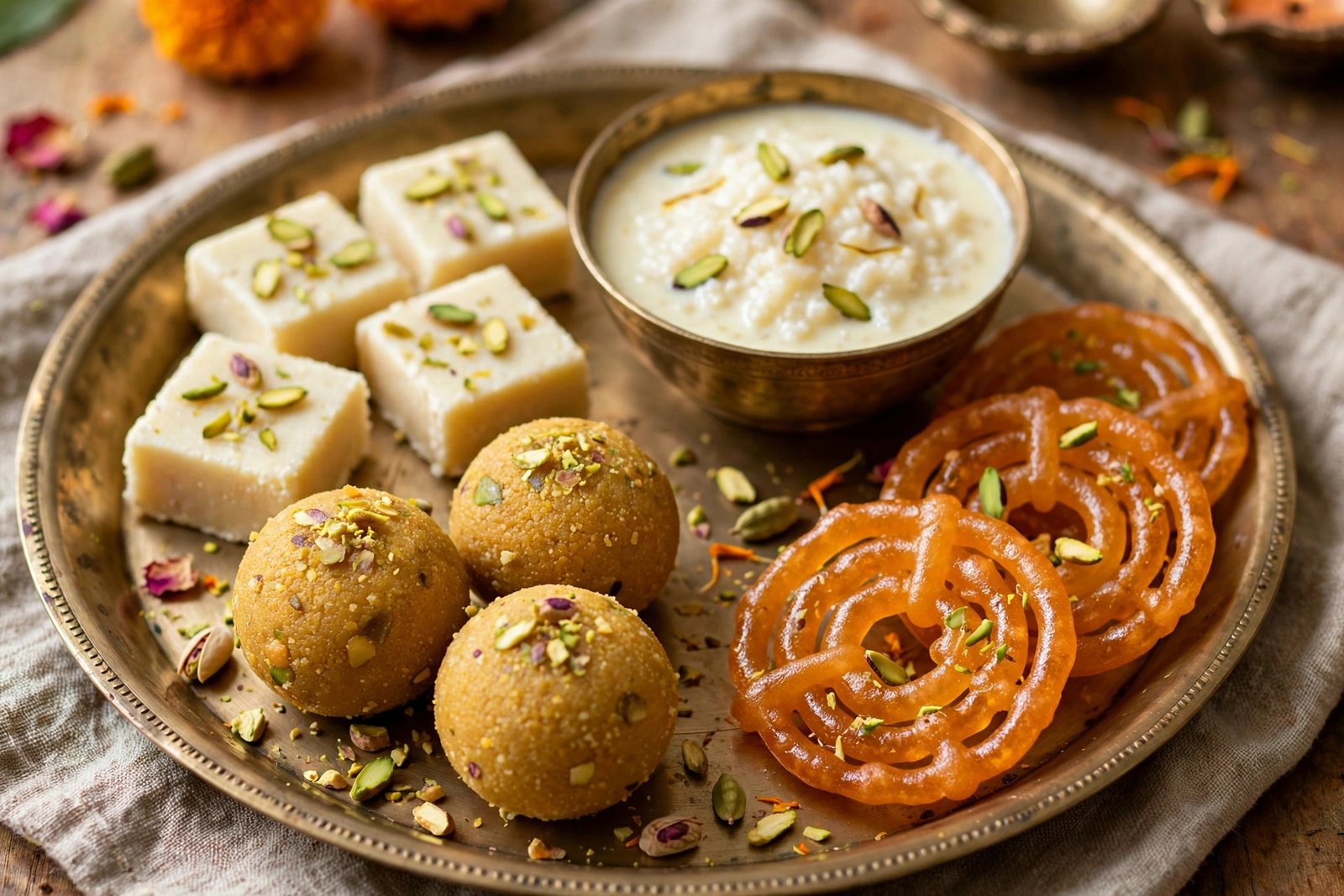
Easy Homemade Diwali Sweets Recipes
Shop-bought mithai is convenient, but homemade Diwali sweets taste different — fresher, warmer, and exactly as sweet as your family likes them. The good news is that the classics are far easier than they look. With a little planning, you can make ladoo, barfi, kheer, and even jalebi at home in the days before Lakshmi Puja on Sunday, November 8, 2026, and have a sweet table that guests remember long after the diyas go out.
This guide gives you four reliable recipes with shortcuts, make-ahead tips, and common mistakes to avoid. No special equipment, no candy thermometer needed — just a heavy pan, patience, and good ingredients.
Key Takeaways
- Make ladoo and barfi 2–3 days ahead — they keep well and taste better the next day.
- Use a heavy-bottomed pan and low-medium heat for all milk- and sugar-based sweets.
- Roast besan and semolina until fragrant before adding sugar or milk — raw flour taste is the top mistake.
- Keep sugar syrup at one-string consistency for barfi and jalebi; too thick sets hard, too thin never sets.
- Store sweets in airtight boxes, layered with butter paper, and keep milk sweets refrigerated.
Besan Ladoo: The Classic That Never Fails
Besan ladoo is the first sweet most families learn, and for good reason: four ingredients, one pan, and a result that tastes like celebration. Roast 2 cups of besan (gram flour) in 1 cup of ghee on low-medium heat, stirring constantly, for 20–25 minutes until it turns golden and smells nutty. This step cannot be rushed — pale, under-roasted besan tastes raw, and burnt besan tastes bitter. Let the mixture cool slightly, then mix in 1 cup of powdered sugar, ½ teaspoon of cardamom, and a handful of chopped nuts. Shape into balls while still warm; if the mixture crumbles, add a spoon of warm ghee.
Variations: add a spoon of roasted semolina for texture, roll the finished ladoos in desiccated coconut, or press a pistachio sliver on top. Besan ladoos keep for two weeks in an airtight box at room temperature, which makes them the perfect make-ahead sweet. For more make-ahead festival cooking, our make-ahead baking ideas share the same plan-ahead logic for busy celebration weeks.
Kaju Barfi: Elegant, Simple, Impressive
Kaju barfi looks like a sweet-shop showpiece but needs only cashews, sugar, and cardamom. Grind 2 cups of cashews into a fine powder — pulse, do not blend continuously, or the nuts release oil and turn to butter. Make a sugar syrup from 1 cup of sugar and ½ cup of water, cooking until it reaches one-string consistency (a drop between thumb and finger stretches into a single thread). Stir in the cashew powder and ½ teaspoon of cardamom, and cook on low heat, stirring, until the mixture pulls away from the pan and forms a soft dough.
Turn the dough onto a greased plate or butter paper, roll it to about ½ cm thick, and cut into diamonds while still warm. Optional silver leaf (varq) on top makes it look truly festive. Let it cool completely before separating the pieces. If the barfi is too soft, the syrup was undercooked; if it cracks, it was overcooked — both are fixable next time by watching the one-string stage carefully. For other festive bakes that reward patience, our festive baking guide covers the same low-and-slow principles.
Kheer: The Comfort Sweet Everyone Loves
Kheer is the most forgiving Diwali sweet and the one guests ask for by name. Rinse ¼ cup of basmati rice and soak for 30 minutes. Boil 1 litre of full-cream milk, add the rice, and simmer on low heat for 45–60 minutes, stirring often, until the rice is soft and the milk has thickened to a creamy consistency. Stir in ½ cup of sugar, ½ teaspoon of cardamom, and a pinch of saffron soaked in warm milk. Finish with chopped pistachios and almonds.
Shortcuts that work: use condensed milk for half the milk to cut cooking time, or make the kheer a day ahead — it thickens beautifully overnight in the fridge, and you can loosen it with a splash of warm milk before serving. Serve kheer chilled in small bowls or warm in earthen bowls (matkas) for a traditional touch. Variations include vermicelli kheer (seviyan), which cooks in 20 minutes, and pumpkin or carrot kheer for a seasonal twist.
Jalebi Shortcuts: Crispy Without the Stress
Traditional jalebi needs fermented batter, which scares many home cooks. The shortcut version uses a simple batter of 1 cup of plain flour, 2 tablespoons of cornflour, ½ teaspoon of baking powder, and enough water to make a thick, pourable batter — no fermentation needed. Rest it 15 minutes, then pipe spirals into hot (not smoking) oil or ghee using a squeeze bottle or a piping bag with a small nozzle. Fry until golden and crisp, then soak in warm sugar syrup (1 cup sugar, ½ cup water, cardamom, a squeeze of lemon) for 30 seconds per side.
The keys to crisp jalebi: oil at medium heat (too hot burns the outside before the inside cooks), syrup warm rather than boiling (boiling syrup makes jalebi soggy), and serving within a few hours. Jalebi is best made on the day of the celebration — it is the one sweet in this guide that does not improve with keeping. Pair it with rabri (thickened sweet milk) for the classic jalebi-rabri combination that guests love. For a simpler sweet bread to serve alongside, our festive sweet bread recipe is an easy, crowd-pleasing bake.
Planning Your Sweet Table
Make ladoo and barfi on Wednesday or Thursday before Diwali, kheer on Saturday, and jalebi on the day itself. Present sweets on a brass plate or a tiered stand, garnished with pistachio slivers and dried rose petals, with small labels if you have made several kinds. Keep milk sweets refrigerated and bring them to room temperature 30 minutes before serving. And make a little extra — Diwali sweets are for sharing with neighbours, colleagues, and anyone who drops by, and running out is the only real failure.
For gifting, pack mixed boxes: two ladoos, two barfi pieces, and a small jar of dry fruits. A handwritten note on top turns a sweet box into a gift. For more on festive hosting, our cozy seasonal recipes and make-ahead dishes show how planning ahead makes celebration cooking enjoyable rather than exhausting.
Frequently Asked Questions
Which Diwali sweet is easiest for a beginner?
Besan ladoo. Four ingredients, one pan, no syrup stage to judge, and it keeps for two weeks. Start there, then try kheer.
How far ahead can I make Diwali sweets?
Ladoo and barfi: 1–2 weeks at room temperature. Kheer: 2–3 days refrigerated. Jalebi: same day only, for the best crispness.
How do I fix barfi that will not set?
Return it to the pan with a splash of milk and cook a few minutes longer, then re-test the one-string stage. Undercooked syrup is the usual cause.
Can I reduce sugar in these recipes?
Yes, by about a quarter, without affecting texture much. For ladoo and kheer, reducing sugar is easy; for barfi and jalebi, the syrup chemistry matters more, so reduce cautiously.
Homemade Diwali sweets are not about perfection — they are about the smell of roasting besan filling the house, the first crisp jalebi off the pan, and a sweet table that says you cared enough to make it yourself. Start with one recipe, enjoy the process, and let the festival taste as good as it looks.