
Cranberry Orange Bread Recipe: Easy Moist Loaf
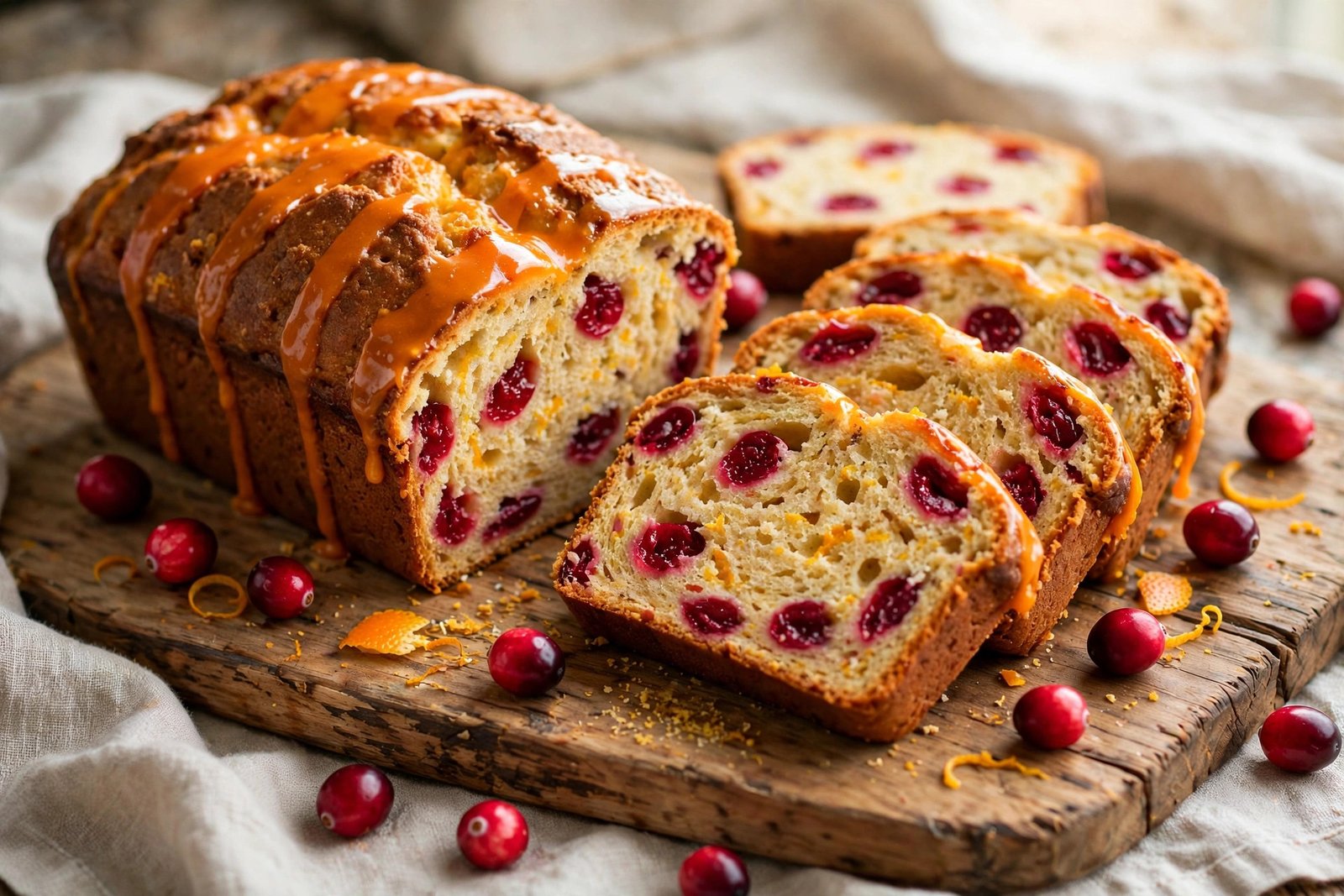
There is a reason cranberry orange bread shows up every November and December: it tastes like the holidays without demanding a whole afternoon in the kitchen. Tart cranberries, bright orange zest and a tender, buttery crumb make a loaf that works for breakfast, afternoon tea, a holiday brunch table and a thoughtful homemade gift. This cranberry orange bread recipe is deliberately simple — one bowl for the wet ingredients, one for the dry, no mixer required — yet it bakes up moist, fragrant and beautifully domed every time.
The secret is balance. Cranberries on their own are sharply tart, and orange on its own can taste flat in a baked loaf. Together, with just enough sugar and a spoonful of orange juice in the batter, they sharpen and sweeten each other. A light orange glaze on top, added while the loaf is still slightly warm, seals in moisture and gives every slice a glossy, citrus finish. If you have never baked with fresh cranberries before, this is the perfect place to start: they need no prep beyond a quick rinse and a rough chop, and they soften into jammy pockets as the loaf bakes.
Key Takeaways
- Fresh or frozen cranberries both work; do not thaw frozen berries before mixing them in.
- Orange zest carries most of the flavour, so zest before you juice and avoid the bitter white pith.
- Do not overmix once flour is added, or the loaf will turn tough instead of tender.
- A simple orange glaze, brushed on while warm, keeps the loaf moist for days.
- The loaf freezes beautifully for up to three months, making it ideal for holiday gifting.
- Serve it warm with butter, or toasted the next day with cream cheese.
Why This Recipe Works
Quick breads fail for two predictable reasons: they are either dry or dense. This recipe avoids both. Buttermilk (or plain yoghurt) adds tenderness and a gentle tang that echoes the cranberries, melted butter keeps the crumb rich without creaming, and the batter is deliberately thick so the berries stay suspended instead of sinking to the bottom. Baking at a moderate oven temperature lets the centre set fully before the crust over-browns, which is the usual cause of a loaf that looks done outside and stays gummy inside.
It is also forgiving. If your cranberries are extra tart, the glaze compensates. If you only have a loaf tin that is slightly larger or smaller, the baking time shifts by just a few minutes. And if you want to dress it up for a festive table, a handful of sugared cranberries and a few orange slices on top turn an everyday loaf into a centrepiece — the same kind of low-effort, high-impact thinking behind our Christmas table setting ideas, where one beautiful focal point does most of the work.
Ingredients
For the loaf
- 2 cups (250g) plain flour, spooned and levelled
- 1 cup (200g) granulated sugar
- 1½ teaspoons baking powder
- ½ teaspoon bicarbonate of soda
- ½ teaspoon fine salt
- Zest of 2 large oranges (about 2 tablespoons)
- ¾ cup (180ml) buttermilk, at room temperature
- ⅓ cup (80ml) neutral oil or melted butter, slightly cooled
- 2 large eggs, at room temperature
- ¼ cup (60ml) fresh orange juice
- 1 teaspoon vanilla extract
- 1½ cups (150g) fresh or frozen cranberries, roughly chopped
- 2 tablespoons flour, for tossing the cranberries
For the orange glaze
- ¾ cup (90g) icing sugar, sifted
- 2–3 tablespoons fresh orange juice
- ½ teaspoon orange zest, optional
Method: Step by Step
- Prepare the tin and oven. Heat the oven to 175°C (350°F). Grease a 9×5-inch loaf tin and line it with a strip of baking paper that overhangs the long sides, so you can lift the loaf out easily.
- Whisk the dry ingredients. In a large bowl, whisk the flour, sugar, baking powder, bicarbonate of soda and salt. Rub the orange zest into the sugar-flour mixture with your fingertips until fragrant — this releases the oils and perfumes the whole loaf.
- Mix the wet ingredients. In a second bowl or jug, whisk the buttermilk, oil or melted butter, eggs, orange juice and vanilla until smooth and combined.
- Combine gently. Pour the wet mixture into the dry and stir with a spatula just until no dry flour remains. A few small lumps are fine; overmixing develops gluten and makes the bread tough.
- Add the cranberries. Toss the chopped cranberries in the extra 2 tablespoons of flour, then fold them into the batter. The flour coating helps them stay evenly distributed.
- Bake. Scrape the batter into the tin and smooth the top. Bake for 55–65 minutes, until a skewer inserted in the centre comes out clean or with just a few moist crumbs. If the top browns too quickly, tent it loosely with foil for the last 15 minutes.
- Cool, then glaze. Cool in the tin for 15 minutes, then lift out and cool on a rack for another 20 minutes. Whisk the icing sugar with orange juice until pourable, drizzle over the still-slightly-warm loaf, and let it set for 20 minutes before slicing.
For clean slices, use a serrated knife and a gentle sawing motion rather than pressing straight down, which squashes the soft crumb. The loaf slices best once fully cool, but a warm first slice with salted butter is one of baking’s great rewards — enjoy it standing in the kitchen, as tradition dictates.
Variations Worth Trying
Once you have the base loaf down, it adapts easily. For a nuttier version, fold in ¾ cup of chopped toasted pecans or walnuts with the cranberries. For a more festive loaf, add ½ teaspoon of ground cinnamon and a pinch of nutmeg to the dry ingredients, and top the glaze with sugared cranberries. For a lighter, summery take, swap half the cranberries for blueberries and add a tablespoon of lemon zest alongside the orange.
You can also bake the batter as muffins: divide it between 12 lined muffin cups and bake at the same temperature for 20–24 minutes. Muffins freeze just as well as the loaf and make excellent lunchbox treats or a quick addition to a home coffee station morning, when something homemade beside the coffee feels like a small luxury. For a dairy-free version, use oat milk soured with a tablespoon of lemon juice in place of buttermilk, and oil instead of butter — the crumb stays moist, though slightly less rich.
Storage, Freezing and Gifting
Wrap tightly in cling film or foil. It stays moist for 3–4 days, and actually tastes better on day two as the orange flavour deepens.
Freeze unglazed, wrapped twice, for up to 3 months. Thaw overnight in the fridge, then glaze fresh before serving.
Slice first, freeze in a single layer, then bag. Toast straight from frozen for a fast breakfast.
Wrap in baking paper, tie with twine, and add a dried orange slice. It travels well and looks beautiful.
If you are baking for guests, this loaf pairs naturally with a holiday spread. It sits happily beside the savoury dishes in our Friendsgiving dinner party ideas as a sweet counterpoint, or as the baked offering you bring when you do not want to arrive empty-handed. Baked goods are among the most welcome host gifts because they are personal, useful and gone within a day — unlike another bottle that joins a crowded shelf.
Frequently Asked Questions
Can I use dried cranberries instead of fresh?
Yes, but soak 1 cup of dried cranberries in warm orange juice for 20 minutes first, then drain. Dried berries are sweeter and less tart, so reduce the sugar by 2 tablespoons if you prefer a less sweet loaf.
Do I need to thaw frozen cranberries?
No — use them straight from the freezer, chopped while still firm. Thawed berries bleed colour into the batter and turn it pink, while frozen ones hold their shape and colour.
Why did my loaf sink in the middle?
Usually the oven door was opened too early, the loaf was underbaked, or the batter was overmixed. Bake until a skewer comes out clean, resist peeking before 45 minutes, and stir only until the flour disappears.
Can I make this loaf gluten-free?
A good 1:1 gluten-free flour blend works well. Add an extra egg yolk for structure and check the loaf 5 minutes early, as gluten-free batters can brown faster.
How do I stop cranberries sinking to the bottom?
Toss them in flour before folding in, and keep the batter thick. If your batter seems thin, add a tablespoon of extra flour. Chopped berries also suspend better than whole ones.
Is the glaze necessary?
Not strictly, but it adds shine, extra orange flavour and a moisture seal. If you prefer less sweetness, brush the warm loaf with plain orange juice instead, or skip the topping entirely.
Bake It This Weekend
Cranberry orange bread is the rare recipe that is both impressively festive and genuinely easy — the kind of bake that earns compliments far out of proportion to the effort. Mix it on a quiet afternoon, glaze it while warm, and slice it for people you like. Save one loaf for the freezer, too: future you, facing an unexpected guest or a chilly morning, will be very grateful.