
Items Movers Will Not Move: The Complete List to Check Before Moving Day
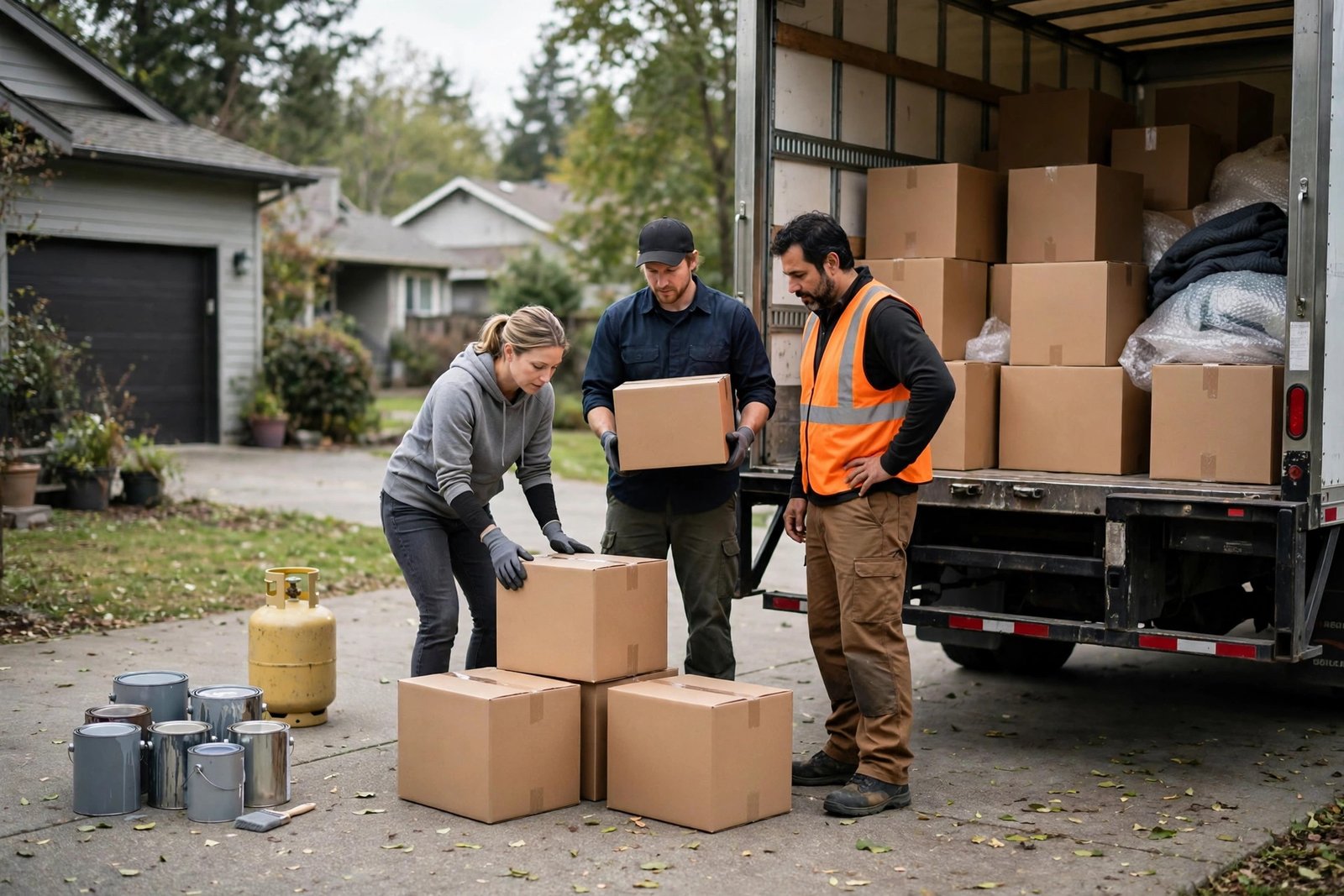
Picture moving day. The truck is in the driveway, the crew is working fast, and then the foreman stops at a box in your garage and shakes his head. He cannot take it. That box — full of paint cans, propane tanks, or cleaning chemicals — is staying behind, and now you have a last-minute problem with nowhere to put it. This scene plays out in homes every single week, and it is almost always avoidable. Most professional moving companies refuse the same categories of items, for the same three reasons: safety, the law, and liability.
Knowing the list before you start packing changes everything. It lets you use up, donate, sell, or transport certain things yourself while there is still time, instead of discovering the problem when the truck is already half loaded. This guide covers every major category movers will not move, explains why each refusal exists, and gives you a practical plan for each one so nothing derails your move.
Key Takeaways
- Movers will not move hazardous materials: fuel, paint, aerosols, propane, chemicals, fireworks, and ammunition.
- Perishable food, plants, and pets are almost always excluded — plan separate transport for all three.
- Cash, jewellery, important documents, and irreplaceable sentimental items should travel with you personally.
- Ask your mover for their written non-allowables list at booking time, not on moving day.
- Use up, donate, or safely dispose of banned items weeks before the move to avoid a moving-day scramble.
- When in doubt about one item, ask — company policies vary, and a quick question saves a crisis.
Why Movers Refuse Certain Items
The first reason is safety. A moving truck is a sealed metal box that bounces, brakes, heats up in summer, and may sit loaded overnight. Flammable liquids, pressurised canisters, and chemicals that react with each other become genuinely dangerous in those conditions. Movers are not being difficult when they refuse these items; they are protecting their crew, your belongings, and everyone else on the road.
The second reason is the law. Transport regulations restrict how hazardous materials can be carried, and household moving trucks are not licensed or equipped as hazmat vehicles. Some items, such as firearms in certain jurisdictions or large quantities of fuel, carry legal requirements that a standard mover cannot meet. Companies that break these rules risk fines, loss of insurance, and loss of their operating licence, so compliance is not optional for them.
The third reason is liability. Movers carry insurance for your household goods, but that cover has limits and exclusions. High-value items such as cash and jewellery are often excluded or capped at a low value, because the mover cannot verify what was in a sealed box. The same logic applies to living things: a mover cannot guarantee a pet or plant will survive hours in a hot truck, so reputable companies will not accept that risk.
Hazardous Materials: The Hard No
Hazardous materials are the largest and least negotiable category. If it burns, explodes, corrodes, or releases toxic fumes, assume your mover will not take it. The list includes gasoline and diesel fuel, kerosene, motor oil, paint, paint thinner, varnish, solvents, and stains. It includes propane tanks, whether full or partly used, and any other compressed gas cylinders. Aerosol cans — spray paint, hairspray, deodorant, cleaning sprays, and insecticides — are usually refused in bulk, though a few small personal toiletries may be allowed; check your company’s exact rule rather than assuming.
Household chemicals belong on this list too: bleach, ammonia, drain cleaner, pool chemicals, pesticides, herbicides, fertilisers, and darkroom chemicals. So do fireworks, ammunition, gunpowder, and lighter fluid. Even items that seem harmless can qualify: nail polish remover is flammable, charcoal lighter fluid is flammable, and some glues and adhesives give off fumes that build up in a sealed truck. If you have a garage, shed, or utility cupboard, walk through it with this list in hand a month before moving and sort everything into keep-and-carry-yourself, use up, donate, or dispose of.
The practical approach is to stop buying these products weeks before the move and use up what you have. Half-empty paint cans can often be donated to community reuse schemes or taken to a household hazardous waste facility. Fuel should never be poured down a drain or onto the ground; your local waste authority will tell you where to take it. Propane tanks can usually be returned to the supplier. Arrive at moving day with nothing left for the crew to refuse.
Perishable Food, Plants, and Pets
Perishable food is the next common refusal, and it catches people by surprise because a freezer full of food feels like a household good like any other. It is not, from the mover’s point of view. Frozen and refrigerated food spoils quickly in a truck, leaks as it thaws, and can ruin neighbouring boxes. Most movers will not transport perishables at all, and for long-distance moves the refusal is effectively universal. Plan a deliberate run-down: stop bulk buying a few weeks out, plan meals around the freezer, and donate unopened non-perishables to a food bank. Anything left travels in a cooler in your own car, if at all.
Plants are refused for overlapping reasons. They are fragile, they need light and water, and they can carry pests or soil-borne diseases across boundaries — some jurisdictions legally restrict plant movement for exactly that reason. A mover cannot guarantee a plant’s survival in a dark, hot truck, and a tipped pot can damage everything around it. Move plants in your own vehicle, upright in open boxes, watered the day before so soil is damp but not dripping. For long moves, give larger plants to friends and take cuttings instead.
Pets are never cargo on a household moving truck, and any company that offered to carry them should worry you. Animals need ventilation, temperature control, water, and bathroom breaks, none of which a sealed truck provides. Pets travel with you, in your car, in a carrier, with their food, water, medication, and comfort items close at hand. Our guide to moving with pets tips covers the full routine for keeping animals calm through the disruption. Plan vet visits, medication refills, and identification updates before moving day so the pet plan is as solid as the box plan.
Valuables, Documents, and Sentimental Items
This category is different: movers may not refuse these items outright, but you should not hand them over anyway. Cash, jewellery, watches, coin and stamp collections, stock certificates, and high-value electronics fall under limited liability, meaning the mover’s insurance may only cover a small fraction of their value if they are lost or damaged. More importantly, these are the items whose loss hurts most, and no insurance payout replaces a grandmother’s ring or a childhood photo album.
Important documents belong in the same personal-carry bag: passports, birth certificates, marriage certificates, property deeds, insurance papers, medical records, school records, and moving paperwork itself, including the mover’s contract and inventory. Keep them in one folder or bag that stays with you from the old home to the new one, never in a moving box. The same goes for laptops, external hard drives, and anything containing irreplaceable data — back up digitally before the move, then carry the device yourself.
Sentimental items deserve the same treatment even when they have little monetary value. Children’s favourite toys, photo albums, family heirlooms, and handmade gifts are the things people most regret losing in a move, precisely because they cannot be replaced. Pack a clearly labelled “do not load” zone — a car boot, a bathroom, or a corner of a room — and put everything personal-carry there the night before. Tell the crew explicitly that the zone is not to be loaded. A simple conversation at the start of moving day prevents the most heartbreaking moving mistakes.
Other Items That Surprise People
Several everyday items surprise homeowners because they look ordinary. Opened food containers and liquids are often refused because they leak; movers prefer sealed, unopened pantry goods, and even those may be limited on long moves. Candles seem harmless, but they melt in a hot truck and ruin nearby items, so many movers refuse them in summer or ask you to carry them yourself. Similarly, pressed wood and particleboard furniture that is already damaged may be refused or moved only with a liability waiver, because it often falls apart in transit.
Large or unusual items can also be a problem: pianos, pool tables, safes, hot tubs, and grandfather clocks often need specialist movers or extra equipment, and a standard crew may decline them or charge extra. The same applies to items that are not properly prepared, such as a washing machine that has not been drained or a television that has not been packed. If you are unsure whether a bulky item qualifies, raise it at the quotation stage so the company can plan crew, equipment, and price honestly. For help getting ready in general, our guide to how to prepare for movers to pack walks through the whole preparation routine.
Finally, remember that policies vary between companies and between local and long-distance moves. One company may allow sealed cleaning products while another refuses them, or move plants locally but not across the country. That variation is why you should get the written non-allowables list at booking time. If your mover refuses an item that matters to you, ask whether a specialist carrier, a courier, or your own vehicle is the right alternative — there is almost always a legal, safe route for it.
Your Pre-Move Plan for Refused Items
Ask your mover for their written non-allowables list when you book, and compare it with your garage, shed, and cupboards.
Stop buying paint, fuel, and chemicals weeks before moving, and plan meals and projects that consume what you already own.
Unopened food, usable paint, and garden chemicals can often go to food banks, reuse schemes, or neighbours.
Take hazardous waste to your local collection facility. Never pour fuel or chemicals down drains or onto soil.
Valuables, documents, medication, chargers, and sentimental items travel with you, never on the truck.
Choose one room or corner for personal-carry items and tell the crew clearly before loading starts.
Sorting refused items early also helps you declutter, which is one of the most valuable things you can do before a move. Our guides to how to declutter before moving and what not to pack when moving pair naturally with this list, and if you are still choosing a company, how to choose a moving company explains what to ask at quotation stage, including the non-allowables question.
Frequently Asked Questions
What items will movers not move?
Hazardous materials such as fuel, paint, propane, aerosols, and chemicals; perishable food; plants; pets; and items outside their insurance cover such as cash and jewellery. Always get your company’s written non-allowables list, as exact policies vary.
Can movers take paint cans or propane tanks?
Almost never. Paint, solvents, and propane are flammable and classified as hazardous materials, so standard moving trucks are not licensed to carry them. Use them up, donate usable paint, or take them to a hazardous waste facility.
Will movers move my plants?
Most will not, especially on long-distance moves, because plants are fragile, need light and water, and can carry pests across boundaries. Move plants in your own vehicle, or take cuttings and give larger plants to friends.
Should I let movers carry my jewellery and important documents?
No. Carry valuables, cash, jewellery, passports, deeds, and medical records yourself. Movers’ liability for these items is usually capped at a low value, and some things, like family photos, cannot be replaced at any price.
What should I do with items my mover refuses?
Use up what you can before moving day, donate usable items, take hazardous waste to a proper collection facility, and transport the rest yourself in your own car. Start this process weeks early so nothing is left for moving-day panic.
Check the List Before You Pack a Single Box
The single most useful moving-day habit is also the simplest: ask for the non-allowables list before you pack. One email to your mover, one walk through the garage and shed, and one personal-carry bag can save you the most stressful hour of the entire move. You will arrive at the new home with everything that matters, nothing dangerous in the truck, and no last-minute pile of refused boxes on the driveway.
Start today, even if moving day is weeks away. Sort the hazardous items, plan the pet and plant transport, and set aside the valuables that travel with you. Your movers will thank you, your belongings will be safer, and moving day will run the way it should: steadily, safely, and without surprises.