
How Much Does Deep Cleaning Cost? Prices, Factors, and What Is Included
A regular clean keeps a home ticking over. A deep clean resets it. It reaches the places routine cleaning never touches: behind the cooker, inside the oven, on top of the cupboards, under heavy furniture, along skirting boards and grout lines, and inside light fittings and vents. It is the clean people book before moving house, after building work, at the change of seasons, or when a home has simply drifted past the point where a quick tidy can fix it. It is also, understandably, more expensive than a standard clean — and the price varies a lot.
So how much does deep cleaning cost? The honest answer is that it depends on the size of your home, its condition, where you live, and exactly what is included. This guide explains typical price ranges, the factors that push costs up or down, what a proper deep clean should cover room by room, how deep cleaning differs from regular cleaning, and when it makes sense to hire professionals versus doing it yourself. No brand names, no sales pitch — just the information you need to get a fair quote.
Key Takeaways
- Deep cleaning typically costs roughly two to three times a regular clean, because it takes far longer and covers far more.
- Home size is the biggest price driver, followed by condition, pets, clutter, and add-on services like oven or carpet cleaning.
- Most professionals price by home size and hours, or by a flat rate for a defined checklist — always ask which one applies.
- A proper deep clean covers inside appliances, high and low surfaces, grout, skirting, vents, and behind movable furniture.
- DIY deep cleaning saves money but costs a full weekend or more, plus equipment and cleaning products.
- Compare quotes on the same checklist. The cheapest quote often simply includes less work.
Deep Cleaning vs Regular Cleaning: Why the Price Differs
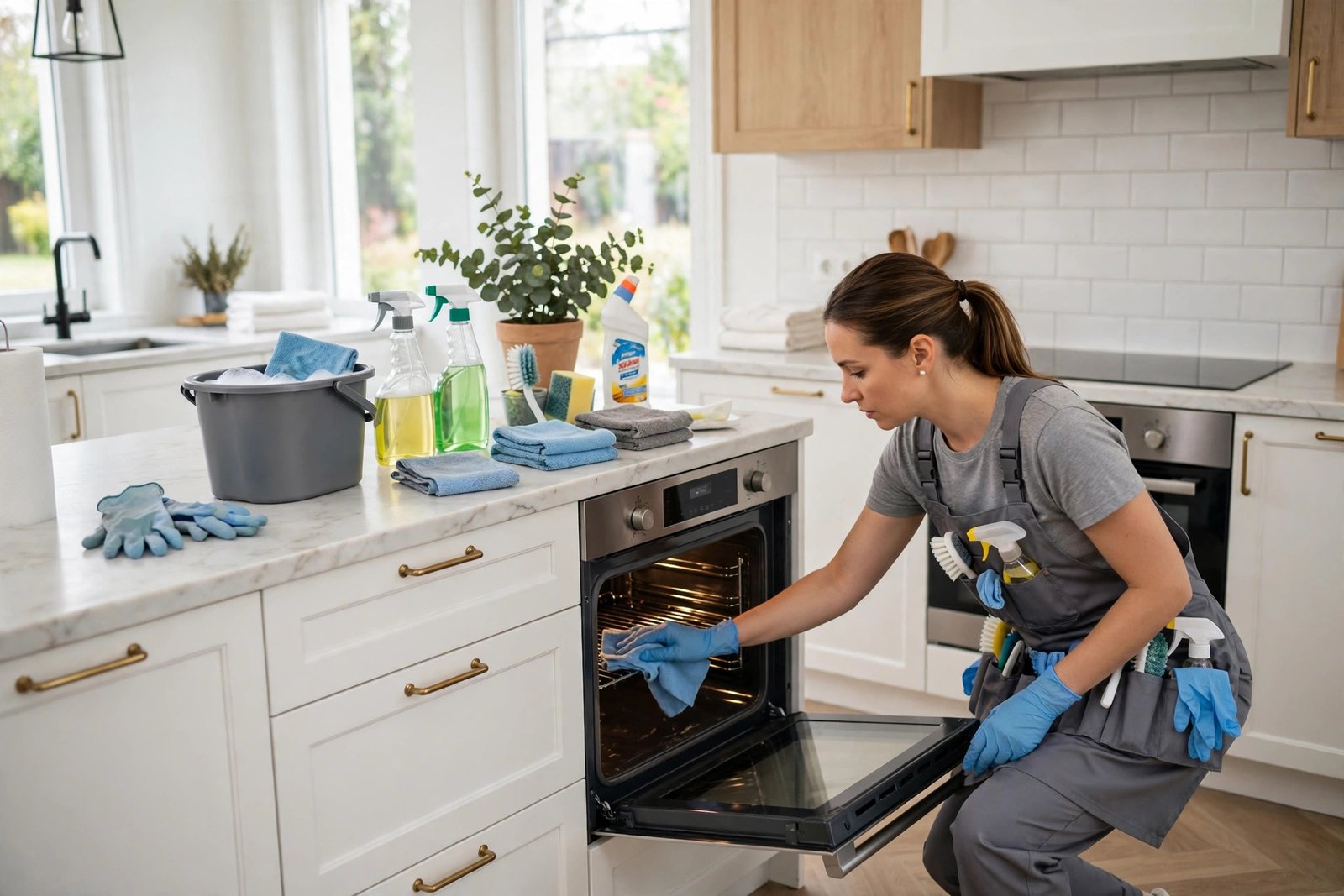
Regular cleaning covers the visible, everyday jobs: dusting open surfaces, vacuuming and mopping floors, wiping worktops and sinks, cleaning toilets and showers, and taking out rubbish. It assumes the home is already in reasonable order and maintains it. Deep cleaning assumes it is not. It adds the hidden, neglected, and time-consuming jobs: degreasing extractor filters, descaling taps and showerheads, scrubbing grout, washing inside cupboards and drawers, cleaning behind and under appliances, dusting ceiling fans and vents, and polishing fixtures until they look new.
That difference explains the price gap. A regular clean of an average home might take two to three hours; a deep clean of the same home commonly takes five to eight hours, sometimes with two cleaners working together. More hours, more products, more equipment, and more attention to detail all cost money. If you are unsure which service you need, our comparison of the difference between deep cleaning and regular cleaning lays out the two checklists side by side. As a rule of thumb, if it has been more than six months since a thorough clean, if you are moving in or out, or if the home has had building work or a long period of neglect, you need a deep clean, not a regular one.
Typical Deep Cleaning Prices by Home Size
Prices vary by country and city, and labour rates in large cities run higher than in smaller towns, so treat the ranges below as a planning guide rather than a quote. For a small one-bedroom home or apartment, a professional deep clean commonly falls in the lower range, reflecting three to five hours of work. A two-bedroom home usually costs noticeably more, and a three-bedroom family home more again, because each extra bedroom, bathroom, and living space adds surfaces, fixtures, and floor area.
Large homes with four or more bedrooms, multiple bathrooms, and features like conservatories, basements, or large kitchens sit at the top of the range, and very large or heavily soiled properties may be priced by the hour after an initial assessment. Bathrooms and kitchens drive a disproportionate share of the cost because they contain the most fixtures, grease, limescale, and grout. A home with one bathroom is far quicker to deep clean than a home with three, even if the bedroom count is the same. When you request quotes, state the number of bedrooms and bathrooms, the approximate floor area, and whether you have pets — cleaners use those facts to estimate hours, and accurate information prevents surprise surcharges on the day.
The Factors That Push the Price Up or Down
Condition is the second-biggest factor after size. A well-kept home that simply needs a thorough reset costs less than a home with heavy grease, mould, pet hair, stains, or months of accumulated dust. Cleaners may charge extra for severe soiling, mould treatment, or stain removal, and some jobs — like heavy mould remediation or pest-related cleaning — fall outside standard deep cleaning altogether and need specialists.
Clutter slows everything down. If cleaners must move piles of belongings, clear surfaces, or work around boxes and laundry, the job takes longer and costs more. Clearing clutter before the appointment is the easiest way to control the price. Pets add hair to every surface, especially upholstery and carpets, and may add a surcharge. Location matters too: city rates, parking costs, and travel time all feed into the quote. Finally, add-ons stack up quickly. Oven cleaning, fridge and freezer defrosting, carpet shampooing, window cleaning, and laundry services are sometimes included and sometimes charged separately — always ask. Our deep cleaning checklist is a useful tool for checking exactly what a quote covers before you accept it.
What a Proper Deep Clean Should Include
A trustworthy deep clean follows a room-by-room checklist, and you should receive that checklist before the work starts. In the kitchen, expect inside and outside of cupboards and drawers, degreased hob, extractor and filters, oven and microwave interiors, descaled taps, cleaned splashbacks and grout, and appliances pulled out and cleaned behind where safe. In bathrooms, expect descaled showerheads and taps, scrubbed grout and tiles, cleaned extractor fans, polished mirrors and fixtures, and inside cabinets.
In living areas and bedrooms, expect dusting of all surfaces including high shelves, picture frames, and light fittings, vacuuming under furniture and cushions, cleaning skirting boards, door handles, and switches, and washing accessible interior windows and sills. Throughout the home, expect vacuuming and mopping of all floors, cobweb removal, vent and radiator cleaning, and rubbish removal. What is usually not included — unless stated — is exterior window cleaning above ground level, carpet shampooing, upholstery deep cleaning, garden work, and hazardous waste removal. If any of those matter to you, ask for them explicitly and get the extra cost in writing.
DIY vs Hiring Professionals
Doing a deep clean yourself saves the labour cost, which is the largest part of any quote, but it is not free. You will need a full weekend for an average home — often two days of solid work — plus cleaning products, cloths, a good vacuum, a steam cleaner or grout brush for stubborn areas, and protective gloves. The work is physically demanding, and jobs like oven degreasing, grout scrubbing, and high dusting are slow without professional tools. DIY makes most sense for smaller homes, for people who enjoy the work, or when the budget is tight and time is plentiful.
Hiring professionals buys speed, equipment, and consistency. A trained team cleans systematically, brings commercial-grade products and machines, and finishes in hours what takes a homeowner days. It also buys accountability: reputable cleaners are insured, so accidental damage is covered, and many offer a re-clean guarantee if you are unhappy. The middle path works well for many households: hire professionals for the hardest rooms — kitchen and bathrooms, plus oven and carpets — and handle bedrooms and living areas yourself. For ongoing upkeep after the reset, see how to clean your house fast and how much does house cleaning cost to plan regular maintenance that keeps the deep-clean result lasting longer.
How to Get a Fair Quote and Avoid Surprises
Compare quotes on identical checklists. A cheap quote that skips ovens and grout is not a bargain.
Give bedrooms, bathrooms, pets, and honest condition details so the quote reflects the real job.
Flat rates protect you from slow work; hourly rates suit unusual homes. Know which you are agreeing to.
Clear surfaces and floors before cleaners arrive. Every hour saved on moving belongings saves money.
Use insured cleaners with a damage policy and a re-clean guarantee. Ask before booking, not after a problem.
Midweek slots are often cheaper and easier to book than weekends and end-of-month moving dates.
Finally, get at least two or three quotes, and be suspicious of any quote given without questions about your home. A careful cleaner asks about size, bathrooms, pets, and condition; a careless one guesses. Also confirm what happens if the job overruns: is the price fixed, or does the clock keep running? Written confirmation of price, checklist, timing, and guarantee turns a vague promise into a service you can hold to account.
Frequently Asked Questions
How much does deep cleaning cost on average?
It depends on size and location, but expect roughly two to three times the cost of a regular clean for the same home. Small homes sit at the lower end, large family homes with multiple bathrooms at the higher end, with condition and add-ons moving the price further.
What is included in a deep clean?
Inside appliances and cupboards, degreasing and descaling, grout scrubbing, high and low dusting, skirting boards, vents, and cleaning behind movable furniture. Carpet shampooing, exterior windows, and garden work are usually extra unless stated.
How long does a deep clean take?
A small home may take three to five hours; an average family home commonly takes five to eight hours, often with two cleaners. Heavily soiled or very large homes can take a full day or more.
How often should you deep clean a house?
Most homes benefit from a deep clean every three to six months, with regular cleaning in between. Homes with pets, allergies, children, or heavy cooking may need it more often.
Is deep cleaning worth the money?
For moves, post-renovation resets, seasonal refreshes, and neglected homes, yes — it restores hygiene, appearance, and air quality in a way routine cleaning cannot. For well-maintained homes, a regular clean plus targeted deep tasks may be enough.
Can I deep clean my house myself?
Yes, with a full weekend, the right products, and patience. DIY saves labour cost but takes far longer and lacks professional equipment. Many people hire professionals for kitchens, bathrooms, and ovens and do the rest themselves.
Get the Reset Your Home Deserves
Deep cleaning is not a luxury extra — it is the periodic reset that keeps a home healthy, pleasant, and easier to maintain. Price it honestly: size, condition, and checklist first, then compare like with like. Declutter beforehand, confirm insurance and guarantees, and choose the provider whose checklist matches your home’s actual needs.
Whether you hire a team or roll up your sleeves for a weekend, the result is the same reward: a home that smells fresh, looks cared for, and stays clean far longer with ordinary upkeep. Book the deep clean, then protect the result with a regular routine — your future self will be grateful every time you walk through the door.