
What Attracts Ants in Your House? The Hidden Invitations You Did Not Know You Sent
You wipe the counters, you take out the rubbish, and yet the ants keep coming. It feels unfair, but ants are not visiting at random. A scout ant finds something worth reporting — a trace of sugar, a drop of grease, a damp corner, a warm shelter — and lays down a chemical trail that summons the rest of the colony. Your home is not being invaded by chance. It is being invited, often by things so small you would never notice them.
This guide is about those invitations. It explains exactly what draws ants indoors, from the obvious sugar spill to the surprising culprits like pet food, damp wood, and overgrown garden plants touching your walls. Understanding the attractants is the most powerful prevention step there is: remove what ants want, and most of them simply stop coming. This is not a removal guide — it is the guide to why they arrive in the first place, and how to stop inviting them.
Key Takeaways
- The top ant attractants are sugar, grease and protein, water and moisture, warmth, and sheltered nesting spots.
- Ants follow scent trails: even invisible food residue on counters, floors, and bins can summon a whole colony.
- Pet food left out, sticky jars, and unrinsed recycling are among the most common overlooked invitations.
- Damp wood, leaking pipes, and condensation attract moisture-loving ants and signal nesting opportunities.
- Ants enter through tiny gaps around doors, windows, pipes, and cables — sealing entry points removes the route in.
- Ant activity peaks in warm, dry weather and after rain, when colonies search for food and water indoors.
How Ants Decide Your Home Is Worth Visiting
To understand attractants, it helps to understand how ants search. A colony sends out scout ants to explore the surroundings for food and water. When a scout finds something useful, it carries a sample back to the nest while laying down a pheromone trail — an invisible chemical path that other ants follow. The richer the find, the stronger the trail, and the more ants arrive. That is why a single dropped crumb can become a visible trail within hours, and why the trail keeps returning to the same spot even after you wipe it: the scent, and the memory of a reliable food source, persist.
Different ant species want different things, which is why one home attracts sugar ants while another attracts larger carpenter ants. Sugar-loving species, the small ants most commonly seen in kitchens, are drawn to sweets, fruit, and syrups. Grease and protein feeders prefer meat residues, cooking oil, and pet food. Carpenter ants are more interested in damp, softened wood, where they excavate nests. Knowing which kind you are seeing tells you which attractant to hunt for first — our guides to how to get rid of sugar ants and how to get rid of carpenter ants describe each species in more detail.
The important point for prevention is that ants need three things to keep coming back: a food or water reward, a route in, and a reason to stay. Remove the reward and the route, and the trail fades. Prevention is less dramatic than treatment, but it is far more lasting.
Food Attractants: Sugar, Grease, and Everything Sticky
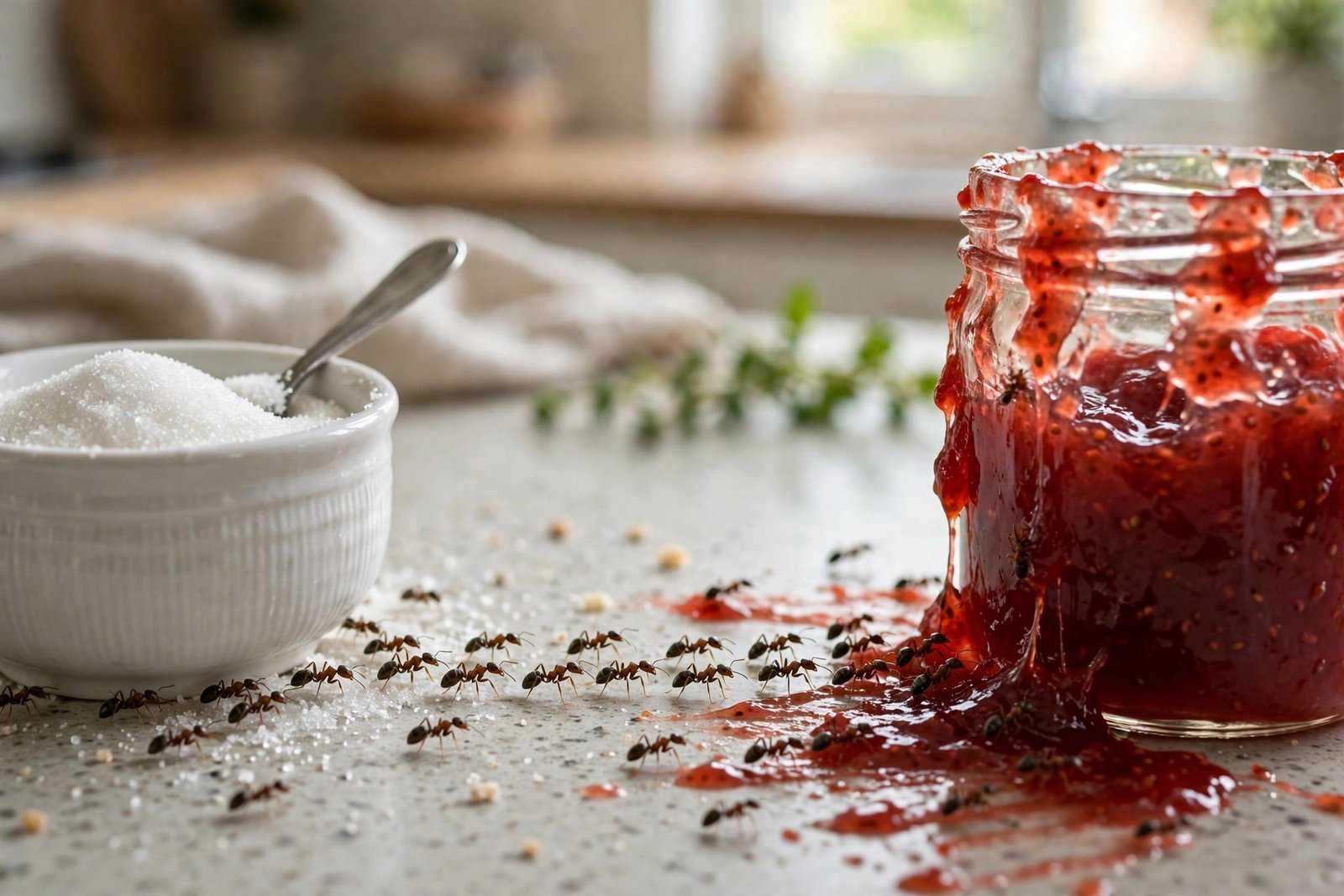
Sugar is the most famous ant attractant, and deservedly so. Spilled sugar, honey, jam, syrup, soft drink residue, and overripe fruit all release sweet scents scouts detect from surprising distances. The danger is not the obvious spill you clean up immediately; it is the invisible residue. A jam jar with a sticky rim, a honey bottle with drips down the side, a sugar bowl with grains around the base, a child’s juice box left on the counter — each one is a beacon. Store sugar, honey, syrups, and cereals in sealed, airtight containers, wipe jar rims and bottle exteriors, and rinse sticky containers before they go into the recycling.
Grease and protein are the second food group, easier to overlook because they do not smell sweet to us. Cooking oil splashes around the hob, grease films on the extractor filter, meat juices on a chopping board, and crumbs under the toaster all attract grease-feeding ants. Pet food is one of the biggest overlooked attractants: a bowl of kibble left out all day, or wet food sitting for hours, is an open buffet. Feed pets at set times, pick bowls up after meals, and store pet food sealed rather than in open bags.
Do not forget the places food hides out of sight: crumbs under the fridge and cooker, debris in the bin lid hinge, sticky residue inside the microwave, and the drip tray under the coffee machine. The same applies beyond the kitchen — a sweet wrapper in a bedroom bin or a fruit bowl left to overripen can start a trail. Wiping surfaces, vacuuming under appliances, and emptying small bins weekly removes these hidden rewards before scouts find them.
Water and Moisture: The Attractant Nobody Checks
Ants need water just as much as food, and in dry weather a reliable water source indoors can be the main reason they come inside. Leaking taps, dripping pipes under sinks, condensation on windows and cold water pipes, a damp bathroom floor, and water pooled in plant saucers all attract thirsty colonies. In kitchens and bathrooms, check under sinks regularly for slow leaks — the kind that keeps the cabinet floor permanently damp without ever forming a visible puddle. That dampness is exactly what moisture-loving ants seek, and it also softens wood, creating nesting opportunities.
Damp wood deserves special attention. Wood that stays wet from a leak, poor ventilation, or rain exposure softens over time, and softened wood is prime nesting material for carpenter ants, which excavate galleries inside it. Look for the warning signs: wood that feels soft or spongy, paint that bubbles or peels near water sources, and small piles of fine sawdust-like material near wooden structures. These are signs of a moisture problem first and an ant problem second — fixing the leak, improving ventilation, and drying the wood removes the underlying invitation, not just the symptom.
Outdoor moisture matters too. Overwatered beds against the wall, mulch piled against foundations, clogged gutters spilling water down the wall, and air-conditioning condensate dripping beside the house all create damp zones right where ants enter. Keep soil and mulch a few inches from the foundation, clear gutters seasonally, and direct downspouts away from the walls. A dry perimeter deters ants and protects against damp and rot.
Entry Points and Shelter: How Ants Get In and Stay
Ants do not need an open door. Most species can pass through gaps as narrow as a millimetre: cracks in foundations, gaps around window frames and door thresholds, spaces where pipes and cables enter the wall, vents without fine mesh, and the junction between a patio and the house wall. Once inside, wall cavities, loft insulation, and the voids behind kitchen units offer warm, undisturbed shelter. Sealing entry points is prevention at its most literal — no route, no visit — and it is worth doing systematically, room by room, with sealant, draught excluders, and fine mesh over vents.
Vegetation touching the house acts as a bridge over all that sealing work. Branches overhanging the roof, shrubs pressed against walls, and firewood stacked against the house all give ants a direct highway indoors that bypasses ground-level seals. Trim branches back from the roof and walls, keep shrubs pruned away from the facade, and store firewood away from the house and raised off the ground. The same logic applies to clutter against the walls: stored boxes, garden tools, and children’s toys left beside the house create sheltered, undisturbed routes and nesting spots.
Inside, clutter and undisturbed spaces invite ants to stay. Cardboard boxes stored long-term in a garage or loft, rarely moved appliances, and the void behind a fitted kitchen are all places where a colony can establish itself unnoticed. Pulling the fridge out twice a year and vacuuming behind it disrupts the quiet, stable conditions ants prefer. Ants thrive on neglect; a home that is regularly cleaned and inspected is much less attractive to them.
Seasonal Patterns: When Ant Attractants Peak
Ant activity follows the seasons, and knowing the pattern lets you prepare before the peak rather than reacting during it. In spring, warming temperatures wake colonies from winter slowdown, and hungry ants search aggressively for food to feed the new season’s brood. This is when kitchen invasions often begin: the colony is expanding, the scouts are active, and any food residue becomes a priority target. A thorough spring clean of the kitchen, pantry, and bin areas pays off disproportionately.
Summer is peak ant season. Heat drives ants to seek water indoors, dry weather makes outdoor food scarce, and long daylight means more foraging time. Barbecues and picnics add a twist: food left outside and sugary drink cans in the recycling attract ants that then follow the trail indoors. In autumn, cooling temperatures push ants to seek warmth inside, and fallen garden fruit draws colonies close to the house. Clear fallen fruit promptly and seal entry points before the cold arrives.
Winter is usually quieter, but heated homes can still attract ants around warm pipes and boilers. A winter trail often points to a nest inside the structure, warmed by the house, rather than a colony visiting from outside. Whatever the season, the principles stay the same: remove food rewards, remove water sources, seal routes, and keep the perimeter dry and clear.
Your Ant-Prevention Checklist
Keep sugar, cereals, and pet food in airtight containers. Wipe sticky jars and rinse recycling before binning it.
Wipe under appliances, clean bin lids and hinges, and vacuum crumbs from under the toaster and cooker weekly.
Repair dripping taps and pipes, check under sinks, and dry plant saucers. Dampness invites ants and damages wood.
Caulk cracks, fit draught excluders, and mesh vents. Check pipe and cable entry points around the whole house.
Trim plants away from walls, move firewood and mulch from foundations, and clear gutters and fallen fruit.
Feed at set times, pick bowls up after meals, and never leave wet food out overnight. Store kibble sealed.
Prevention also overlaps with other household routines: keeping a kitchen clean and dry helps with many pests, not just ants. If you are dealing with other unwelcome visitors, our guides to how to get rid of ants in the kitchen and signs of termites in your home cover related problems, and how to clean a microwave is a good starting point for the sticky-spot clean that removes so many ant rewards.
Frequently Asked Questions
What attracts ants in your house the most?
Sugar and sweet residues are the top attractant for kitchen ants, followed closely by grease, pet food, and water from leaks or condensation. Even invisible residue on jars, counters, and bin lids can start a scent trail.
Why do ants keep coming back to the same spot?
Scout ants lay pheromone trails to a reliable food or water source, and other ants follow and reinforce the trail. Until the reward itself is removed and the trail is cleaned away, the same spot keeps attracting them.
Does a clean house still attract ants?
Yes, if it has water or shelter attractants. Leaks, damp wood, condensation, and tiny entry points can draw ants into even a spotless home. Prevention needs to cover food, water, entry points, and the outdoor perimeter together.
What time of year are ants worst indoors?
Late spring and summer are peak season, when colonies expand and heat drives ants to seek food and water indoors. Autumn brings a second wave as ants seek warmth and shelter, and fallen garden fruit draws colonies close to the house.
Can plants and mulch around the house attract ants?
Yes. Vegetation touching walls gives ants a bridge indoors, mulch against foundations creates damp shelter, and fallen fruit is a major food source. Keep plants trimmed back, mulch away from walls, and clear fallen fruit promptly.
Stop Sending Invitations
Ants are not mysterious invaders. They are remarkably honest creatures: they go where the food, water, and shelter are, and they follow the trails their scouts lay. That honesty is good news, because it means you can read the trail backwards. Wherever ants appear, something nearby invited them — a sticky jar, a damp corner, a gap in the sealant, a bowl of pet food left out overnight.
Walk your home this week with fresh eyes: the kitchen, the bins, the pipes under the sink, the plants against the wall, the mulch by the foundation. Remove one invitation at a time, and you will find the trails fade on their own. Prevention is quieter than treatment, but it lasts longer — and a home that offers ants nothing is a home they will pass by.