
How to Get Rid of Sugar Ants: Find the Colony, Cut the Food, and Stop the Trail
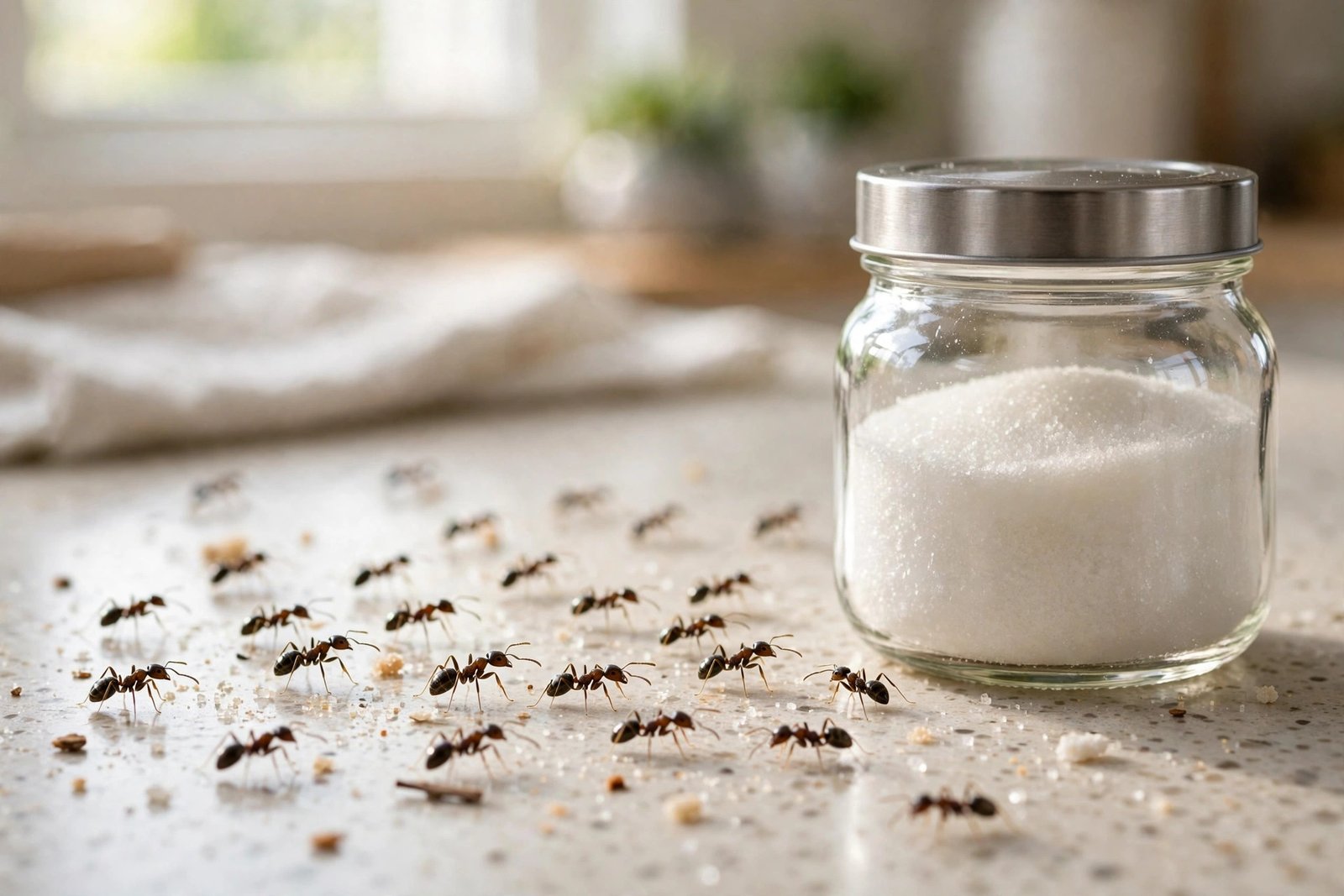
One morning there is a single ant on the kitchen counter. By evening there is a neat, busy line marching from the skirting board to the sugar jar. Sugar ants are among the most common household invaders, and they are also among the most beatable, provided you treat the colony rather than just the ants you can see. Spraying the visible trail feels satisfying, but it usually makes the problem worse by scattering the colony. This guide explains how to get rid of sugar ants properly: identifying them, finding where they come from, using baits that workers carry back to the nest, and sealing your home so the next colony does not move in.
Key Takeaways
- Sugar ants are usually odorous house ants or pavement ants drawn to sweets, crumbs, and moisture.
- Baits beat sprays for lasting control because workers carry bait back to the queen and colony.
- Never spray a baited trail: insecticide on the trail stops workers returning and protects the colony.
- Remove food and water sources, clean trails with soapy water, and seal entry points around pipes and windows.
- Call a professional if ants persist beyond two to three weeks of baiting or appear in wall voids in large numbers.
What Are Sugar Ants, Exactly?
“Sugar ant” is a household nickname rather than a scientific species name. In most homes it refers to small ants, typically two to three millimetres long, that are strongly attracted to sweet foods. The most common culprits are odorous house ants, so named because crushed workers smell faintly like coconut, and pavement ants, which nest under slabs, driveways, and foundations and enter through cracks. Both species form large colonies with multiple queens in some cases, which is why killing a few dozen workers barely dents the population. A mature colony can contain tens of thousands of workers, and in warm weather they send out scouts constantly searching for food and water.
Identification matters because different ants need different tactics. Tiny black or dark brown ants trailing to sugar, honey, fruit, or pet food are almost certainly sugar ants in the household sense. Larger reddish ants, ants with visible wood shavings near timber, or ants nesting in damp wood may be carpenter ants, a different problem requiring a different approach. If you are unsure, photograph a few workers next to a coin for scale and compare them with reliable identification guides, or ask a pest professional. Getting the species right saves weeks of using the wrong bait, since protein-loving ants ignore sweet baits and vice versa.
Why Ants Keep Coming Back
Ants return because the colony survives. A scout finds food, lays a pheromone trail back to the nest, and within hours hundreds of workers follow the chemical highway. Spraying the trail kills the workers on it, but the queen keeps laying eggs, new workers replace the dead, and surviving ants may split off to form satellite colonies, a process called budding that is especially common in odorous house ants when they are disturbed by repellent sprays. That is why a home can seem ant-free for a day after spraying and then worse than before within a week.
The other reason ants return is that the attractants remain. A sticky jam jar rim, crumbs under the toaster, pet food left out overnight, a leaking tap, or a damp sponge all signal a reliable food and water supply. Ants are remarkably persistent when a food source is dependable. Effective control therefore has two halves that must happen together: eliminate the colony with bait, and eliminate the reasons ants chose your home in the first place. Skipping either half guarantees a repeat visit, often from the same colony through a different entry point. Understanding how ants behave in the kitchen helps you see why the kitchen is usually ground zero.
Step 1: Find the Trail and the Entry Point
Start by watching, not spraying. Follow the trail in both directions. One end leads to the food source; the other leads to the entry point, often a gap around a pipe, a window frame, a door threshold, or a crack in the foundation. Note where ants enter and where they concentrate. Check under sinks, behind the fridge, around the dishwasher, and near pet bowls. Outdoors, look for trails along foundations, under mulch, and near outdoor taps. You do not need to find the nest itself, which may be inside a wall void or under a slab, but knowing the entry points tells you where to place baits and what to seal later.
While you investigate, clean up the food source but do not wipe away the entire trail yet if you plan to bait immediately. Workers need to find the bait, and placing bait directly on or beside an active trail gives the fastest uptake. Remove competing food at the same time: seal sugar, honey, cereals, and pet food in airtight containers, wipe counters, sweep crumbs, and fix dripping taps. The bait should be the easiest, most attractive meal available, not one option among many.
Step 2: Use Baits Correctly
Ant baits combine a slow-acting insecticide with an attractive food, usually a sweet gel or liquid. Workers eat the bait and carry it back to the colony, where it is shared with larvae and queens through feeding. Because the poison acts slowly, workers survive long enough to distribute it widely, and the colony collapses over days to a couple of weeks. Place small bait stations or gel dots directly beside active trails and near entry points, out of reach of children and pets. Use several stations rather than one large one, since a colony may use multiple trails.
Patience is essential. Baiting often looks like it is failing at first because ant activity may increase as more workers discover the bait. This is a good sign: it means the bait is being collected. Resist the urge to spray the trail during this period, and do not move bait stations once ants are feeding. Replace dried-out gel and replenish stations that are emptied. If activity has not dropped noticeably after ten to fourteen days, try a different bait formulation, since colonies sometimes prefer a protein-based bait at certain times of year, or the bait may have been placed where competing food still wins.
Homemade borax baits: use with care
Many homeowners make borax and sugar-water baits at home. Borax-based baits work on the same slow-poison principle and can be effective, but they must be kept strictly away from children and pets, labelled clearly, and placed in closed bait stations rather than open dishes. Commercial gel baits are usually more reliable, precisely dosed, and safer to place, so they are the better choice for most households. Whichever bait you use, never mix baiting with repellent sprays on the same trail.
Step 3: Clean, Seal, and Prevent
Once baiting has reduced activity, break the pheromone trails by washing surfaces with hot soapy water or a vinegar solution. This removes the chemical highway and discourages new scouts from following the old route. Then seal entry points: caulk gaps around windows, doors, and pipe penetrations, fit door sweeps, repair damaged window screens, and seal cracks in foundations. Outdoors, keep mulch and soil away from direct contact with siding, trim overhanging branches that touch the house, and store firewood away from walls.
Long-term prevention is mostly housekeeping. Wipe counters daily, store food in sealed containers, rinse recyclables, empty bins regularly, and do not leave pet food out overnight. Fix leaks promptly, since moisture attracts ants as strongly as sugar does, and dry up spills under sinks and around appliances. These habits also help against other kitchen invaders; for example, the same sanitation discipline reduces the appeal of your home to gnats in the house and other small pests that thrive on food residue and damp.
Airtight containers for sugar, honey, cereal, and pet food remove the reward that keeps colonies sending workers inside.
Spraying a baited trail kills the messengers. Let workers carry bait home and the colony collapses from within.
Leaks under sinks and behind appliances draw ants year-round. Fix drips and dry the area as part of treatment.
Ant problems sometimes overlap with other pest clues. Learning the signs of termites in your home helps you tell a nuisance ant trail from structural damage.
Natural and Low-Chemical Options
Several natural approaches support baiting but rarely replace it for an established colony. Diatomaceous earth, a fine powder made from fossilised algae, damages ant exoskeletons and can be dusted into cracks and voids where ants travel, but it loses effectiveness when wet and must be kept dry. Vinegar and soapy water erase trails and kill ants on contact, useful for cleaning up after baiting. Cinnamon, peppermint oil, and citrus are sometimes used as repellents at entry points, and they can discourage scouting, but they do not kill colonies and should not be applied to baited trails. Think of natural methods as the cleanup and prevention layer around a baiting programme, not a substitute for it.
For households with small children or pets, prioritise enclosed bait stations, physical sealing, and sanitation, and keep any powder or liquid product out of reach. Read every product label before use, and never apply indoor insecticides to food preparation surfaces. If you are uncomfortable using insecticides at all, a pest professional can place professional-grade baits in wall voids and other inaccessible areas where household products cannot reach.
When to Call a Professional
Call a professional if baiting for two to three weeks has not reduced activity, if ants are emerging from wall voids, electrical outlets, or ceiling spaces in large numbers, or if you suspect carpenter ants rather than sugar ants. Professionals can identify the species, locate nests with specialised tools, and apply treatments inside voids that household products cannot reach. They can also advise on structural issues, such as damp timber or foundation gaps, that keep attracting colonies. A professional visit costs more than a box of bait stations, but for a persistent or misidentified infestation it is usually cheaper than months of ineffective DIY attempts.
Frequently Asked Questions
How long does it take to get rid of sugar ants?
With correct baiting, activity usually drops within a week and the colony collapses within two to three weeks. Larger or multi-queen colonies can take longer, and sealing plus sanitation prevent reinfestation.
Why are there more ants after I put bait out?
Increased activity at first is normal and positive: it means workers found the bait and are recruiting nestmates to collect it. Activity should decline steadily after several days as the bait reaches the colony.
Are sugar ants harmful?
Sugar ants are mostly a nuisance, but they contaminate food and can carry bacteria across kitchen surfaces. They do not sting like fire ants or damage timber like carpenter ants, but food they contact should be discarded.
Can I use vinegar to kill ants?
Vinegar and soapy water kill ants on contact and erase pheromone trails, which helps cleanup. They do not kill the colony, so use them alongside baits, not instead of them.
Do sugar ants come back every summer?
They often return in warm weather when colonies expand and forage actively. Year-round sealing and food storage, plus baiting at the first sign of a trail, keep summer invasions small and short.
Getting rid of sugar ants is a test of patience and method: find the trail, bait it without spraying, starve the colony of competing food, and seal the way in. Do those four things together and the line across your counter disappears for good, not just for a day. Skip the baiting step and you will be spraying the same trail next week, so let the ants do the work of carrying the solution back to the nest that sent them.
1 thought on “How to Get Rid of Sugar Ants: Kill the Colony, Not the Trail”