
Men’s Henley Shirt Outfit Ideas: How to Style a Henley
The Henley is the hardest-working shirt most men own — and the one they think about least. It is a long- or short-sleeved top with a buttoned placket at the neck, no collar, and a history that runs from nineteenth-century rowers to modern weekend wardrobes. It looks like a T-shirt that grew up: more detail at the neckline, more structure in the fabric, and far more versatile than either a plain tee or a formal shirt.
That versatility is the point of this guide. A Henley works as a base layer under a blazer, an overshirt, or a chore coat; it works on its own with jeans or chinos; and it works across seasons, from a lightweight summer version to a thick thermal for winter. We cover fits, fabrics, layering combinations, seasonal outfits, and the mistakes that turn a great Henley into a sloppy one.
Key Takeaways
- A Henley is a collarless shirt with a button placket — smarter than a tee, more relaxed than a shirt.
- As a base layer, it should fit close; worn alone, it should skim the body without clinging.
- Long-sleeve Henleys layer under blazers, overshirts, chore coats, and field jackets.
- Thermal and waffle-knit Henleys are winter base layers; slub cotton and linen blends are for summer.
- Leave one or two buttons undone, never all of them, and never button it to the top unless it is a thermal.
- Own Henleys in white, charcoal, navy, and olive first — patterns and bright colours come later.
What Is a Henley, Exactly?
A Henley is defined by its placket: a short row of two to five buttons at the neck, on a shirt with no collar. The name comes from Henley-on-Thames, where rowers wore the style in the 1800s, and the design has barely changed since because it barely needs to. The placket gives you control — button up for warmth, undo one or two for ventilation and a relaxed neckline — that a crew-neck tee simply does not offer.
The Henley’s real advantage is its neckline. A crew neck can look plain; a V-neck can look dated; a collared shirt can look too formal for a weekend. The Henley sits in the middle, adding just enough detail to make a simple outfit look intentional, without adding formality you do not want. That is why it layers so well: it gives an open jacket or blazer something interesting to frame, rather than a blank expanse of T-shirt.
Fit: The Difference Between Fitted and Sloppy
Fit is everything with a Henley, because there is no collar or structure to hide behind. The shoulders should sit on your shoulders, not droop down your arms. The body should skim your torso — close enough that it does not billow when tucked or layered, loose enough that the buttons do not pull when fastened. If you can pinch more than a couple of centimetres of fabric at the waist, it is too big; if the placket gaps when you sit, it is too small.
Fabrics for Every Season
Cotton jersey is the everyday default: soft, breathable, easy to wash, and available at every price. Look for a midweight jersey that holds its shape after washing — thin, flimsy cotton stretches out of shape in weeks, while a heavier jersey keeps its drape for years. Slub cotton, with its slightly textured, irregular surface, adds visual interest and is ideal for summer Henleys worn alone.
Waffle knit and thermal Henleys are winter base layers. The waffle texture traps air and insulates far better than flat jersey, which is why thermal Henleys are the layer to reach for under a sweater or coat on freezing days. Merino wool Henleys are the premium winter option: warm, naturally odour-resistant, and slim enough to layer under tailoring without bulk. For the coldest layering systems, pair a thermal Henley with the kind of mid-layer in our quarter-zip outfit ideas and you have warmth without bulk.
How to Style a Henley: Base Layer and Standalone
Under a Blazer
A dark Henley under an unstructured blazer is the smart-casual shortcut. Choose a charcoal or navy Henley, a brown or navy blazer, dark trousers or jeans, and leather shoes. The Henley replaces the shirt-and-no-tie combination, looks less stiff, and keeps you warmer. This is the outfit for dinners, dates, and creative offices where a shirt would feel overdressed. Our corduroy blazer outfit ideas pair particularly well with Henleys, because corduroy’s texture and the Henley’s softness share the same relaxed-smart spirit.
Under an Overshirt or Chore Coat
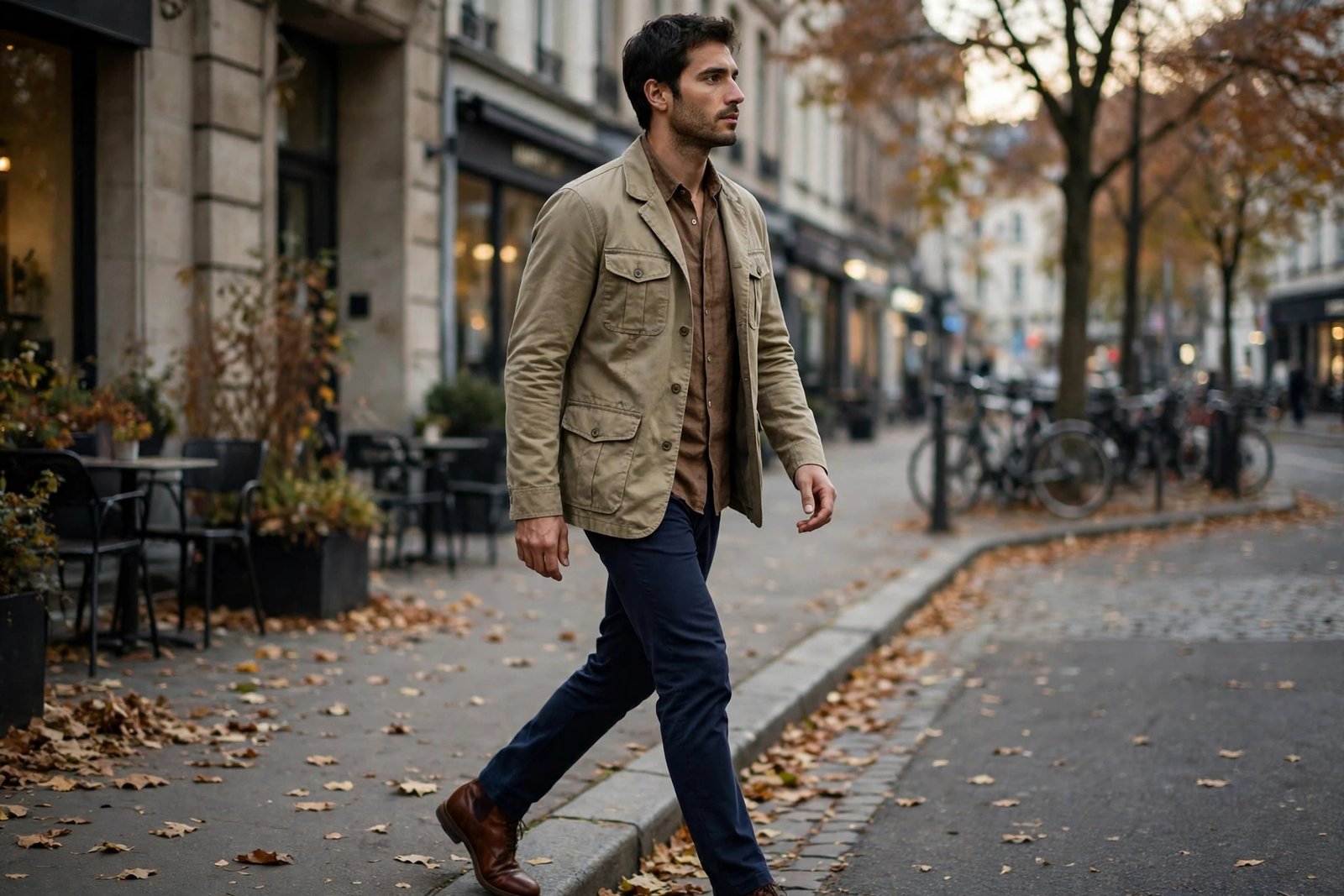
This is the Henley’s home turf. A white or grey Henley under an olive, navy, or plaid overshirt, with jeans and boots, is a weekend uniform that works from a morning coffee run to an evening at the pub. Leave the overshirt open so the Henley’s placket shows, undo one button, and let the layers do the talking. A chore coat in canvas or wool adds a workwear edge that suits the Henley’s utilitarian roots.
Under a Field Jacket or Waxed Jacket
For outdoors and bad weather, a thermal or waffle Henley under a field jacket or a waxed jacket is practical and good-looking. The Henley provides warmth without the bulk of a sweater, so the jacket still fits and moves properly. Choose earthy colours — olive, brown, charcoal — and sturdy boots to complete a look that handles rain, wind, and muddy paths.
Worn Alone
On its own, a Henley needs good trousers and good shoes to avoid looking like loungewear. Pair a fitted Henley with dark jeans or chinos, leather sneakers or boots, and a simple watch. The placket is the detail, so keep everything else quiet: no loud logos, no patterned trousers, no statement belt. If the Henley is white or light-coloured, make sure it is opaque and freshly washed — a grey, stretched white Henley is the fastest way to ruin this outfit.
Seasonal Henley Outfits
Spring: Light Layers
White or stone long-sleeve Henley, olive chinos, white sneakers, and an unbuttoned overshirt for cool mornings that you can tie around your waist by afternoon. Light, fresh, and easy to adjust as the day warms.
Summer: The Henley Alone
Short-sleeve Henley in white, navy, or sage, with linen chinos or tailored shorts and leather sandals or sneakers. Undo two buttons, push nothing up, and keep the palette light. This is the Henley at its simplest and best.
Autumn: The Layered Henley
Charcoal Henley under a corduroy overshirt or a soft blazer, dark jeans, and Chelsea boots. Add a scarf if the evening turns cold. Autumn is the Henley’s peak season, because every layer in the outfit suits it.
Winter: The Thermal Base
Thermal waffle Henley as the first layer, a crew-neck knit over it, a wool coat on top, dark trousers, and boots. The Henley is invisible in this outfit, and that is the point — it is doing the warm work while the knit and coat do the visible work. A softer, more romantic take on winter layering, with flowing scarves and unstructured tailoring, appears in our poetcore outfit ideas for men, where a Henley can quietly replace a billowy shirt for a more grounded version of the look.
5 Henley Mistakes to Avoid
A fully open placket flaps and looks sloppy. One or two undone is relaxed; all undone is undressed.
Unless it is a thermal under layers, a Henley buttoned to the throat looks stiff and uncomfortable. Leave at least one open.
A Henley with no shape is sleepwear. Shoulders on shoulders, body skimming, no billow at the waist.
Grey, stained, or stretched white Henleys drag every outfit down. Replace white Henleys more often than dark ones.
A thick waffle Henley under a slim blazer bunches. Match layer weight: thin under tailoring, thick under outerwear.
Striped or bright Henleys are fun, but build your base in solids first. Patterns work only once the solids are covered.
Frequently Asked Questions
Can I wear a Henley to the office?
Yes, in smart-casual and creative offices, especially layered under an unstructured blazer. Choose a dark, fitted, good-quality Henley, pair it with tailored trousers and leather shoes, and avoid thin or worn-out versions. For formal offices, stick to a collared shirt.
Should a Henley be tucked in?
Usually untucked, ending at mid-fly. Tuck a fitted Henley into tailored trousers or jeans for a smarter look, especially under a blazer — a front tuck also works if the Henley is slim. Never tuck a baggy Henley; it will bunch at the waist.
How many buttons should I undo?
One for a smart look, two for a relaxed look. Never undo all of them, and never button a casual Henley fully to the top. The exception is a thermal Henley worn purely as a base layer, where buttoning up is about warmth, not style.
Are Henleys suitable for muscular or larger builds?
Yes — Henleys are very forgiving. The placket draws the eye vertically, which lengthens the torso, and the collarless neckline opens the chest. Choose a fit that skims rather than clings, and avoid very thin fabrics that highlight every contour if that is not what you want.
What is the difference between a Henley and a T-shirt?
The placket. A Henley has a buttoned opening at the neck and no collar; a T-shirt has a plain crew or V neck. That small detail makes the Henley look more considered, gives you ventilation control, and layers more interestingly under jackets and blazers.
Bringing It All Together
The Henley earns its place not by being dramatic, but by being dependable. It is the shirt you reach for when a tee feels too plain and a shirt feels too formal, the base layer that makes winter jackets fit better, and the standalone top that carries a summer weekend on its own. Own it in the right fit, in solid colours first, and in fabrics matched to the season.
Start with one long-sleeve Henley in charcoal, wear it under your favourite overshirt this week, then alone with jeans next weekend. You will quickly see why it is the quiet workhorse of a good wardrobe — and why, once you own a few, you will wonder how you dressed without them.