
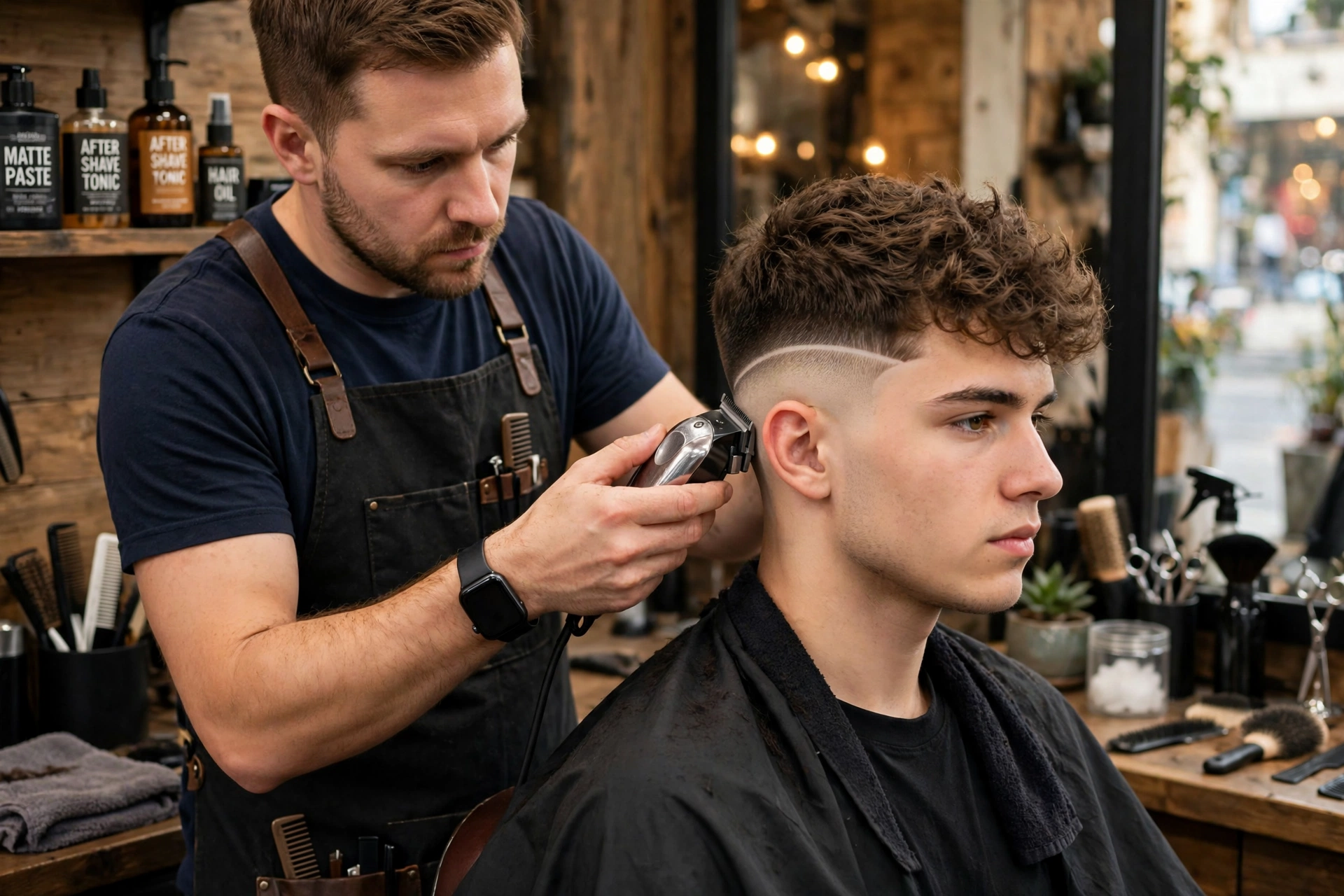
The high taper fade is one of the most asked-for haircuts right now, and for good reason: it is sharp without being severe, works with almost any hair on top, and grows out better than a skin fade. But it is also one of the most misunderstood cuts — ask for it wrong and you walk out with something completely different. This guide explains what it is, how it differs from a low taper and a skin fade, what to say to your barber, and how to style it at home.
- A high taper fade starts the fade high up the head — around the temples — and blends down to the skin or near-skin at the neckline and sideburns.
- It differs from a low taper fade (which starts just above the ears) and a skin fade (which goes fully bald at the bottom).
- It works with straight, wavy, curly, and coily hair, and with almost any length on top.
- Bring a photo: “high taper fade” means slightly different things to different barbers.
- Maintenance is a trim every 2–3 weeks; at home, a little pomade or matte clay does most of the work.
What Is a High Taper Fade?
A taper fade is a haircut where the hair gradually gets shorter as it goes down the sides and back. The “high” part tells the barber where to start the blend: high up on the head, around the temples, rather than low near the ears. The result is a clean, sharp look with a strong contrast between the longer hair on top and the short, faded sides — but without the harsh bald line of a skin fade, because a taper keeps a little length at the very bottom.
It is a versatile cut. The top can be a textured crop, a quiff, curls, waves, a fringe, or a slicked-back style. The fade does the same job every time: it cleans up the sides, sharpens the outline, and makes the top look intentional. That is why you see it everywhere from the office to the football pitch.
High Taper Fade vs Low Taper Fade vs Skin Fade
These three get mixed up constantly, so here is the simple version:
- High taper fade: The fade starts high, around the temples. Bold, sharp, and the most noticeable of the tapers.
- Low taper fade: The fade starts low, just above the ears and neckline. Subtle and classic — the difference is only visible up close. Our low taper fade guide covers that cut in detail.
- Mid taper fade: Starts between the two — a middle ground that suits most people.
- Skin fade (bald fade): The hair goes down to the skin at the bottom. Much sharper contrast and needs more upkeep than a taper.
The taper part matters too: a taper fades gradually and keeps some length, while a skin fade goes to zero. A high taper fade is the boldest taper, but it is still softer than a high skin fade. If you want sharp but not severe, high taper is the right call.
What to Ask Your Barber For
Barbers hear “high taper fade” a hundred times a week, but they still appreciate specifics. Here is what to say:
- “High taper fade on the sides and back, please.” That sets the height and the blend.
- “Keep the top [length] — textured / curly / long enough to push back.” Describe the top, not just the fade.
- “Taper the neckline and sideburns, don’t square them off.” This is what makes it a taper rather than a skin fade.
- Bring a photo. Show two or three pictures of the exact look you want, including the top. A photo removes all doubt.
Best High Taper Fade Styles
Textured crop + high taper
Short, choppy texture on top with a high taper on the sides. Low effort, looks sharp, and it is the most popular version right now.
Curly top + high taper
Curls on top with a clean fade underneath. The contrast makes the curls look fuller, and the fade keeps the sides tidy as the curls grow.
Quiff + high taper
Longer on top, swept up and back. The classic version — it needs a bit of product and a hairdryer, but it looks the most polished.
Buzz cut + high taper
The shortest version: a buzz on top with a high taper. Almost no styling needed and it grows out gracefully.
Slicked back + high taper
Longer hair combed back with pomade. A smart, mature look that works well in an office.
How to Style a High Taper Fade at Home
- Matte clay or paste for textured, natural looks — rub a pea-sized amount between your palms and work it through damp hair.
- Pomade for slicked-back or quiff styles — more shine, more hold.
- Sea salt spray for wavy or curly tops — adds texture without weight.
- Blow-dry the top for volume, especially if you wear a quiff. Thirty seconds with a dryer beats any product on its own.
- Do not overdo the product. A little is enough; too much makes the top look greasy and heavy.
For hair care that keeps the top healthy, our winter hair care tips and hair colour ideas are good places to start. And if you are pairing the cut with a new look, our short hairstyles guide has more ideas.
How Often Do You Need a Trim?
Every two to three weeks keeps a high taper fade looking sharp. The fade grows out faster than the top, and the contrast is what makes the cut work — once the sides get fuzzy, the whole thing loses its edge. The good news is that a fade touch-up is quick and cheap at most barbers. If you are growing the top out, keep getting the sides tapered and let the top keep its length.
Frequently Asked Questions
What is the difference between a high taper fade and a low taper fade?
The height where the fade starts: high starts around the temples, low starts just above the ears. High is bolder and more noticeable; low is subtler and more classic.
Does a high taper fade suit all hair types?
Yes — it works with straight, wavy, curly, and coily hair. The fade is about the sides; the top can be styled to suit your hair type.
How do I ask for a high taper fade?
Say “high taper fade on the sides and back, tapered neckline”, describe the top you want, and bring a photo. A photo is the single best way to get what you want.
Is a high taper fade good for a round face?
Yes — the height on top and the clean sides add length to the face, which suits rounder face shapes well. Ask for volume on top to make the most of it.
How long does a high taper fade last?
About 2–3 weeks before it needs a touch-up. The fade grows out faster than the top, so regular trims keep it looking sharp.
The high taper fade is popular because it is honest: it looks sharp, it suits almost everyone, and it does not ask much of you in the morning. Ask for it by name, bring a photo, keep the top the way you like it, and get it touched up every couple of weeks. That is the whole secret.
1 thought on “High Taper Fade: What to Ask For & How to Style It”